
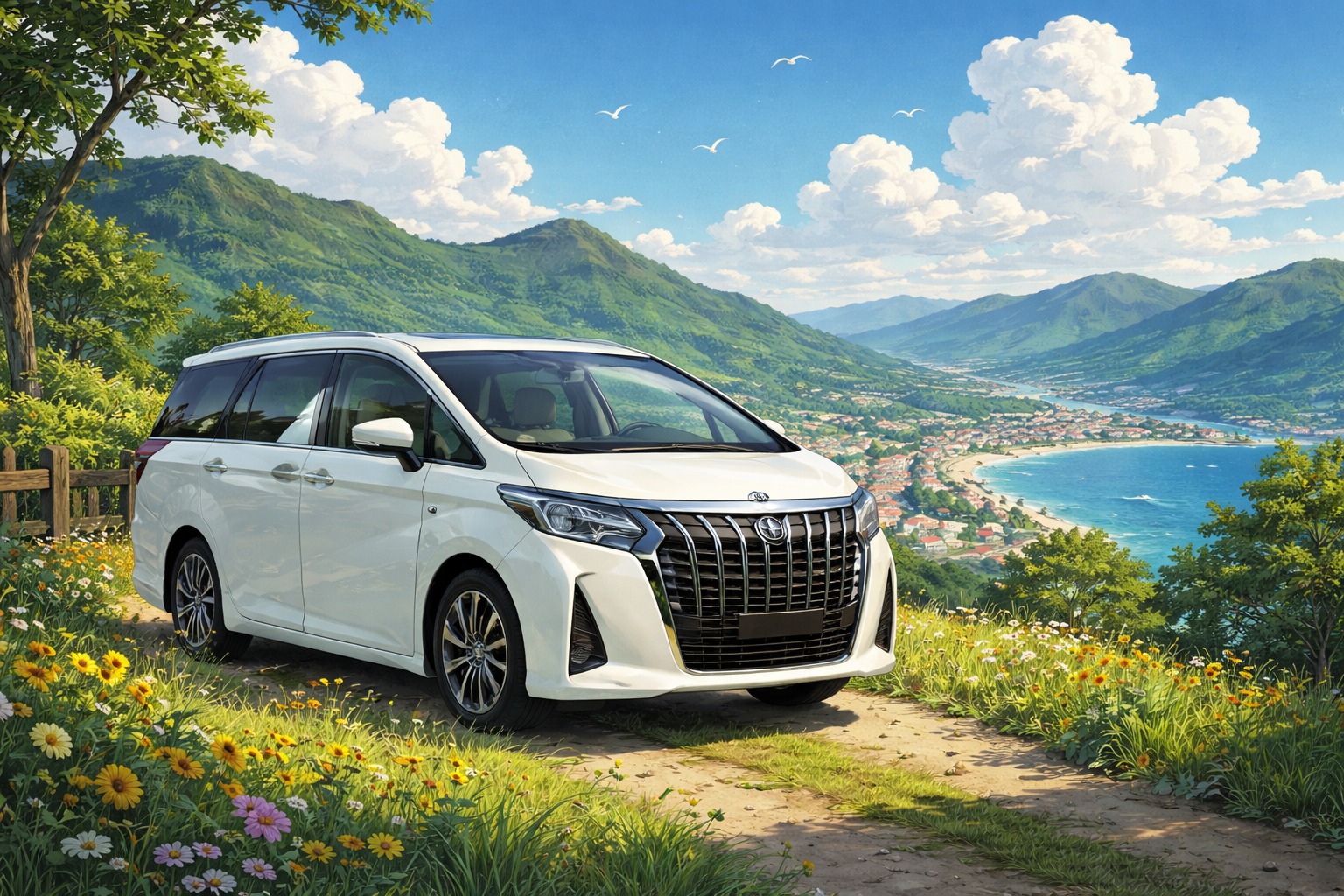
The Toyota Alphard is one of the most dominant luxury minivans in Japan’s used car market. While the new car price is high, many people wonder: “Will it still sell for a good price in 10 years?” and “Is it a car that holds its value?” Here, we break down the Alphard’s projected residual value, used car price trends, and comparisons with the Vellfire and other minivans to help you understand its future asset value.
Projected Residual Value After 10 Years (Resale Value)
The Alphard is known for having one of the highest resale values among Japanese domestic minivans. According to 2026 resale data, its 5-year residual value stands at 81.05%, placing it at the very top of its class. Most Japanese domestic vehicles typically retain around 40–60% of their value after five years, making the Alphard’s figure notably high.
While there is not yet sufficient real-world data for the current 40-series to project 10-year figures precisely, based on the high 5-year residual rate, used car pricing trends for previous generations, and robust demand in the used car market, the Alphard is expected to retain approximately 40–50% of its value after 10 years. This is considerably higher than most minivans, and is one of the key reasons the Alphard is often described as “expensive but slow to depreciate.”
Automotive media projections for the current model show a range of 82–90.6% after 3 years and 73–86.1% after 5 years. While the short-term premium pricing has begun to cool, the Alphard continues to be viewed as a vehicle that maintains strong long-term asset value.
▼ Price and Residual Value Overview: Alphard vs. Comparable Popular Models
| Model | New Car Price (Approx.) | 5-Year Residual Rate | 10-Year Projected Rate |
|---|---|---|---|
| Alphard (40-series) | ~¥5.1M–¥10.65M | ~81% | ~40–50% |
| Vellfire (40-series) | ~¥6.7M–¥10.85M | ~80.78% | ~40–50% |
| Voxy | ~¥3.0M–¥3.9M | ~72.64% | ~35–45% |
Note: 10-year projections are estimates based on 5-year residual rate data as of 2026, historical used car pricing for earlier generations, market supply, and popularity trends. Actual prices will vary depending on grade, color, mileage, and market conditions.
Used Car Price Trends
The current 40-series Alphard was extremely popular from the moment it launched. Combined with new car delivery delays, used car prices surged above new car prices, creating a “premium market.” Particularly through around 2024, strong demand for immediate delivery kept prices high on registered-but-unused units and low-mileage examples.
However, this premium state was never going to last indefinitely. With minor revisions and the addition of new grades through 2025, supply in the market increased, and prices have entered a mild correction phase. According to an analysis by CarSensor, the average price of a current-generation Alphard as of May 2025 had settled to ¥7,757,000.
Even so, this is less a “collapse in the market” and more a case of “extreme premiums calming down somewhat.” As of 2026, prices still span a wide range depending on model year and grade, with certain configurations continuing to command high prices. Strong brand equity, steady demand from corporate fleets, and loyal buying from families keep the floor price relatively firm.
Why the Alphard Holds Its Value
The primary reason behind the Alphard’s strong asset value is the depth of demand in the used car market. Its premium interior and exterior, ride quality, and rear-seat comfort are all highly regarded, generating demand not only from families but also from corporate and chauffeur-use buyers.
Furthermore, the Alphard is a vehicle that many people want even in used form — “if I can’t get one new, I’ll buy used.” When supply tightens, used car prices tend to spike quickly; conversely, even when supply stabilizes, the underlying popularity rarely fades, making the market floor hard to break through.
The wide variation in pricing based on body color, grade, and factory options also concentrates demand on the most desirable configurations. In general, top-tier grades, popular colors, and well-equipped examples tend to command stronger resale prices — even within the Alphard lineup itself.
Comparison with the Vellfire and Other Minivans
The Vellfire, the Alphard’s sibling model from the same generation, also commands very strong resale values, with a 5-year residual rate of 80.78% according to 2026 data — nearly on par with the Alphard. By comparison, the Voxy comes in at 72.64% and the Noah at 66.04%, highlighting just how dominant the Alphard and Vellfire are.
This gap is not simply a matter of product quality, but is largely driven by brand value as a luxury minivan. In other words, the Alphard is evaluated not merely as transportation, but as a status symbol with ownership prestige — which is why its used car price remains so resilient.
Running Costs, Caveats, and Their Relationship to Asset Value
While the Alphard offers strong asset value, it is by no means a cheap car to run. The high purchase price, relatively large tires and consumables, and the impact of weight and engine displacement on taxes and fuel costs all add up. Buying an Alphard under the assumption that “good resale means low total cost” without accounting for day-to-day running expenses can easily lead to financial strain.
It is also worth paying attention to future price trends. The premium pricing seen at launch has been gradually softening as supply increases and new grades are introduced. Accordingly, it is more realistic to think of the Alphard as a high-residual minivan that retains value well over several years of ownership, rather than a vehicle to flip for short-term profit.
In short, the Alphard is not a “guaranteed money-maker” — rather, it is best understood as a luxury vehicle that depreciates slowly and is unlikely to result in a significant financial loss. With that framing, it stands out as a car with exceptionally strong long-term asset value.
Conclusion: The Alphard Is a Luxury Minivan Likely to Retain Its Value After 10 Years
Even as of 2026, the Alphard remains one of Japan’s top-tier domestic minivans for resale value. With a 5-year residual rate of approximately 81%, it has a strong chance of retaining 40–50% of its value even after a decade. While the short-term premium has been cooling, the breadth of demand, brand strength, and versatility of use make it a vehicle that is unlikely to see a sharp price collapse over the medium to long term.
For anyone looking for a car that is “expensive but unlikely to be a financial loss,” or who wants a family-friendly vehicle with one eye on future resale value, the Alphard is an extremely compelling option. Paying attention to popular grades, popular colors, and factory equipment at the time of purchase will further help maintain a high resale value down the line.