
The Birth and Evolution of the GN125 – The Development History of the “People’s Ride”
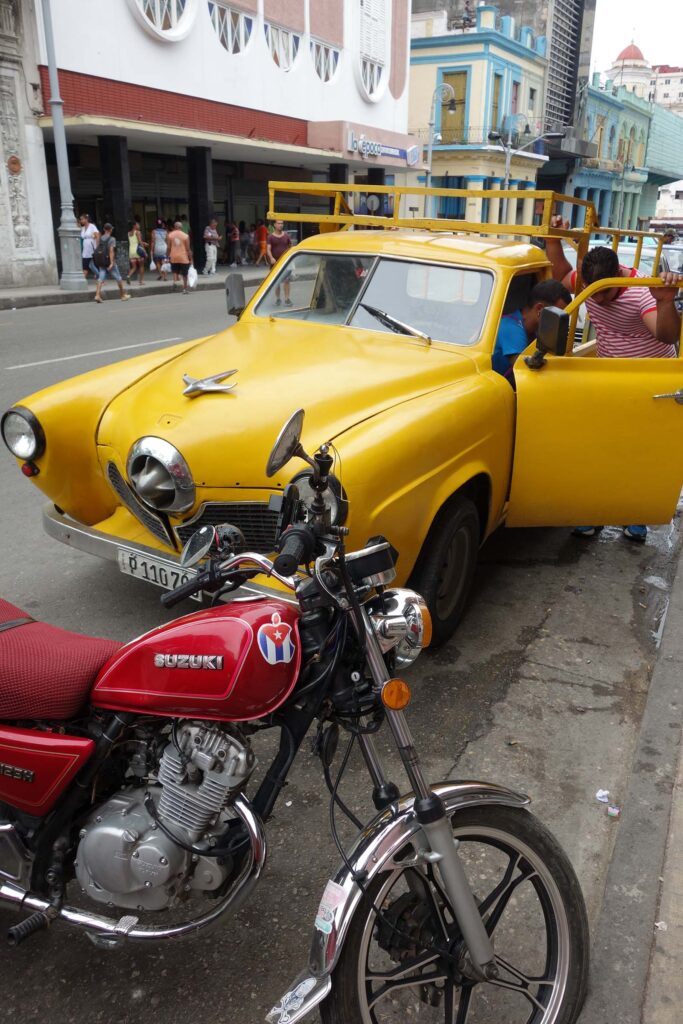
The Suzuki GN125 is a 125cc-class motorcycle that went on sale in Japan in April 1982. It debuted as part of the GN Series (which spanned 50cc to 400cc) and featured a low-and-long cruiser style with a teardrop-shaped fuel tank. With an air-cooled single-cylinder engine and cast wheels, it was a practical, no-frills all-purpose motorcycle with business use in mind. The 125cc OHC 2-valve single-cylinder engine delivered a maximum output of 11.5 PS, but thanks to its simplicity, economy, and ease of handling, it earned steady support from some riders as a dependable utility bike, becoming a long-selling model in Japan until 1999. It was even used as a training bike, making it a low-key but enduring model domestically.
A History of Improvements: After domestic production ended, the GN125 lived on overseas. From the 1990s onward, license production by China’s Changjiang Group (Haojun) began, and Suzuki headquarters supplied the “Suzuki” brand GN125 without direct involvement in production. From the mid-2000s onward, the bike drew renewed attention in Japan through parallel imports, and its surprising low price of ¥150,000 to ¥180,000 for a new bike became a hot topic. Because it was an overseas OEM production model, Suzuki dealers in Japan sometimes refused to service it, but since the basic design was shared with domestic models and had around 80–90% parts compatibility, it could typically be serviced without issue at local motorcycle shops. Further improvements followed, with the 2005 GN125H seeing engine refinements and carburetor changes that boosted output from 11.5 PS to 12.5 PS, and the 2006 GN125F undergoing as many as 22 major modifications. The fact that a Japanese-origin model underwent successive fine-tuning by a Chinese manufacturer and found new life in various countries worldwide is yet another unique chapter in the GN125’s story.
The Dual-Purpose Legacy – The Development History of the DR200 (Jeabel 200)
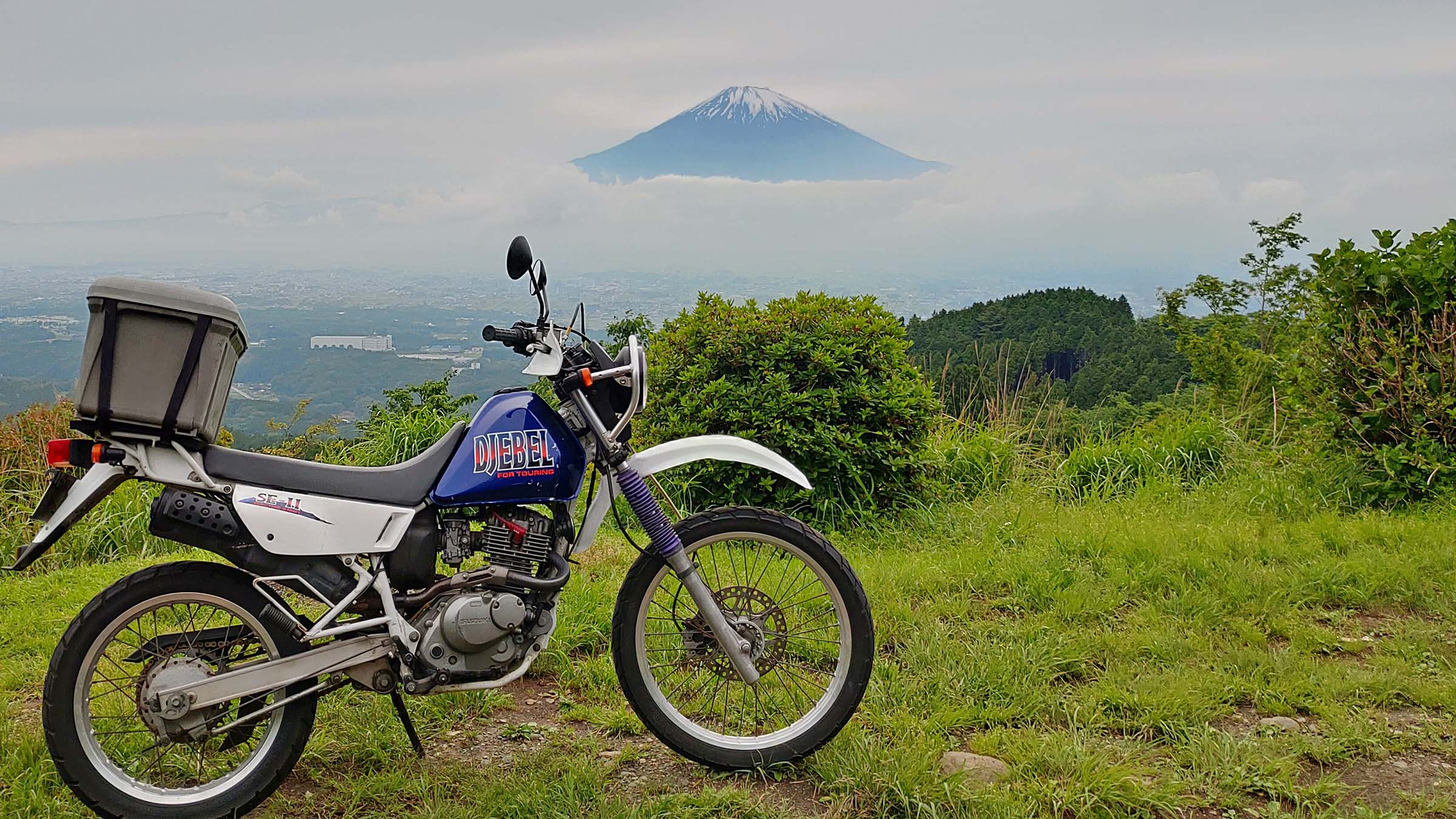
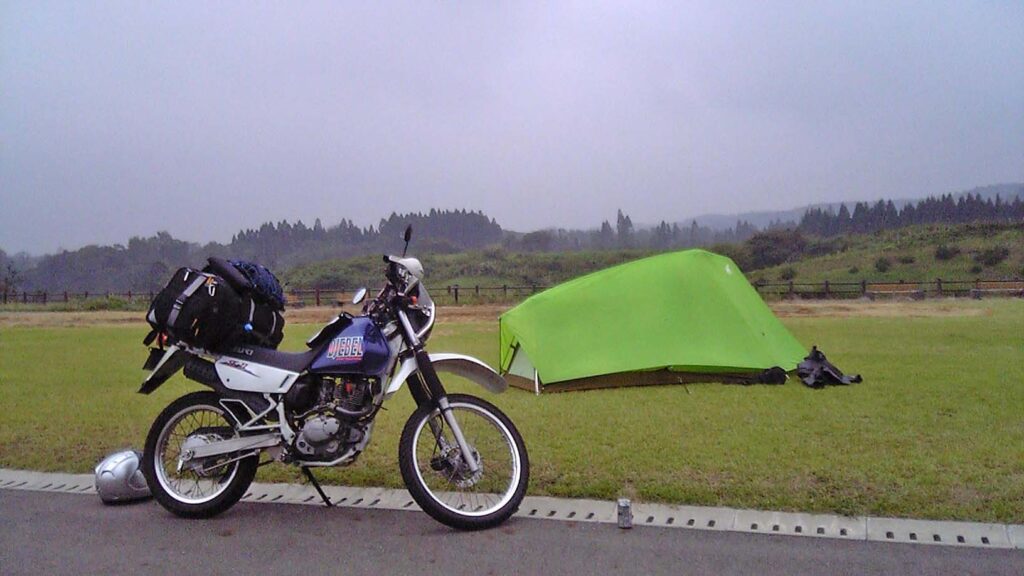
Meanwhile, the lineage of the Suzuki DR200/125 began in the mid-1980s. The root model was the 1985-debut “SX200R/125R,” an unpretentious off-road motorcycle designed for ease of handling. During Japan’s off-road boom at the time, the SX200R was overshadowed by high-performance models, but with its large-capacity fuel tank, excellent fuel economy, and comfortable riding posture that reduced fatigue, it quietly earned support from touring riders. Building on the SX200R and further refined for touring capability came the “Jeabel 200/125,” launched in 1993. Arriving as a member of the Jeabel Series, the Jeabel 200 saw improved convenience with the addition of an electric starter in its electrical systems. Later, in 1997, a heavy-duty variant called the “DF200E/125E” also made its debut. The DF200E emphasized durability through a large rear carrier, an integrated front carrier with headlight guard, extended fenders front and rear, and camouflage color options. This 1997 DF200E was essentially the same specification as the “DR200SE” later offered for overseas markets, making it the de facto finished form of the DR200. The domestic Jeabel 200/DF200E was discontinued from the catalog in 2005, marking the end of its tenure. However, development continued for overseas markets, and the air-cooled 199cc single-cylinder engine and basic frame construction remained virtually unchanged since 1985, with production and sales continuing worldwide. This refined design, now some 40 years old, boasts exceptional reliability, and has survived to the present day as a “tough and easy-to-repair” dual-purpose motorcycle. The Banban 200, a fun model equipped with fat tires, was produced from 2003 to 2016, and from 2007 onward it came equipped with fuel injection.
DR200 vs GN125 Major Specification Comparison
| Item (Specification) | Suzuki GN125 | Suzuki DR200 (Jeabel 200) |
|---|---|---|
| First Introduction | 1982 | 1985 (SX200R) ※1993 Jeabel 200 |
| Engine Type | Air-cooled 4-stroke single-cylinder OHC 125cc 2-valve | Air-cooled 4-stroke single-cylinder OHC 199cc 2-valve |
| Maximum Output | Approx. 12.5 PS / 9000 rpm | Approx. 20 PS / 8500 rpm |
| Maximum Torque | Approx. 9.2 Nm / 7000 rpm | Approx. 18.6 Nm / 7000 rpm |
| Transmission & Drive | 5-speed return / chain drive | 5-speed return / chain drive |
| Brakes (Front / Rear) | Disc / Drum (country-specific spec) | Disc / Drum |
| Curb Weight | Approx. 117 kg | Approx. 132 kg |
| Seat Height | 738 mm | 850 mm |
| Fuel Tank Capacity | 10.3 liters | 13 liters |
| Starting Method | Electric starter (some with kick starter as option) | Electric starter (some with kick starter as option) |
※The GN125 uses carburetor fuel supply (no fuel injection conversion). The DR200 also retains carburetor configuration, with equipment enhancements (such as oil cooler addition) applied as needed.
Activity in the Americas – From People’s Transport to Police Motorcycles

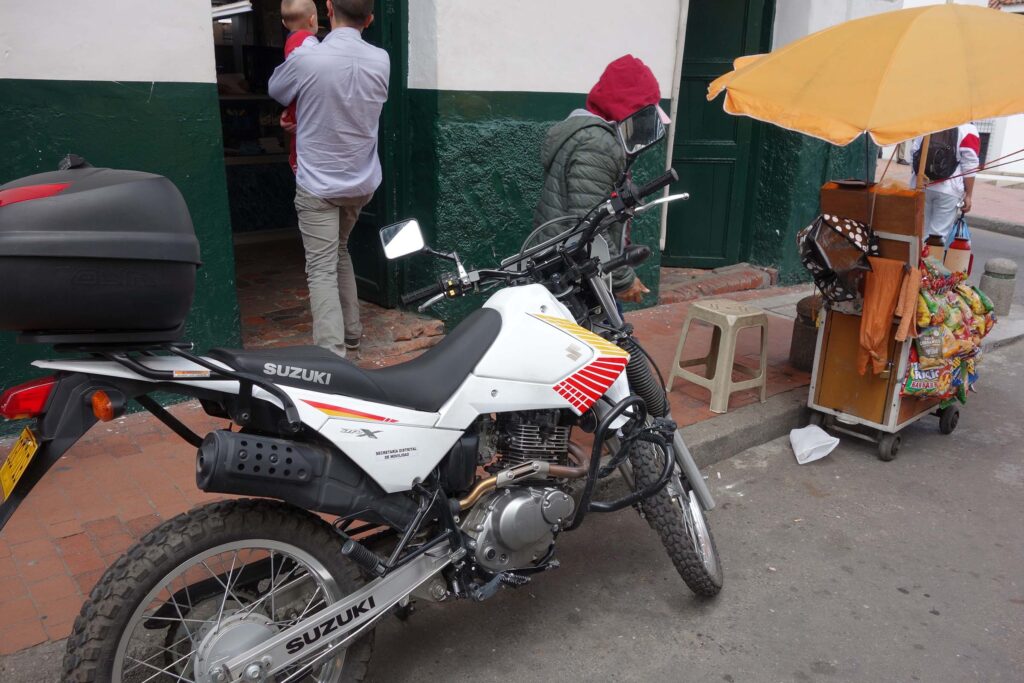
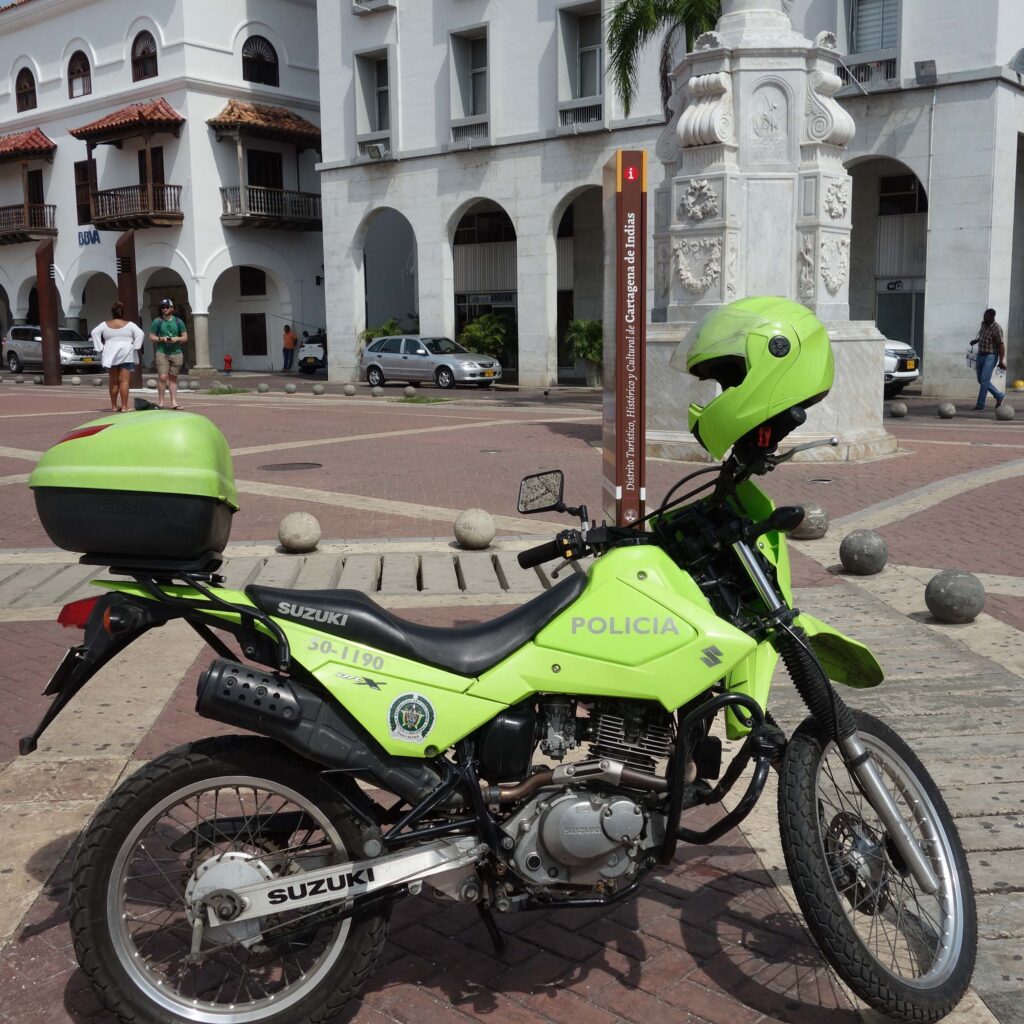
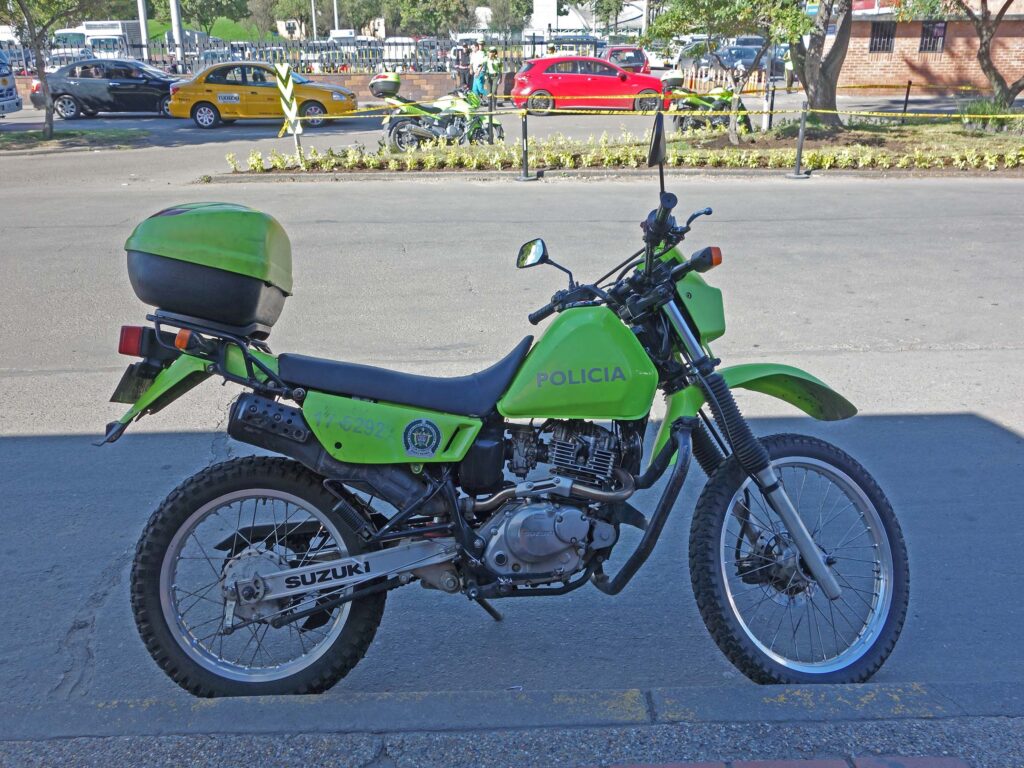
Turning attention to the developing world, both the GN125 and DR200 enjoy tremendous support as “people’s transport.” In South America,the GN125 is particularly popular, and for example in Colombia it consistently ranks among the top sellers in the 125cc class. In fact, according to Colombia’s two-wheel vehicle sales statistics for December 2024, the Suzuki GN125 sold 2,155 units that month, achieving growth of 47% over the past several years despite a slight year-on-year decline, and standing among bestselling models on par with rival bikes. This affordably priced, fuel-efficient motorcycle represents an ideal daily transport solution for local riders, with some observers noting it has become a substitute for the Honda Cub as the “cheap, tough, and easy-to-use” mini-bike of choice. Meanwhile, the DR200 also plays a unique role in South America. For example, Colombia’s National Police has adopted the DR200 (likely known locally as the DR200SE) as a patrol motorcycle, valued for its off-road capability and reliability. Its use on unpaved routes for patrol work and supply transport in regions with extensive unsurfaced roads is a fitting image of a “working motorcycle.” In Central and South America, there are also cases of the DR200 being used for ranch patrols and cargo hauling in rural areas, so while the GN125 serves as the foot of the city, the DR200 serves as the foot of the countryside, each supporting people’s lives in their respective fields.
As a fascinating example, a Colombian rider rode a Suzuki GN125 across five South American countries, covering 13,000 km and realizing his dream. At 45 years old, he packed only the bare essentials on his beloved GN125 (nicknamed “Bendición,” meaning “Blessing”) and spent four months making a continent-spanning journey from Venezuela through Colombia, Ecuador, and Peru to Chile. Long-distance touring of this scale is normally done on large-displacement adventure bikes, yet this 125cc “little companion” pulled it off, and local media reported on the GN125’s remarkable capabilities with genuine surprise. The story of a “people’s motorcycle” carrying a rider’s dreams to completion speaks volumes about the GN125’s reliability and depth of capability.
Recognition in Africa – Toughness Shining Through in Harsh Conditions
In African nations as well, the GN125 and DR200 are widely accepted for their robust construction. In urban areas, the affordable and easy-to-maintain GN125 serves as a taxi substitute and for small-scale delivery work, supporting people’s mobility. Meanwhile, in vast rural areas and savanna regions, the DR200’s sturdy off-road performance truly shines. The DR200 is sold in various countries including the Democratic Republic of Congo in central Africa, and in some regions it is known by the name “Trojan 200.” As the name Trojan (Trojan Horse) suggests, it is a workhorse in agricultural and pastoral settings, used to patrol large farms and plantations. What is required is a simple structure that anyone can handle and repair on the spot if it breaks, and an affordable price. The DR200 meets these conditions perfectly, and because of its air-cooled engine unchanged since the 1980s off-road bikes and its traditional configuration, it has earned the reputation of being “a bike you can pull over and open up the engine to fix right there”. It also comes standard with sturdy carriers front and rear and pipe-guarded lights for carrying large loads, and the mudguards are substantially enlarged for peace of mind on Africa’s muddy roads. As a robust companion that goes anywhere as long as it has fuel, the DR200 is used in Africa by farmers, rangers, and even United Nations agency support activities, earning high trust from the people. The GN125, too, has a simple structure and is not prone to failure, so it is welcomed by local mechanics as “a bike that’s easy to fix.” It is prized as a means of transportation for long-distance haulers and rural security personnel. It has become one of the vehicles trusted in harsh lands, to the point where it is said that “the best friends in Africa are a Toyota pickup and a small-displacement bike.”
Popularity in Asia – From China and Southeast Asia to Japan
In Asia as well, the presence of these two models cannot be ignored. First, the GN125 is remarkable as a successful example of licensed production in China. As noted earlier, when Dachang Group (Haojun) acquired the production rights from Suzuki and manufactured and supplied large quantities from the 2000s onward, it became widely distributed throughout China and Southeast Asia. In Southeast Asia, with rising prices for Honda Super Cub-line models, the cheaper and more practical GN125 is said to be increasing its numbers as the common person’s transportation. For example, even in provincial cities in the Philippines, Thailand, and Malaysia, you are increasingly likely to see GN125s used for mail delivery and delivery work. With 125cc displacement but enough power for two riders and a low-seat design that makes it easy to load and unload cargo while stopped, it is ideal for small shop owners and delivery riders. Moreover, because parts for Chinese-made GN125s are extremely inexpensive and easily obtained through online shopping, it has become a popular model in motorcycle repair markets throughout Asia. While there are some quality differences in plated parts compared to domestic models, thanks to manufacturing under Suzuki’s technical guidance there are no fatal issues, and overall the assessment “cheap and good motorcycle” has become established.
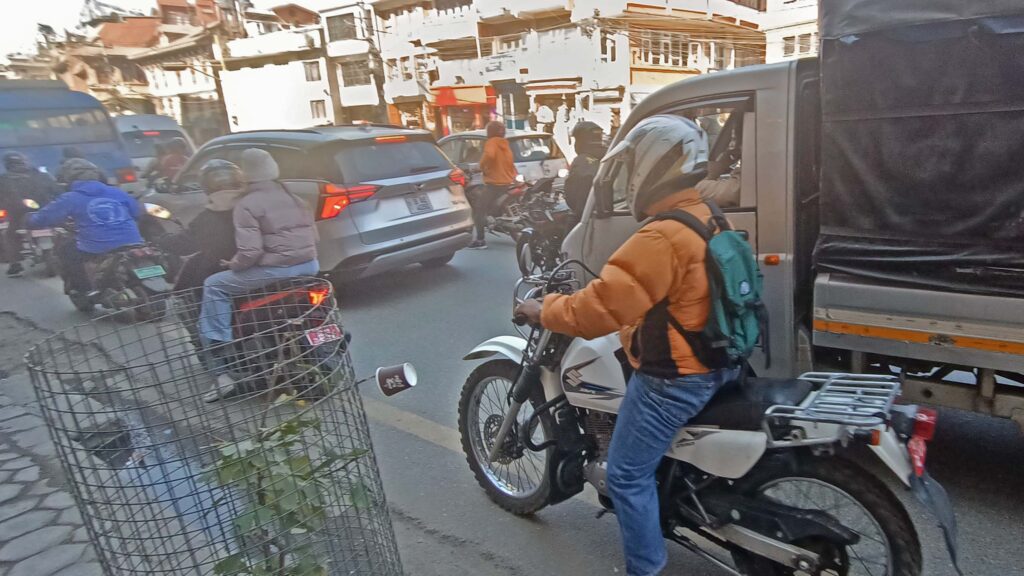
Regarding the DR200, in Asia it is mainly in demand as a “rugged public-use motorcycle that can handle mountain roads.” For example, in mountainous countries like Nepal and Indonesia, sturdy off-road bikes are required for police and border patrol units, and DR200-equivalent models have been deployed (along with similar models from other manufacturers). Particularly noteworthy is its success in Australia, where a DR200-based farm bike sold under the name “Trojan 200” was named “Australia’s most popular farm bike” as of 2023. Designed for use on vast ranches, the Trojan 200 is equipped with both left and right kickstands, large hand guards, a bright halogen headlight, a large 13L fuel tank, and even an oil cooler. Australia is geographically part of the Asia-Pacific region, so it is somewhat different in character, but it is a fine example of how the DR200 line is loved with names and equipment adjusted to regional needs. As for production, it appears that Suzuki’s local subsidiary in Thailand assembled DR200-series models, serving as a supply base for the Asian market. For riders throughout Asia, both the GN125 and DR200 share a common assessment: “motorcycles with sufficient performance, durability, and longevity.” The fact that these small-displacement models originating in Japan have taken root as bestsellers locally is a matter of pride.
Serviceability, Reliability, and Durability – The Reason They Keep Being Loved
Behind the worldwide use of the GN125 and DR200 lies their outstanding serviceability and reliability. Although the GN125 features a classic carbureted air-cooled engine, its fuel economy is exceptional, and it rarely falls below 40 km per liter no matter how hard you ride it. Its simple structure and low parts count mean few failures, and if something does go wrong, it is easy enough for an amateur to handle maintenance with just a tool or two in hand. This is undoubtedly the main reason it is beloved in developing countries. The GN125 keeps costs down drastically with inexpensive consumables and can be maintained through DIY service indefinitely, earning it praise from motorcycle enthusiasts as “a fine teaching tool for learning through tinkering.”
The DR200 is no less impressive when it comes to reliability and toughness. Ever since the DR125S of the 1980s on which it is based, the bike has maintained essentially the same fundamental design for over a quarter century, achieving a level of completion so refined that there is literally nothing to fault. The air-cooled single-cylinder engine is easier to maintain than water-cooled alternatives, and with minimal electrical systems, it is simple for riders to identify and fix problems themselves. The fact that the Djebel 200 from 1999 onward (the DF from 1998 onward) and the DR200SE in overseas specification still retain a kickstarter pedal as a backup alongside the electric starter motor speaks to a design philosophy centered on reliable starting in harsh environments. This simplicity would be unthinkable in today’s large-displacement adventure bikes, yet it is the very essence of the DR200. Australian farmers, for example, trust this bike as they range across vast outback territories, knowing that “the lack of unnecessary electronic controls means I can fix it if something breaks, and it won’t break in the first place.” There are even documented cases of units used by Central and South American police forces that have logged tens of thousands of kilometers and remain operational today, making surplus bikes so popular in the used market (since they can run for many more years with proper care). The design philosophy of “a tough, easy-to-handle motorcycle that anyone can ride anytime” finds its perfect expression in the DR200.
On the whole, the Suzuki DR200 and GN125 may appear unremarkable in terms of specifications—just small-displacement bikes. However, their practical performance and high reliability, combined with ease of maintenance, are proven worldwide, and they possess a “tool-like appeal” that fancy new models simply cannot match. What both motorcycles share is a sense of being “a reliable companion you can count on for the long haul.” Without relying on the latest electronic controls, they continue to run powerfully, carrying people’s daily lives and dreams—surely these bikes have transcended their role as supporting players to become the stars of the show. The DR200 and GN125, born from Suzuki, will undoubtedly continue to run robustly down roads around the world, beloved by countless riders for years to come.
From donkey to thoroughbred: practical tuning
The DR200 is a solid, easy-to-handle motorcycle, yet many owners want a bit more performance margin and riding confidence. At Good Loop, we focus on enhancements centered on “improving practicality” and “enhancing reliability” rather than flashy cosmetics or unnecessary modifications.
1. Adding an oil cooler from the DF200E
We install an oil cooler adapted from the DF series. Beyond improving cooling efficiency, oil capacity increases from 1100ml to 1200ml, making it highly effective against performance loss during long rides due to heat. The difference is especially noticeable in summer and mountainous terrain.
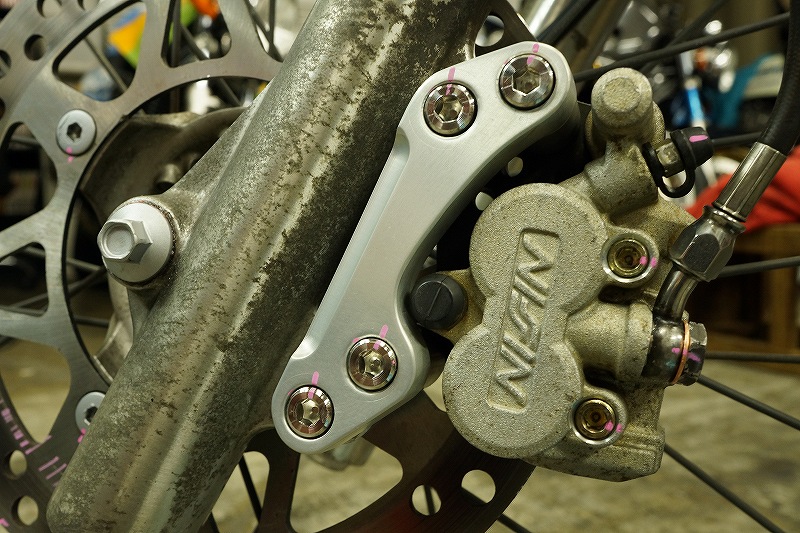
2. Front brake upgrade (using DR350 components)
The standard single-piston design lacks braking power, so we fit a larger-diameter rotor and dual-piston caliper from the DR350. The mounting bracket is custom-fabricated. The result is shorter stopping distances and improved stability when going downhill or carrying a load.
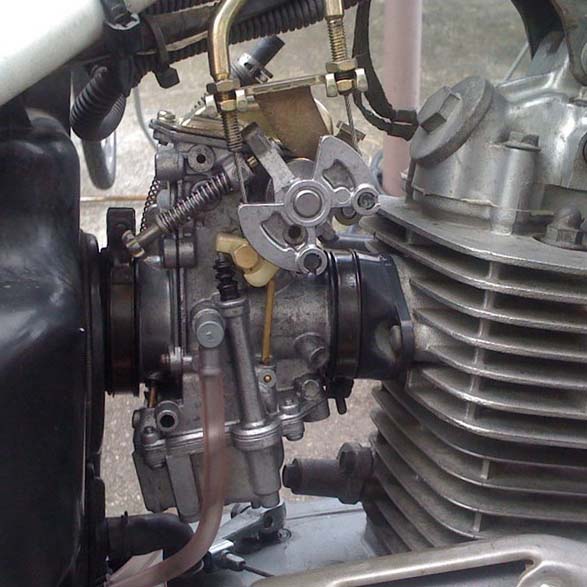
3. Carburetor swap to TM28SS
We replace the stock CV carburetor with the mechanical-actuation carburetor with accelerator pump used on the DR250R (Mikuni TM28SS). The sluggish response of the original carburetor disappears, eliminating the delay between throttle input and acceleration. The bike feels punchier without sacrificing ease of handling.
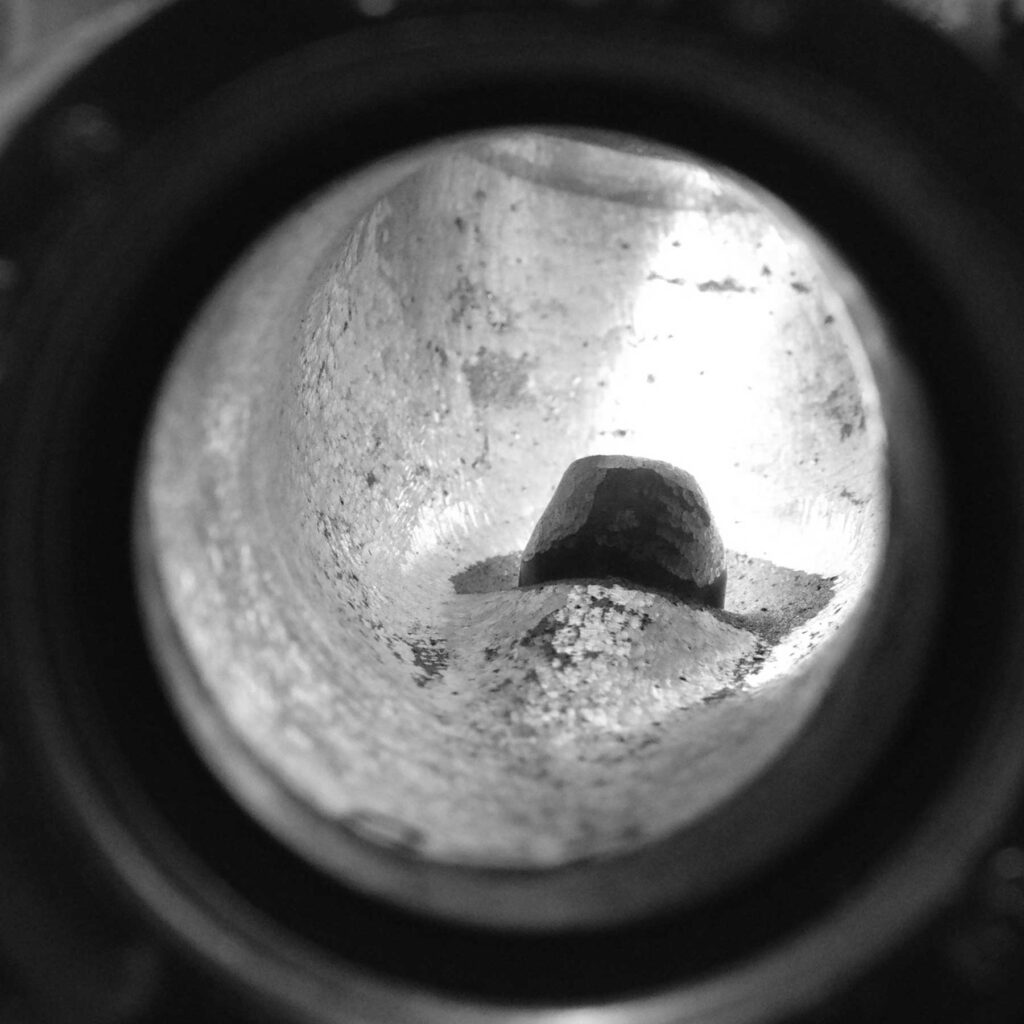
4. Intake and exhaust port polishing
We polish the intake and exhaust ports to improve flow velocity and filling efficiency. Improvement in power delivery at higher RPMs is especially noticeable. It is not a dramatic change, but throttle response becomes smoother overall.
5. Switch to SCEM plated cylinder
We replace the cylinder with a later-model (2003 and onward) plated unit with superior heat dissipation and wear resistance. The risk of oil burning is reduced and stable operation over the long term becomes achievable. Lower oil consumption makes this modification especially effective for touring use.
Each of these modifications is designed to “enhance comfort and performance while making the most of the DR200’s proven reliability.” Prioritizing local conditions and maintainability, we create a “touring-ready” setup you can trust for years to come. Turning a hardworking donkey into a spirited thoroughbred—that is Good Loop’s DR200.
Our shop owns a Djebel 200 (DR200SE) as a research and development vehicle, and we are happy to discuss tuning options for various models. For the latest used market prices, please feel free to contact us. We will propose a bike that matches your preferences and budget.