
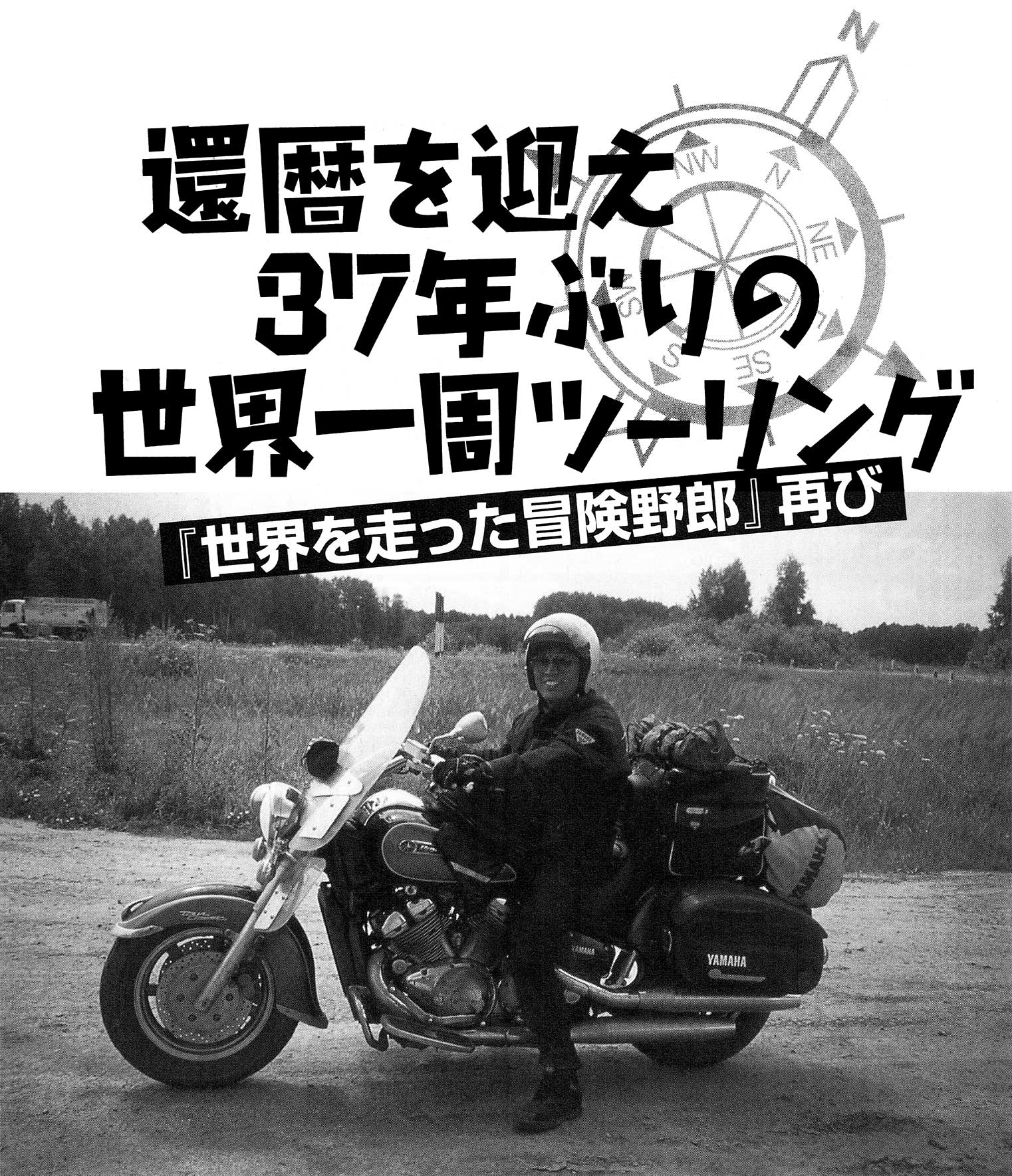
“The Adventure Rider Who Ran Around the World” Returns
Text and photographs by Shigeru Yoshida
Contents
- Episode 1: The Journey Left Unfinished—Into the Soviet Union (Russia)
- Episode 2: A Reunion After 34 Years in the Far North
- Episode 3: A Tearful Class Reunion on the Isle of Man After 35 Years
- Episode 4: Traveling Through 200 Years of Two-Wheel History in Europe
- Final Episode: Crossing the Snowy Rocky Mountains to the Journey’s End
Series Episode 1: The Journey Left Unfinished—Into the Soviet Union (Russia)
(Special Issue, Motorcyclist, January 2004)
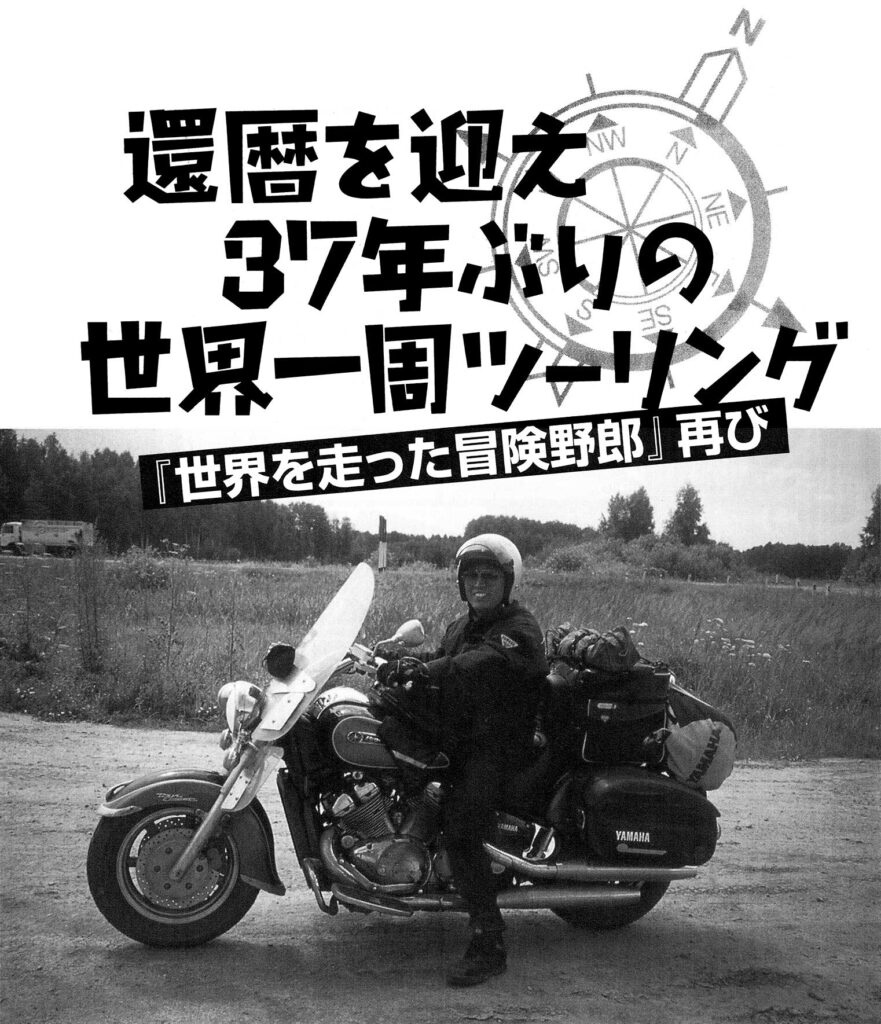
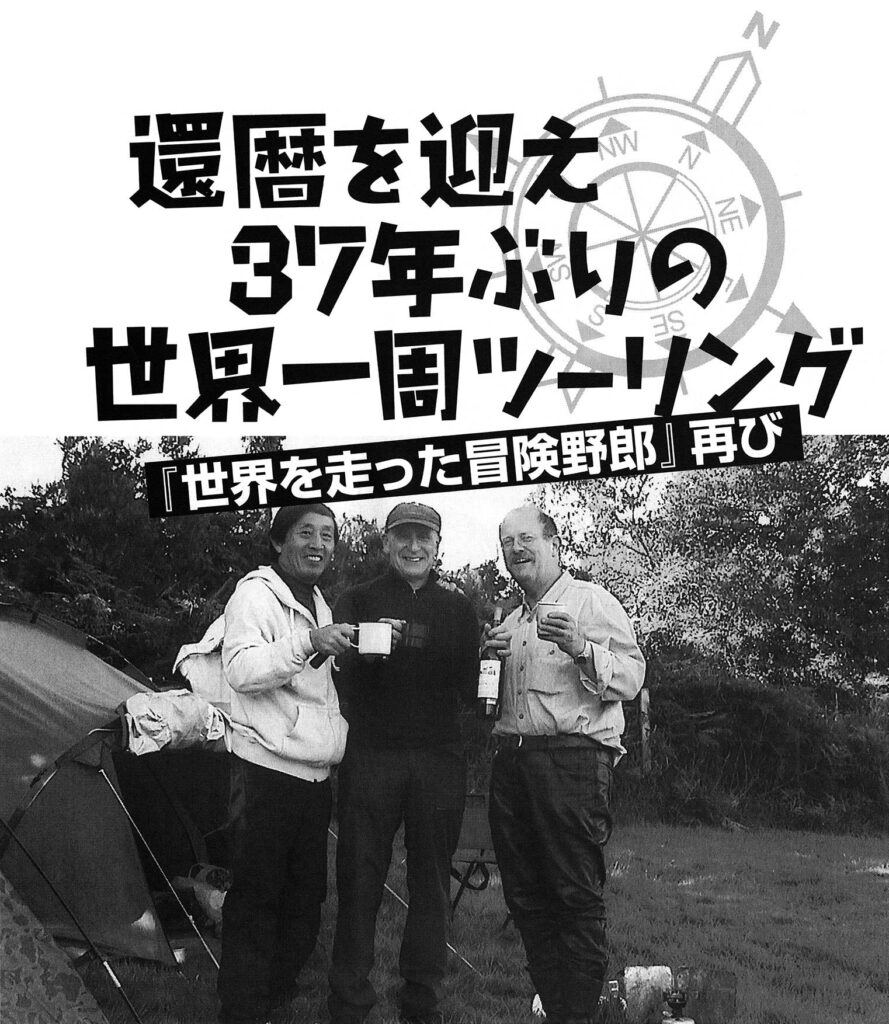
Setting out in July 1965, visiting 63 countries around the world, with a total distance of no less than 135,230 kilometers—a grand tour spanning two years and eight months. In the year Shigeru Yoshida graduated from university, he set out on his round-the-world trip on a Yamaha YDS-III, which was also featured in our company’s publication at the time, “The Adventure Rider Who Ran Around the World,” drawing tremendous response. Thirty-seven years later, Yoshida, who had walked the path of a working professional all those years, set out on a return journey around the world in June 2002, when he reached retirement age.
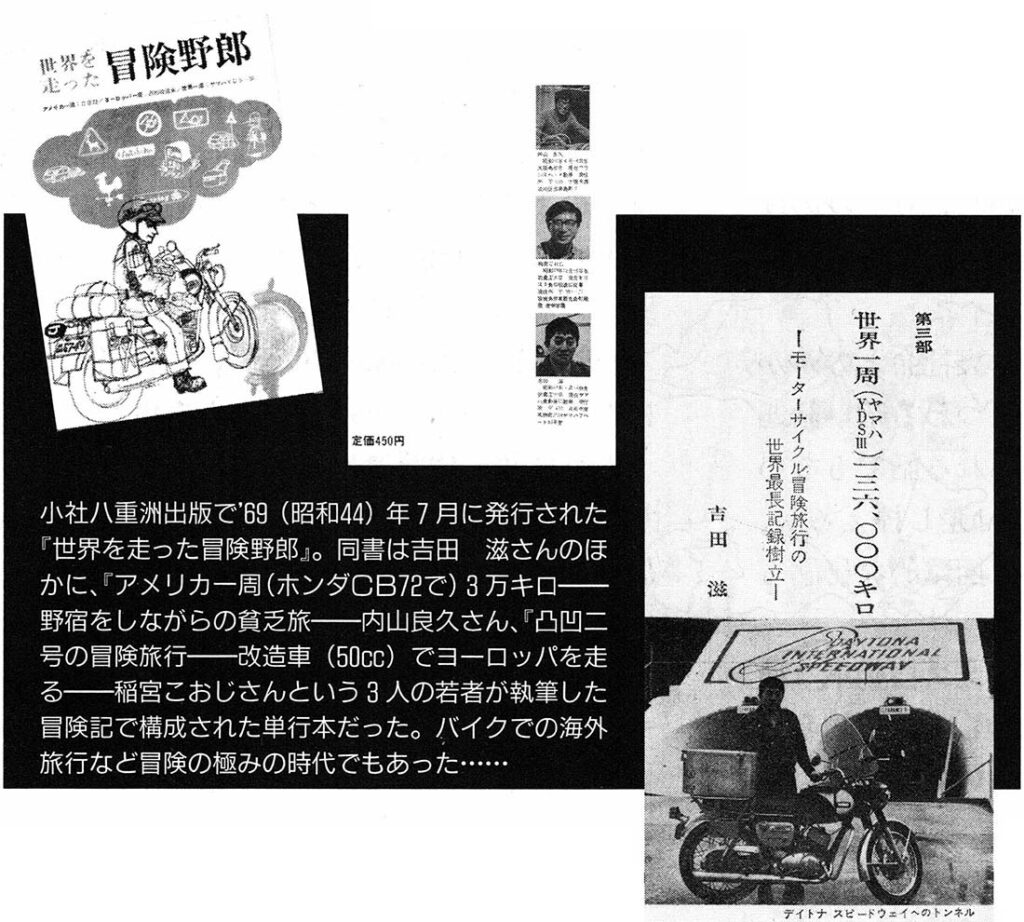
Shigeru Yoshida, born January 1942, from Tokyo, age 61.
Graduated from Musashi Institute of Technology in 1965, and in July of that year set out on his round-the-world trip on a YDS-III. After returning to Japan, he joined Yamaha Motor Corporation, where he was involved in the development of the Toyota 7 and large motorcycles. He later moved to Yamaha Motor USA, then served as Director of Service Information and founding director of the Yamaha Communication Plaza. Upon retiring at age 60 in 2002, he accomplished a 10,000-kilometer crossing of Russia via Siberia, fulfilling his long-held dream of entering the former Soviet Union that he had been unable to achieve 37 years earlier. He then crossed Europe and North America to complete a second round-the-world trip by motorcycle. Currently residing in Kohitomi Town, Hamamatsu City. Family consists of himself and his wife; both his eldest and second sons are working adults and independent. He is currently engaged in his life’s work—Yoshida Two-Wheel Research—under the slogan “Two wheels will save the earth.” “My first encounter with motorcycles goes back some 50 years, not long after the war, when people were still struggling to find food. I clearly remember a single moment when a cool-looking motorcycle passed in front of me. I made a childish vow at that moment: someday I would ride a motorcycle myself. That fleeting instant was my first encounter with bikes.”
The Challenge at 37 Years’ Distance
On June 19, 2002, I left my home on the shores of Lake Hamana on my beloved Royal Star, aiming to cross Russia. Early summer on Lake Hamana blessed me with clear skies, and the lake’s surface, reflecting the blue sky and fresh green of the season, was strikingly beautiful. It would be some time before I said goodbye to this familiar landscape. After crossing Russia, I planned to make a westbound round-the-world trip through Europe and North America. For me, who had retired from Yamaha Motor in January of that year after 34 years of service, this would be my second round-the-world trip by motorcycle, after 37 years. As I gripped the handlebar of the Royal Star, cutting through the refreshing wind, I was thrilled at the prospect of finally realizing the Eurasian crossing of Russia, yet I also carried a faint anxiety: would I be able to safely complete such a journey at this age?
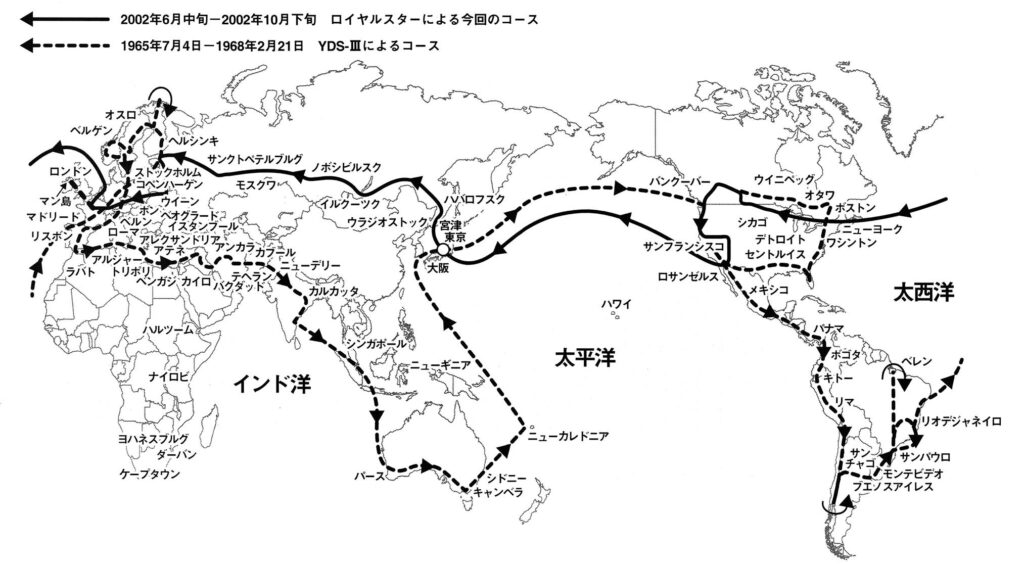
My first round-the-world trip dates back to July 1965. At 23 years old, I set out from Japan on a 250cc Yamaha YDS-III, rode through North America, Central and South America, and Europe. By August 10, 1967, I was riding my bike toward the border to enter the Soviet Union from Finland. Two years had already passed since I left Japan. My plan was to ride the Soviet Union all the way to Moscow, then tour the communist-bloc countries of Eastern Europe such as Poland.
At that time, America and the Soviet Union each possessed enormous nuclear arsenals and maintained a precarious balance of terror. The Soviet Union was shrouded behind the Iron Curtain, and it was difficult to catch even a glimpse of ordinary citizens’ lives. Wanting to see for myself how ordinary people lived, I attempted to enter the Soviet Union by motorcycle. However, the Soviet consulate in Helsinki, without any explanation, categorically refused entry by motorcycle. Having reached the Finnish-Soviet border, I had to swallow my tears with Soviet territory in sight. Fortunately, the communist-bloc countries such as Poland at that time were issuing transit visas permitting stays of up to 72 hours. I found a coal ship heading from Helsinki to Poland and boarded it with my motorcycle.
I landed in Gdansk, Poland, and my journey through the communist bloc began. From Poland, I passed through East Germany, Czechoslovakia, Hungary, Romania, Bulgaria, and Yugoslavia at the time, arriving in Istanbul, Turkey. After that, I proceeded westward along the Mediterranean to Algeciras in Spain, crossed the Strait of Gibraltar to Morocco, and rode through Africa, the Middle East, West Asia, Southeast Asia, and Australia, returning to Japan in February 1968. The distance I covered by motorcycle was approximately 136,000 kilometers, nearly three and a half times around the earth over two years and eight months. I visited 63 countries, but the Soviet Union was not among them. The fact that I had been unable to enter the Soviet Union left me with a sense of having left something important undone. I was certain that a day would come when I could ride through there. I didn’t know when, but I thought that if the opportunity came, I absolutely wanted to cross the border between Finland and the Soviet Union.
The First Hurdle: Obtaining a Russian Entry Visa
Upon reaching retirement, I immediately selected about four travel agencies that specialized in Russian tours and visited them. Every agency said that to travel in Russia, I either had to join a tour or arrange a package with flights, trains, and hotels booked and purchase vouchers—only then could I apply for a visa. They dismissed the idea of riding across Siberia alone on a motorcycle as extremely dangerous. They said that if I really wanted to go, I would need to hire a Russian guide, and they would lead me in a car. I would have to pay in advance for everything—the guide’s daily rate, accommodation, meals, guide fees, and car expenses—not to mention the cost of returning the guide and the car to the starting point. Even then, they couldn’t guarantee the visa would be approved, though they said we could try. I had no intention of spending enormous sums of money on what amounted to a supervised journey. When I returned home and told my wife what the travel agencies had said, she casually replied,
“Why don’t you just scout it out this year on the Trans-Siberian Railway?”
It was obvious she was hoping that in time I would give up the idea of going by motorcycle.
During the last five years of my employment at Yamaha Motor, I was involved in the establishment and operation of the Yamaha Communication Plaza. I came to know many people from Japan and abroad who visited the Plaza. Among them were some motorcycle travelers from overseas. I recalled a Dutch couple, Rob and Daphne, who came on a sidecar motorcycle trip through Russia on their way back to Europe. Since they had already returned home, I sent them an email asking how they had obtained their Russian entry visa.
They replied right away. They said they had obtained an invitation letter from a Russian organization that served as their guarantor, and had obtained their visa based on that. They also gave me the name of the Russian organization that had provided the sponsorship. I immediately called the organization in Russia, and a Russian staff member answered my questions in accented but fluent English from across the ocean. When I told him of my hope to cross Russia by motorcycle, he promptly prepared a list of information needed to write an invitation letter and faxed it to me quickly. I immediately faxed back the required information.
About two weeks later, an invitation letter arrived by fax. On top of that, they said payment could be deferred. I was skeptical about whether I could actually get a visa with this invitation letter, but I promptly went to the Russian Consulate in Tokyo and submitted it attached to the visa application form.
A week later, on April 10th, I lined up at the gate thirty minutes before the Russian Consulate opened, and the moment it opened at ten o’clock, I went to the window first in line that day and handed over my passport receipt. The Russian man in charge silently handed my passport back. When I looked inside my passport, there it was: a three-month visa valid from June through September. Joy and relief rushed through my entire body all at once. I had passed the first hurdle to enter Russia. I quickly wrote a thank-you letter to the Dutch couple who had given me advice.
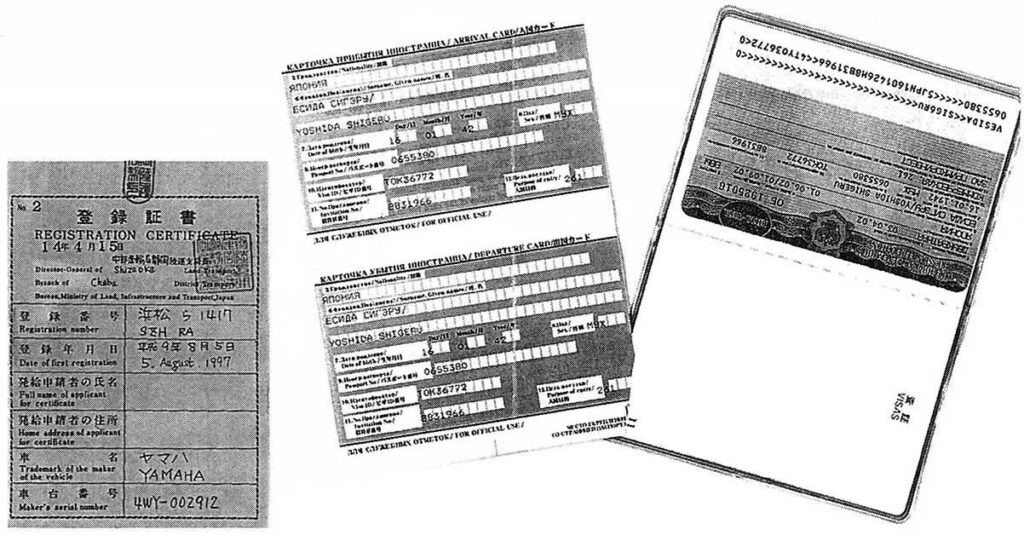
Boarding a Russian ship at Fushiki Port
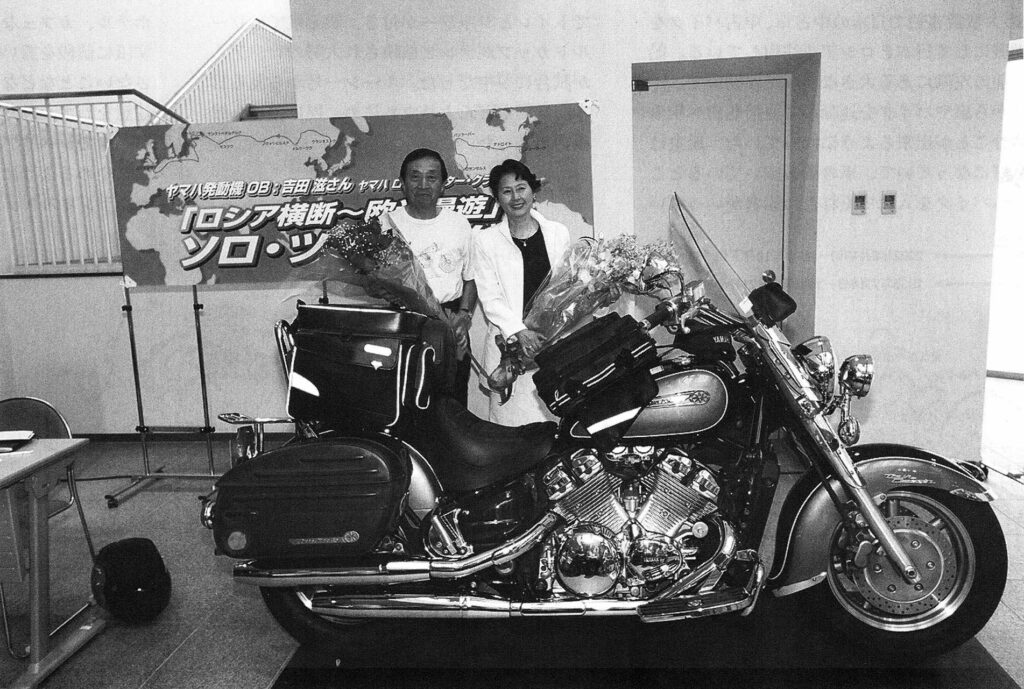
On June 19th, I stopped by the Yamaha Motor headquarters in Iwata, the Communication Plaza, where I received a grand send-off from Chairman Hasegawa and many others, then headed straight for Fushiki Port in Toyama. The weather was fine and I drove smoothly along the approximately 400-kilometer route, arriving at Fushiki Port at the base of the Noto Peninsula at 6 p.m.
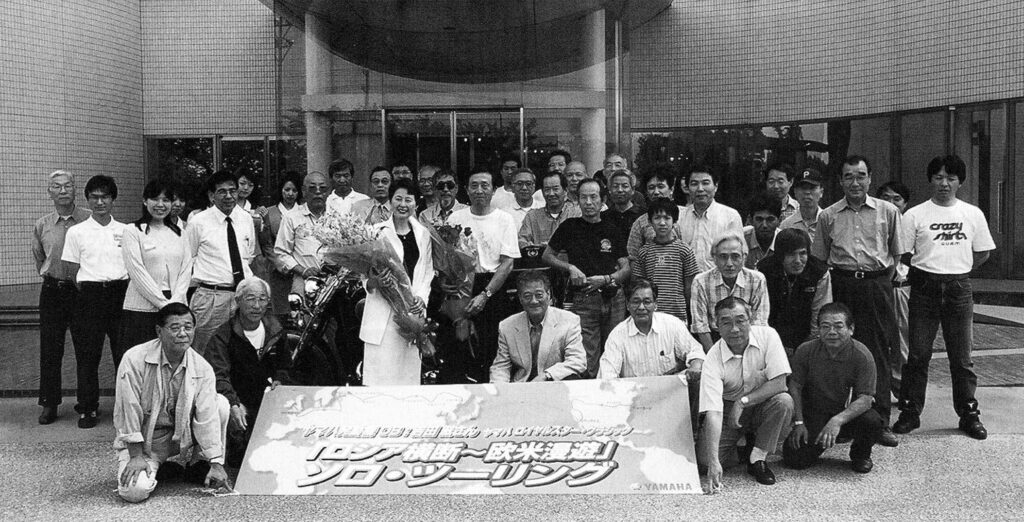
On the afternoon of June 21st, I boarded a Russian ship. My second son, Jun, representing the family, came from Tokyo to see me off, and we met at the station in Takaoka before heading to Fushiki Port. A large ship with a pure white hull was docked at the port, much bigger than I had expected, and it was crowded with many Russians and the used cars and used motorcycles being shipped to Russia.
The Russian ship I was boarding, the Rusy, is a large 13,000-ton cargo-passenger vessel that shuttles back and forth between Japan and Russia loaded with Japanese used cars and used motorcycles. A large hatch on the front left side of the ship was open so that cars and motorcycles could be driven directly from the wharf into the cargo hold. The hold was two stories tall, and they placed the motorcycles in the empty spaces between the cars. Once the cargo hold was full, they used cranes to hoist cars up and load used cars and used motorcycles all over the deck.
Aluminum ingots from Russia were stacked here and there at Fushiki Port. We later learned that these Russians were used car buyers and drivers. About 180 of them—as many as there were cars—boarded the ship. I was the only Japanese person; the other passengers were two British people returning to Europe after coming to support the World Cup, and three European motorcycle travelers. Martin and Barbara, a Swiss couple, were both riding Honda Africa Twins, and Angela, a German woman, was riding a Honda Dominator. They had met in New Zealand, then traveled together in Japan for about three weeks before coming here. All three were in their thirties and had been traveling by motorcycle for over two years since leaving their countries. As I watched them speak with sparkling eyes, I saw myself from 37 years ago reflected in them. The Rusy left the wharf at the scheduled 6 p.m. After 36 hours crossing the Sea of Japan, I would be landing in Russia.
There was a nice restaurant on board where young waitresses in miniskirts served meals course by course, and the accommodations were very comfortable. The meals were included in the ship fare (50,540 yen including the motorcycle), and since the voyage across the Sea of Japan was quite rough, I didn’t have much of an appetite, so it was enough to eat only what I felt like eating. The cabin was a private room with a toilet and shower, and in the entertainment room the World Cup was being broadcast on television with many Russians glued to the match. The Sea of Japan as seen from the Rusy was covered with gloomy clouds, the wind was strong, and the sea was rough.
Landing at Zarubino, a port near North Korea
On June 23rd, the ship’s motion had calmed down considerably from the previous night. I got up at seven and went up on deck. I could see the Far Eastern Eurasian continent before me for the first time. Under gloomy clouds even in summer, the cold-feeling dark navy sea and the dark green continent made me feel the harshness of winter. The temperature was around 15 degrees Celsius, and it was chilly. Since the immigration office in Vladivostok was closed for construction, all passengers were dropped off at Zarubino, located about 250 kilometers to the southwest near North Korea. The wharf had only a railway siding running in, and was otherwise a bleak, empty port. After passing through immigration and customs, three old buses were waiting, and we boarded them immediately. The Royal Star was left on the ship and would be sent to Vladivostok for customs clearance.
The bus was so full that people were sitting in the front passenger seat. Sitting next to me was a Russian from Nakhodka who imports car parts and tires from Japan and goes to Japan to buy stock once every three months. He was very concerned about me riding the Royal Star across Siberia to Europe, and during the five and a half hour bus ride to Vladivostok, he gave me advice about traveling in Russia. In Russia, unlike Japan, you shouldn’t trust people easily, the police and the mafia are in cahoots, when you buy gasoline at a gas station or pay money at hotels and cafes, you must always have the price written down on paper to confirm it, and you shouldn’t pull out large bills, and so on—he advised me about many details. In the end, he got serious and told me it was very dangerous to ride a motorcycle across Siberia and I should give up the idea.
About half of the 250-kilometer road to Vladivostok was unpaved, and the paved sections were simple asphalt that was flaking off. Dust rose in great clouds and seeped through the gaps in the rattling windows into the passenger area. I got covered in dust and my throat gave out on the first day. As we passed through several farming villages, the Russian next to me kept disparaging them, saying the houses and farm equipment were all old and falling apart. Indeed, in the yards of every farm, red-brown, rusty farm equipment was left abandoned, with no new equipment visible to replace it. Russia has long neglected investment in production facilities, and as a result it faces the major problem that many production facilities beyond their useful lives have become obsolete and productive efficiency has declined significantly. How quickly this problem is solved will be crucial to the country’s future development.
Iron Tiger
I arrived in Vladivostok at 5 p.m. Just as our bus reached the port, the Rusy was entering the harbor. I thought it might have been easier to stay on the Rusy, but the immigration office in Zarubino would not permit it. But the five and a half hour bus journey covered in dust was no hardship at all. I got a lot of information from the Russian next to me and was able to see with my own eyes a part of the Russian Far East from Zarubino to Vladivostok. We learned that day that the motorcycle would not be unloaded from the ship, so I decided to head to Hotel Renaissance, which I had reserved from Japan for 50 dollars per night with breakfast included.
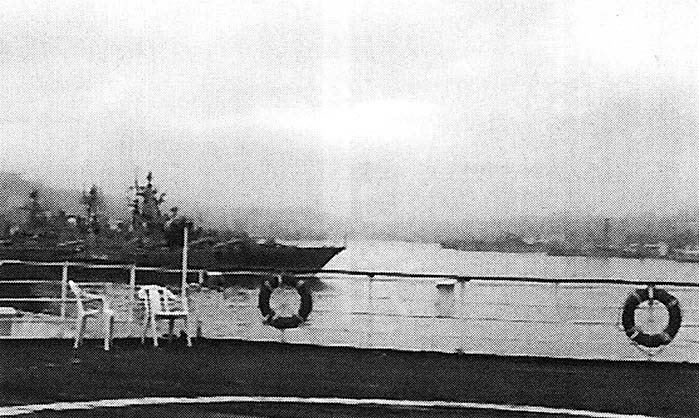
The hotel was built in a hard-to-find location, up a steep hill from the port and off the main street. The three-story building looked old from the outside, and at the entrance a man with an unfriendly expression stared at me intently. I went in anyway and found a reception desk where a woman sat alone. Even though she noticed me coming in, she said nothing and kept a blank expression. I handed her my reservation slip and told her I had booked for two nights. She looked puzzled, studied some documents for a while, then told me to hand over my passport. She explained that all travelers must report to the police, so the hotel keeps passports at reception. I was quite shocked by her unfriendly manner, but I later learned during my travels in Russia that this was standard practice in Russian hotels and shops. Foreign travelers must report to the police in every town and village where they stay, and when staying at a hotel, the hotel handles the report on their behalf. Inside, the hotel was surprisingly neat and well-renovated, unlike its shabby exterior, and the unfriendly man at the entrance turned out to be a security guard hired by the hotel.
The next morning I left the hotel and walked through town down the slope to the port. Vladivostok lies at 42 degrees north latitude, the same as Sapporo, and is the southernmost major city in Russia. It is a beautiful town with lots of greenery and many hills. Over 90 percent of the vehicles are Japanese, but the townscape, roads, and people are so completely different from Japan that at first the Japanese cars did not look like Japanese vehicles.
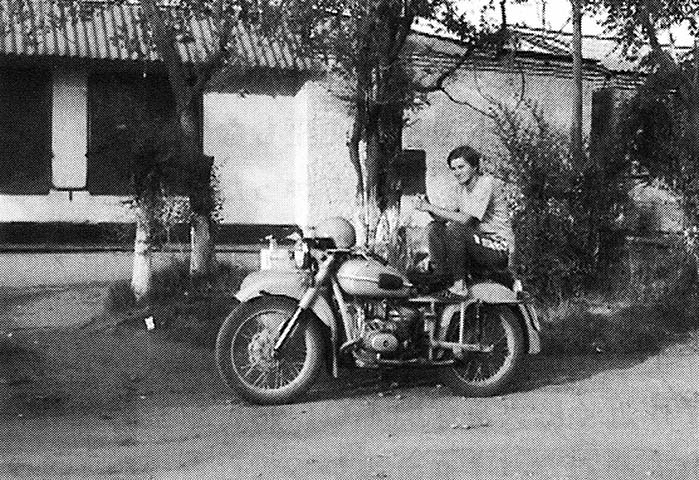
A crowd of commuters got off the ferry. Everyone walked hurriedly. Morning rush hour is the same in any country. Past the military port, we headed to where the Rusiy was moored, met with three European passengers who had stayed on the ship, and went to the cargo loading and unloading area of the ship hold to unload the motorcycle. We unloaded the bike from the ship at 9:30 and put it in the bonded warehouse. I thought it would come out right away, but we were kept waiting for three hours at the shipping agent’s office. The customs office was in town, so we went back and forth between the port and customs several times, waiting at both for two days. Finally, on the morning of June 26 at 10:30 we went to the bonded warehouse, paid the handling fee of 30 rubles (about 120 yen), and the customs clearance that had taken three days was complete.
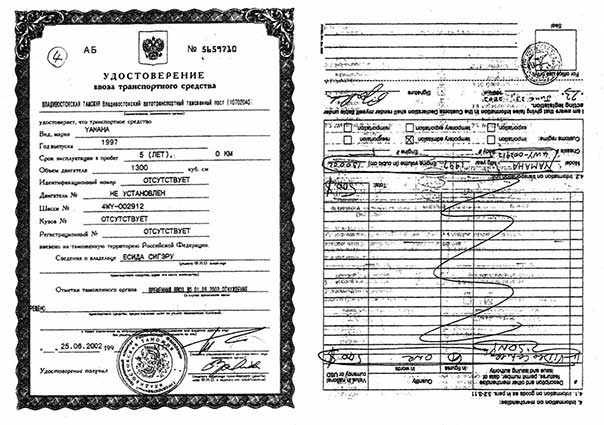
About 15 minutes by motorcycle from the center of Vladivostok, in the suburbs, there was a warehouse combined with an office surrounded by a concrete wall, and in one corner was the clubhouse of a motorcycle club called Iron Tiger. A formidable security guard stood watch at the entrance. This club takes care of motorcycle travelers who visit Vladivostok and is well known among motorcycle enthusiasts. I and the three Europeans all knew about the club, and we received their hospitality for two days. With about 20 members, in addition to club activities they import used Japanese motorcycles, maintain them, and sell them throughout Russia.
The club president, Mika, was 40 years old and traveled to Japan several times a year to buy used motorcycles. He welcomed me warmly, mentioning that he had passed through Hamamatsu a few times. On the first floor was a workshop where 20 to 30 motorcycles under maintenance were scattered about haphazardly. The second floor was the clubhouse with a large meeting table, and we slept in the open space next to it. For the first time in decades I slept in a sleeping bag, but my sleep was shallow and not like when I was in my twenties. On my previous motorcycle trip I had slept soundly in a sleeping bag everywhere I went.
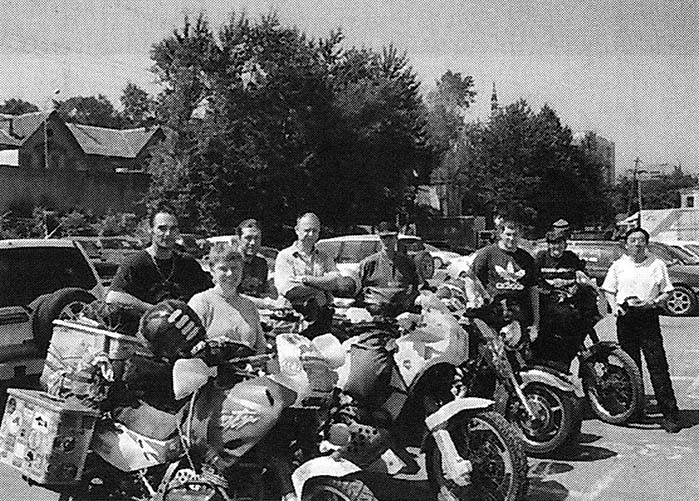
Setting out on a Eurasian continent crossing
On June 27, I got information from Mika, the president, about road conditions and motorcycle situations in Russia and took a commemorative photo with key members of Iron Tiger. One member, saying it would be most appropriate for riding the Royal Star, gave me a belt that the old Russian military had reportedly used more than 60 years ago. For members who see all kinds of motorcycles, the Royal Star was an object of envy. As soon as I put on the belt I received, I got applause from the members. Later, during my travels in Russia, there was not a single person who did not know the design of this belt’s buckle, and it became a precious tool for getting people to accept me with friendliness.
At 2:30 in the afternoon, I finally set out on the Eurasian continent crossing. One member guided us until we reached the main highway. We began riding smoothly on a two-lane paved road with plenty of traffic. I rode carefully because the area around manhole covers was depressed 10 centimeters below the road surface, and in places the pavement was peeling away with holes opening up. After about 100 kilometers, it became a one-lane road and traffic decreased remarkably. After about 200 kilometers we arrived at a small town called Ussuriysk. I bought drinks and food at a kiosk and had a late lunch. Every small village and town had kiosks, and food was abundant. I made sure never to run out of water, purchasing bottled mineral water. The sun was still high but it was already 6 p.m. Motorcycles and bicycles were scarce, but I began to see Russian-made Ural sidecars from time to time. Farmers used them as transportation and to haul cargo. The Ural is equipped with a horizontally-opposed engine, has continued being manufactured for years without changing its design, and still produces around 5,000 units a year—it looks like a classic motorcycle at first glance. A motorcycle called a Niyeppul, somewhat larger than the Ural, is also produced in small quantities.
The weather was good, perfect riding weather, and the four of us rode smoothly. On the first day, we had ridden 350 kilometers by around 9 p.m. and entered a village called Kirovskiy. Mika had told me that Kirovskiy means “clear stream” in Japanese. The small stream flowing beside the road was indeed clear in places, but unfortunately there were many people dumping garbage, and it was clogged with trash—hardly a clear stream. Despite the vast land and low population density, it was unfortunate to see towns and villages polluted with garbage.
We refueled at a gas station, and I rode in a Crown to ask a villager at the same station about lodging. He was kind enough to guide us all the way to the inn. It was located 200 meters off the main road in what looked like an ordinary house and was hard for travelers to find. An inn in Russian is called a “gastinitza.” Looking closely, there was a small sign at the entrance. One night was 250 rubles (about 1,000 yen)—surprisingly cheap—but the corridor was dark and the door looked like it might fall apart. The toilet had no seat, the shower equipment was rusty, and everything was old. The bed looked like it might break, but the sheets and pillowcases were cleanly washed, which was a relief.
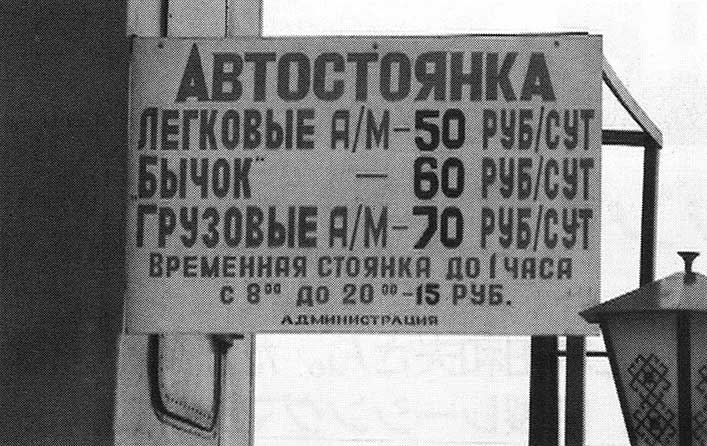
The inn had no garage, so the innkeeper’s son found a large building with a big door nearby and we left the motorcycles there. In Russia, a parking lot is called a “stayanka,” and every town of reasonable size had one. It was surrounded by barbed wire, had a gatekeeper’s lodge, and a gatekeeper slept there at night. At night the gate was locked and fierce dogs were let loose inside. The going rate for leaving a bike overnight was 30 rubles (about 120 yen) to 100 rubles (about 400 yen), and motorcycles were charged the same as four-wheeled vehicles. After that, in small towns and villages without a stayanka, I looked for locked garages or warehouses like this one and left the bikes there.
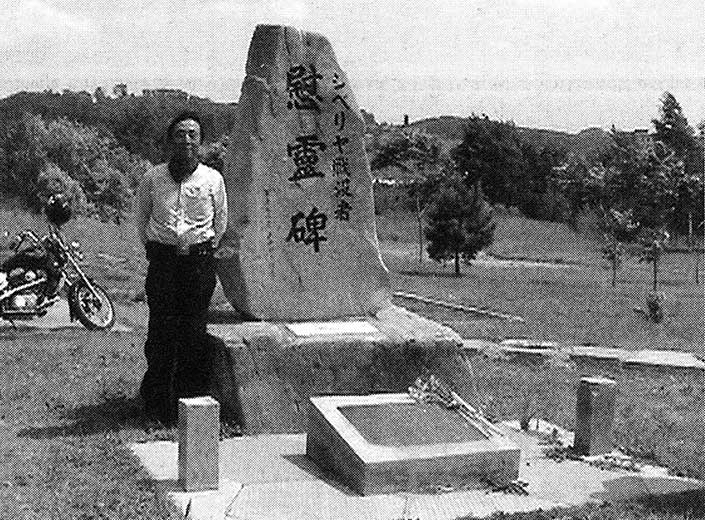
June 28th, today we’re scheduled to reach Khabarovsk. On the bus from Zarubino to Vladivostok, a Russian parts dealer sitting next to me told me about a Japanese graveyard located 70 kilometers before Khabarovsk, where Japanese people were detained by Russia after World War II. He marked it on my map. I noted the location: about one kilometer past two railroad crossings, on the left side. I noticed a monument standing about ten meters off the main road. I signaled to the three people traveling with me, and when we stopped our bikes at the monument, it was unmistakably the Japanese graveyard. In the taiga forest beyond, nearly a hundred stone pillars stood quietly. With no houses nearby and complete silence, I felt strongly that we had truly entered the Siberian wilderness. I bowed deeply in respect to those who had lost their lives working under forced labor with limited food during the severe winter, and as we continued on, the road gradually led us into the town of Khabarovsk. Khabarovsk is located at 48 degrees north latitude (the same latitude as the middle of Sakhalin) and sits on the banks of the Amur River—a beautiful town.
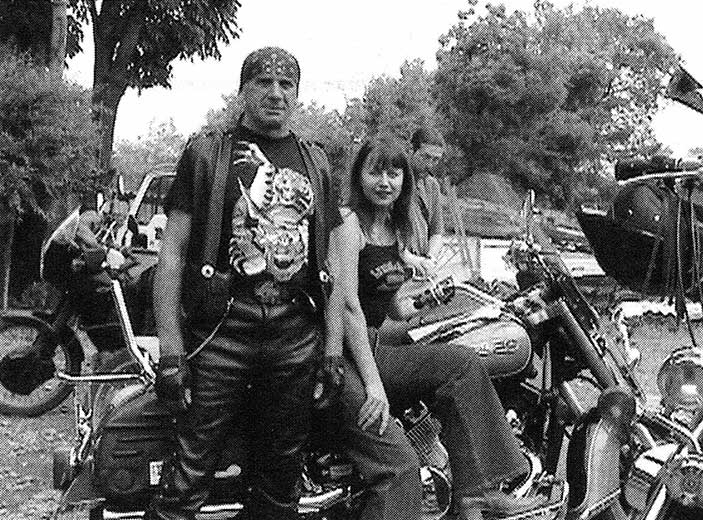
Lynx of Amur
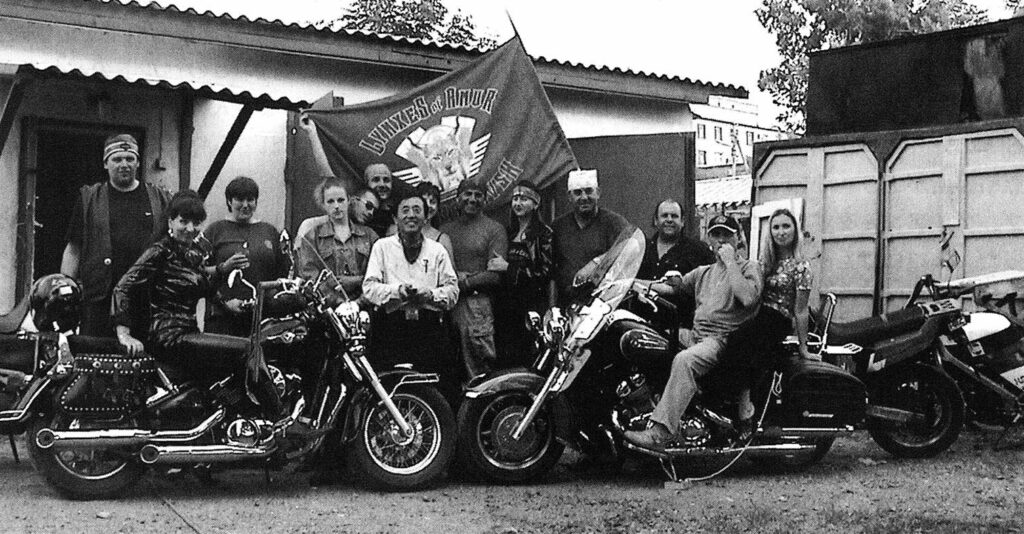
In Khabarovsk, we first visited the motorcycle club Lynx of Amur (the lynx of the Amur River), and Vice-Chairman Slava picked us up by car at Komsomolskaya Square in the town center. Following him to the motorcycle club’s workshop, I found they were also importing, servicing, and selling secondhand Japanese motorcycles. They also built and sold modified Ural choppers made in Russia. All the club members were couples dressed in top-and-bottom leather touring gear, enjoying their rides together. No matter what country you’re in, motorcycle enthusiasts naturally get along.
I had heard that Siberia has a lot of mosquitoes in summer, but it was even worse than I’d heard. Khabarovsk is especially full of mosquitoes, and even with insect repellent spray applied, they didn’t care whether I was in town or in the workshop—they got me everywhere.
On the second evening, since it was Sunday, the club held a grand welcome party for us. Starting in the evening, the men prepared the space, made a fire, cooked soup in a large pot, and went out to buy beer in empty plastic bottles. They told me that buying beer by the liter costs less than half the price of buying cans. They also bought vodka. The women washed dishes, arranged them on tables, cut vegetables and prepared salads, and everyone worked together to get ready. The Armenian soup they had simmered for two or three hours was delicious. Since they gathered ripe vegetables, there was no way it could taste bad. Throughout the party, they kept the fire going and threw leaves on it to smoke out the mosquitoes. For two nights I slept on an air mattress laid on the concrete floor of the clubhouse, in a sleeping bag, but I was bitten by insects and didn’t sleep well, ending up somewhat sleep-deprived.
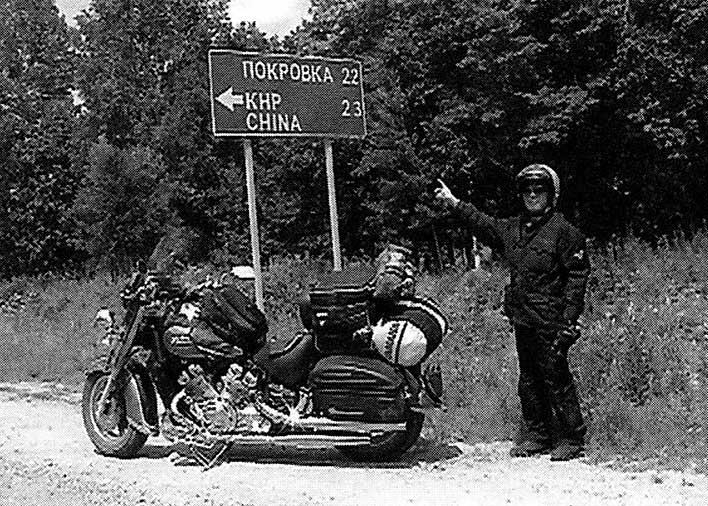
Siberian taiga forest, wetlands, and rough roads
June 30th, we said goodbye to the members of Lynx of Amur and left Khabarovsk. After crossing the long bridge over the Amur River and riding along roads that border Chinese territory, I found we were only 23 kilometers from the border at the closest point. Since we left late that day, we rode about 200 kilometers and stayed in the town of Birobidzhan. The night brought fierce thunder and rain, but by dawn the rain had lessened, and by the time we departed it had stopped, though the afternoon brought high humidity from the rainfall and it became muggy—the temperature reached 35 degrees Celsius.
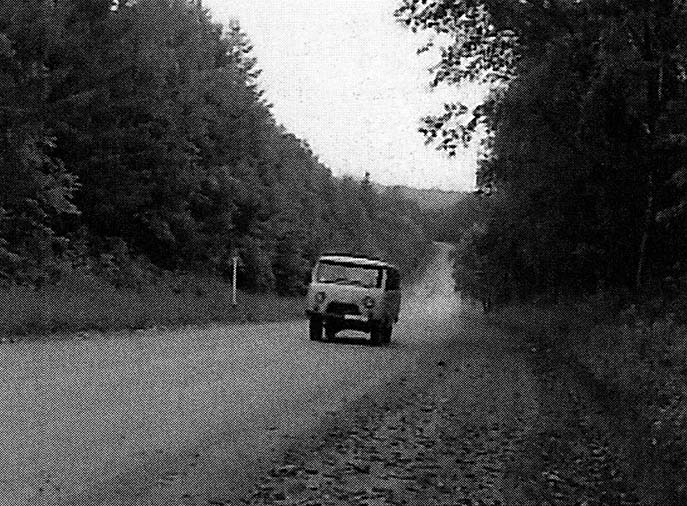
On unpaved roads, controlling the Royal Star’s 350-kilogram bulk was difficult. Especially on stretches with thick gravel, both wheels would lose grip, the bike wouldn’t go straight, and it would slide sideways. I paid careful attention to avoid oncoming traffic, but once I went off the road on a curve and fell, breaking the fog lamp. Two Russians got out of a passing car, and Swiss Martin, who was riding behind us, caught up, and the four of us together pushed the bike back onto the road. My beloved bike got some scratches on the windshield and tank, but the engine and frame were fine and we continued on. All around, birch, larch, and black fir taiga forest stretched endlessly, with wetlands spreading out here and there. Various wildflowers bloomed profusely, celebrating the short summer and soothing my heart.
When we reached Selemdzha River, a tributary of the Amur, there was no bridge and the river was about 100 meters wide. Fortunately, we found a small ferry that could carry about ten trucks and cars. After waiting about ten minutes and boarding, we crossed to the other side in about five minutes. After leaving the ferry and passing through a small town, the rough roads continued, and as the sun began to set, the temperature dropped suddenly. No matter how far we rode, taiga and wetlands continued on, and I desperately hoped to see the next village or town. At ten in the evening we arrived in Belgorsk. Today we had ridden 511 kilometers with about half of it on rough roads.
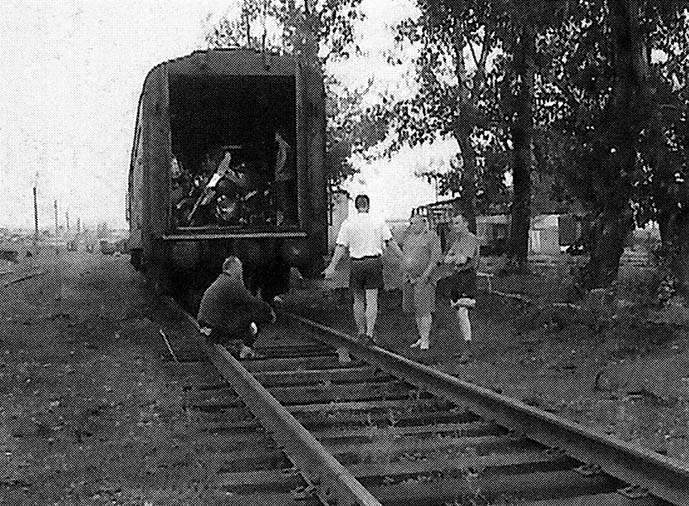
Loading the motorcycle onto a freight train in Shimanovsk
July 2nd, we rode 213 kilometers to Shimanovsk. From Shimanovsk onward, while there are local roads, there are no bridges over the rivers and no ferries. For the 1,000-kilometer journey to Chita, we would need to load the motorcycle onto a freight car. I had researched this in Japan and knew it, but this was the biggest difficulty. First, I had to find a freight car to load the bike on. When I asked the staff at the station ticket office, they said they didn’t handle the procedure for loading bikes onto freight cars there. I found a building dedicated to freight cars about 100 meters from the station and began negotiating with staff there. It seemed things weren’t moving forward, and they asked me to wait for the person in charge to arrive. In the end, the conversation didn’t progress that day, so I stayed at Station Hotel inside the station. The station had a shop like a Japanese convenience store where I bought food and drinks for dinner. After securing a hotel room, I found a garage about five minutes away from the station and left the bike there.
The next morning I woke at seven o’clock and was thinking of having some tea when suddenly I got word that if I brought the bike by eight o’clock, it could go on the freight car. I quickly packed my things and took a taxi to get the bike. If I missed this chance, I didn’t know when I’d get another opportunity to board a freight car. I rode the bike back to the station and, following a staff member’s instructions, crossed several railroad tracks and reached the freight car for loading the motorcycle. The information I had obtained before departure said it would be an open-roof car, so I was prepared for that, but it turned out to be a roofed car.
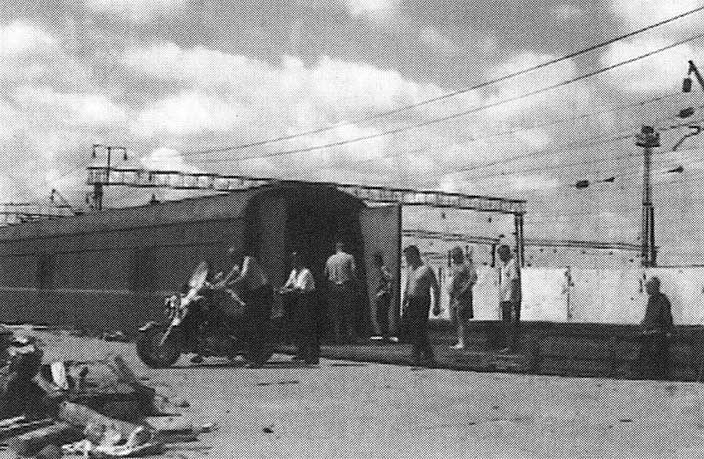
Inside the freight car were already six used vehicles from Japan stacked two high. They said they would load my bike in the empty space at the back. With no platform and the freight car standing more than one meter high, I wasn’t sure how to get the bike up, but in the end eight of us pushed the 350-kilogram motorcycle up a board ramp onto the car. Six of them were Russian buyers who transport used vehicles from Japan and drive them overland into the Siberian interior.
I negotiated the price with the attendant who had guided us to this spot, and the fare came to 2,500 rubles for the bike and me—about 10,000 yen. However, I learned that the freight car wasn’t going all the way to Syktyvkar as I had been told before departure, but only to Chernye Shevski, about 200 km short of Syktyvkar. Since the cars also loaded on the same freight car were getting off at Chernye Shevski and continuing from there, I figured the bike would manage somehow too.
The couple Martin and Barbara were heading another 200 km farther to the next station, so we parted ways. From here on, there are no bridges across the river, so I would have to cross the railroad bridge on the bike. Angela, like me, said this was as far as she could go, so she got on the same freight car. From here to Chernye Shevski was about 800 km away, and it would take 24 hours by freight train. Since freight trains don’t have passenger cars, we had to bring our own food. In the 30 minutes before departure, I hurried back to the station and bought food and drinks for about two days. The freight car was then moved around the yard several times and incorporated into a freight train of about 50 cars. We finally departed from Syktyvkar just after noon.
Serial Report No. 2: A Reunion After 34 Years in the Far North
(Special Edition Motorcyclist, February 2004)
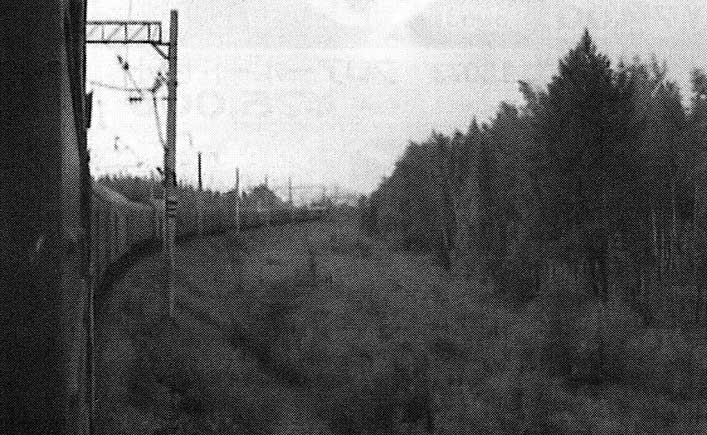
The Sleeping Quarters in the Freight Car Were Heaven
The freight train had a conductor’s compartment every few cars, and I was allowed to sit in the cramped compartment to have my first meal of the day. Fortunately there was a toilet next to the conductor’s compartment, but it was so filthy that it was better to go to the nearby grass when the car stopped.
The conductor here spoke a little English. He was 36 years old with two children—a 12-year-old daughter and a 7-year-old son. He had been deployed in the Afghanistan conflict, had been hit by shrapnel and severely injured, and returned home after three months. He made tea for me on an electric coil at dinnertime. The meal was smoked fish from Lake Baikal and bread, and he offered me one of the three pieces. It was salty, but it was a flavor that suited Japanese tastes. In return, I shared ham and cheese I had bought at the station. He owned three bikes and was a real motorcycle enthusiast, with a Russian Ural and a Dnepr. He said Russian bikes break down a lot, and pointing to my Royal Star loaded on the freight car, he joked that he wanted a Japanese bike.
Outside the window, Siberian taiga forest and marshland stretched endlessly, with white birch trunks standing out beautifully against the vivid green. Around 10 o’clock it turned to sunset, and the western sky was painted red.
The conductor spoke to the driver of the used car, and I was allowed to sleep in the passenger seat. Fortunately, the conductor’s compartment had a bunk bed, and Angela was able to sleep on the upper bunk, which seemed to reassure her. Using a flashlight, I squeezed through a gap barely wide enough to fit my body sideways and crawled into the passenger seat. I had prepared myself to sleep in a sleeping bag in the open on a flatbed freight car, so sleeping inside the car was heaven. The driver was already fast asleep in the driver’s seat. There was only one small window at the front of the freight car, and the inside was pitch black. I thought that if there were a fire, the narrow passage would make it impossible to escape, but I was so tired I fell fast asleep.
The next day the weather was fine and I felt more at ease. I sat on the floor with the freight car door open and slowly watched the scenery outside, savoring Siberia’s nature. The freight train slowly wound its way through the gentle slopes of the Stanovoy Range. There were no tunnels ahead, and there was a station about every 100 km, where we would stop each time, but the stops were of varying lengths, and there was no signal for when the freight train would start moving again. About the only thing I could do was stretch on the platform or walk near the entrance to move my body.
Farms were scattered around the stations, and where roads connected station to station and village to village, they were cut off when they reached rivers because there were no bridges. In winter the rivers freeze, so it seems possible to get through on a two-wheeled off-road motorcycle. It seemed it would still be a long time before I could ride a bike through this area in summer. Once this section becomes passable, traveling through Siberia to Europe would become much easier. On the other hand, if many more vehicles travel here, this vast natural landscape will be destroyed. We have to think about both environmental conservation and the convenience of development.
The Lake Where Genghis Khan Healed His Wounds
Around 11 a.m., we arrived at Chernye Shevski, the final station of the freight train. The freight cars of the long train were brought alongside the platform one at a time, and the cars and cargo began to be unloaded. Our freight car’s turn to unload came about two hours later. Russian travelers on the same freight car helped me get the 350 kg Royal Star down from the car. Before unloading the Royal Star, I collected and cleaned up nails, wire, and metal scattered on the platform that might have caused a puncture. Fortunately, I had made it from Vladivostok without a single puncture. Repairing a flat on a large bike is tough work.
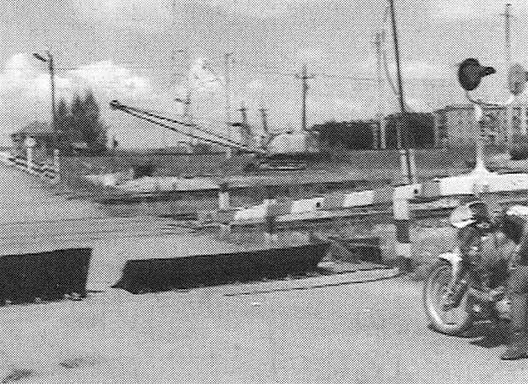
At 3 o’clock I mounted the bike again and departed from Chernye Shevski station. About 1 km ahead, we came to a crossing of the Trans-Siberian Railway we had traveled on. There was just a locomotive stopped on the crossing and the crossing gate was down, but looking closely, the iron plate embedded in the roadway on the tracks side was lifted toward us. The iron plate was blocking the way, preventing cars from entering the crossing, so we waited. Once the locomotive moved away from the crossing, the iron plate lowered to the same level as the roadway and the crossing gate went up. In Russia, there’s always a crossing house with a crossing keeper, and this kind of safety measure was in place.
On July 4th, rain that had started in the evening showed no sign of letting up by morning, so we set out in the rain, but it cleared up in the late morning and the sun came out. Suddenly it became very hot and humid. As we were pleasantly heading toward Ulan-Ude, we came upon a beautiful campground surrounded by a lake and forest, and Angela suggested we stay there that night. I could see Russians swimming in the lake and families camping, enjoying the short summer. It was only 3 p.m. and I wanted to ride for another two or three hours, but we were exhausted, so I agreed.
The tent I had purchased in Vladivostok was finally put to use. I remembered that Mica from Iron Tiger had mentioned that there was a beautiful lake around here where Genghis Khan’s armies had healed their wounds. When I asked Ian, the owner of the campground, it turned out to be exactly this lake. The water apparently contains compounds that are effective for healing wounds. The water was as clear as it must have been in the 13th century when Genghis Khan lived.
Ian prepared venison barbecue for dinner. First he got the fire going with firewood, then boiled potatoes. Once the flames died down and we had hot coals, he skewered the venison and grilled it. The barbecue smoke kept the mosquitoes and horseflies away. While he treated me to smoked venison as a beer snack, he told me how he hunts during the winter, makes the smoked meat, and eats it year-round. It was nearly raw, somewhat salty, but absolutely delicious.
The next morning, in air that was cool and crystal clear, I washed my face in the lake’s cold, clean water—it felt wonderful. Ian prepared breakfast, and over the meal he proudly showed me his hunting photos. Moose, deer, wild birds—all vital sources of food. For the campsite fee, including meals, he charged only 100 rubles (about 400 yen). I left the campground wishing that these people, living their simple, honest lives continuing the hunt in this remote part of Siberia, would long continue to benefit from nature’s blessings and live in peace.
Lake Baikal shimmering in cobalt blue
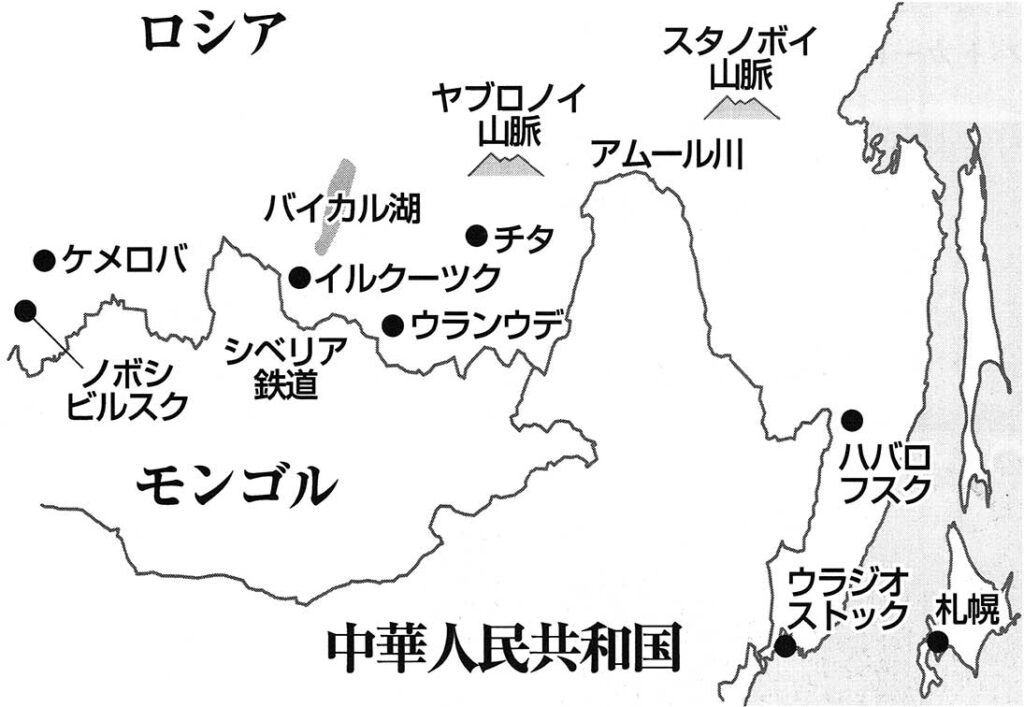
The Yablonoi Range is a mountain chain running east-west that must be crossed to get from Chita to Lake Baikal. Going straight up a long incline, the road began to wind and curve. The loosely paved road lets you go at speeds of 90–100 km/h. The Roadster was perfect for the continuous curves on this climb—I leaned back against the seat and rode with a satisfying feeling. I’d made the right choice with this bike.
At 6 p.m. I arrived in Ulan-Ude and found lodgings. Ulan-Ude is the capital of the Buryat Republic, and from here you can reach Ulaanbaatar, the capital of Mongolia. The Buryat people are of Mongol descent and have faces remarkably similar to Japanese people. That day the city’s 336th anniversary festival was being held, and the central square was thronged with people. On the stage, young people in ethnic dress were taking turns performing traditional dances. Cossacks, Mongols, and Russians of European descent—various ethnicities living together in harmony.
Angela said she was going to Mongolia and we parted ways in this town. I thought solo female travel was dangerous, but she’d apparently traveled alone in Africa too—quite the intrepid adventurer. Later, I got an email in late September saying she’d made it safely back to her hometown, and I was relieved.
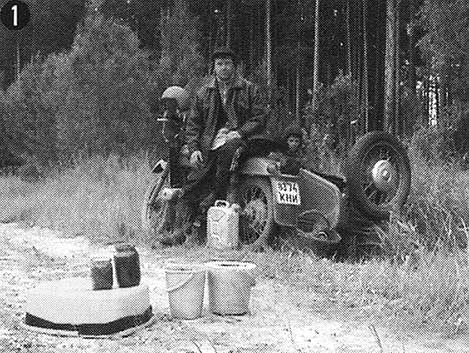
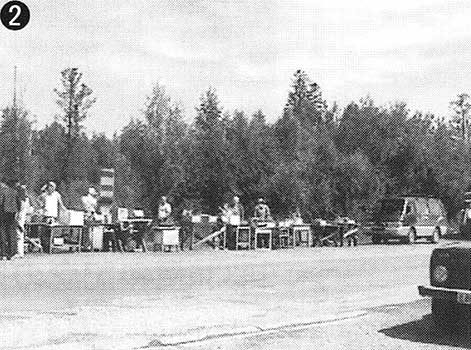
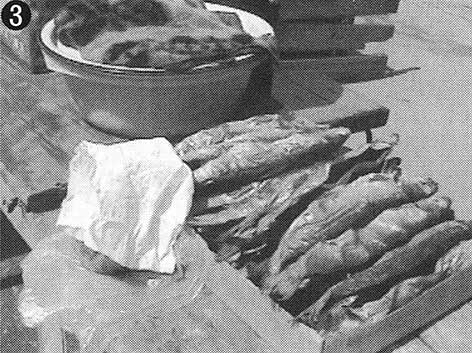
July 8th, heading from Ulan-Ude toward Irkutsk. The mountain road over the Yablonoi Range gradually became gentler curves and slopes, and I began frequently seeing villagers selling blueberries in jars by the roadside. No signs, no hawking—just people sitting quietly or lying in the grass. Further on, I came across stalls displaying smoked fish and fresh fish. The smoked fish I’d been given by a conductor on the Trans-Siberian Railway was the same kind.
Past the stalls, a blue lake opened up on my right ahead. Lake Baikal. Even under the clear blue sky, the far shore is invisible—it’s so vast it seems like an ocean. Lake Baikal stretching beyond the taiga forest in cobalt blue was more beautiful than I’d hoped, and I stopped the bike to gaze at it for a while. Lake Baikal is known as the world’s deepest lake, its waters flowing into the Yenisei River and eventually the Arctic Ocean. I continued riding, keeping Lake Baikal to my side. Here mountains loom close and the road runs parallel to the Trans-Siberian Railway. Given how many times I’d taken breaks where the railway was visible and almost invariably met a train, it was clear the Trans-Siberian is fully operational and a crucial transport artery for Russia. In the village of Listvyanka, about thirty villagers were selling strawberries in buckets by the roadside, and passing cars were buying them. The crops seemed abundant. As I approached Irkutsk, the road improved and traffic increased.
At the town entrance I met Shoshin, a Yamaha importer, and after meeting him I stayed two nights in Irkutsk and got a good rest. From the town of Irkutsk to Lake Baikal is about 70 km, and along the way the forests, villages, and the restaurants that had been built there were all very beautiful. Surprisingly, in one of those restaurants I saw people from Irkutsk eating raw Lake Baikal fish. It was sliced like sashimi, but eaten with salt and pepper. I tried it, but as a Japanese person, I found myself wishing for wasabi and soy sauce.
On the second evening, Shoshin’s friend, who runs an auto parts business, invited me to dinner at his house. It was a mansion in Irkutsk’s upscale residential district, surrounded by a high wall with a large gate, and inside the gate was a house where the security guard’s family lived, with flower beds and a spacious vegetable garden beside them. The vegetables served for dinner were mostly from his own garden, he told me. Among the dishes was frozen fish. The owner had caught it at Lake Baikal that very day and frozen it—you don’t so much cut it as break apart the frozen fish flesh and eat it with salt and pepper. Local people eat it this way all the time, he said. The white fish, somewhat thicker than char, had a crunchy texture that wasn’t particularly appetizing. This upscale neighborhood was in a building boom, and even in this provincial city you could see the nouveau riche class growing.
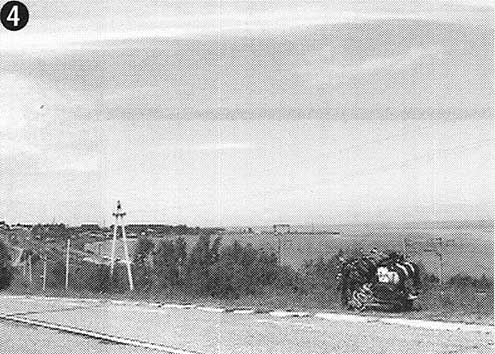
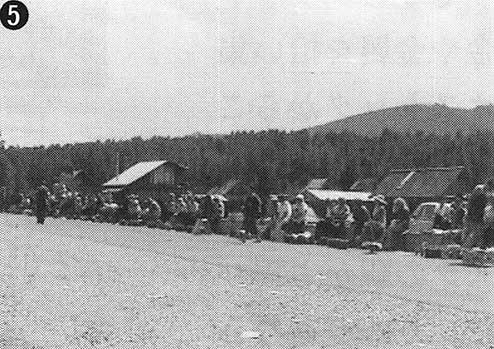
A joking Russian
July 10th, departing Irkutsk. The impressive two-lane road becomes single-lane after 30 km, and becomes unpaved after another 50 km or so. Rain began to fall, turning the potholed road to mud. Passing through several stretches of bad road, I went via Turan and Kansk, passed through Krasnoyarsk at latitude 56° north, and headed toward Kemerovo. Road signs are only in Russian, so you have to watch them carefully, but apparently I missed one. A Russian who happened by got out of his car and gave me directions, and even treated me to hot coffee, but between being bitten by mosquitoes and small insects flying into the coffee, there was no time to savor it slowly. I drank the coffee hurriedly, said my thanks, and moved on.
From here, the road west splits into multiple routes, so I had to be especially careful watching the road signs. While stopped at a railway crossing, one of the railroad construction workers spotted my Roadster and came running over from about 30 meters away. After looking at the bike carefully, he spread his arms dramatically and shouted loudly, pointing to a Russian-made motorcycle (Ural) parked beside the crossing, apparently asking to trade. Seeing his good-natured smiling face, it was instantly obvious this was a joke. Russians are so friendly they’ll crack jokes even with complete strangers.
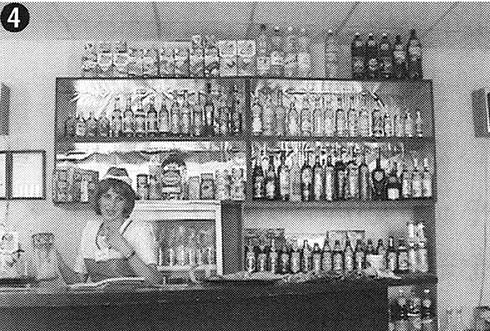
I entered the town of Kemerovo and looked for a hotel. When I stopped the motorcycle in the middle of town, a large crowd gathered around. They looked at it curiously, asking “How many cylinders?” “How many horsepower?” “What’s the top speed?” “How much does it cost?” Their eyes went wide with amazement at the V-type, water-cooled, four-cylinder engine. Since there are many Mongolic Russians in Russia, they didn’t think of me as a foreigner and fired questions at me in rapid-fire Russian. When I managed to tell them in my broken Russian that I was a traveler from Japan, they began speaking slowly in Russian. Not many ordinary people speak English here. Young people, children, and elderly people alike were friendly and approachable everywhere, and as soon as they started talking to me in Russian, they would touch the motorcycle’s handlebars and fuel tank. It was clear how much they wanted a bike like this.
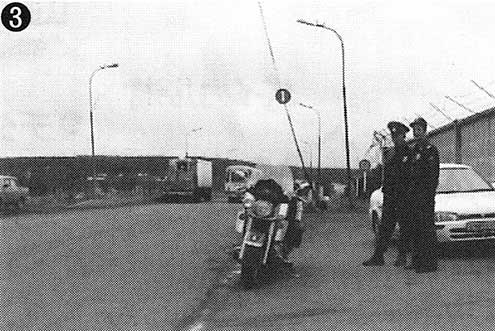
With such a large crowd gathered, a patrol car stopped, wondering what was going on. I took the opportunity to ask the police officer if there was a hotel in town, and he said he’d show me the way and told me to follow him. I said goodbye to the people who had gathered and followed the patrol car to a four-story old building that didn’t look like a hotel from the outside. The first floor was a shop, and the second through fourth floors were partly a hotel. Remarkably, part of the building was a police station, and they even kept my motorcycle there. There was no safer place than that.
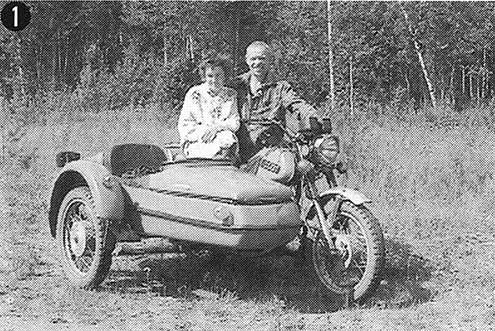
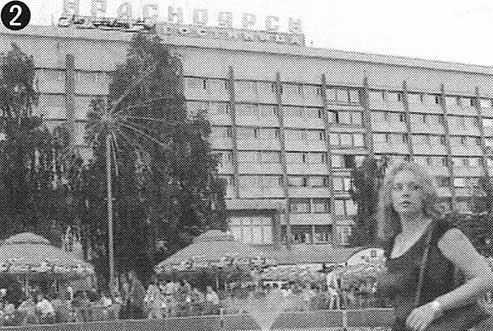
Novosibirsk, the central city of the grain belt.
July 15: I left Kemerovo. Thick smoke poured from old factory complexes, and the entire town was covered in smog, reminding me of the factory districts of Kawasaki in the 1950s. The morning was cold, and the people I passed were dressed in long coats. The temperature had dropped to 10 degrees Celsius. I put on thermal underwear and added quilted lining to my jacket to prepare for the cold. After driving just 10 kilometers, the smog cleared and the sun began to shine from the blue sky, but the temperature still didn’t rise, so I continued wearing my cold-weather gear.
This area is located at 55 degrees north latitude, the same latitude as the midpoint of the Kamchatka Peninsula, and is a rich grain belt. The West Siberian plains have been cultivated, and as far as the eye can see, wheat fields and grassland stretch out. Large agricultural machinery is used, though occasionally I saw sidecars and horse power being used to transport hay. During the short summer, people are busy harvesting wheat for food and hay for livestock.
After driving about 300 kilometers, I arrived in Novosibirsk early, around 3 p.m. The Ob River flows through the middle of town, and large ships come and go. All the major Russian cities have large rivers running through them, and ships are an important means of cargo transport. Right in front of the central railway station stood Hotel Novosibirsk, a 23-story building. The exterior was impressive, but the inside was dimly lit, and security men lounged on the lobby sofas as expected—a typical Russian state-run hotel. The accommodation rates were shamelessly posted at the reception desk with a double price: 850 rubles (about 3,400 yen) for foreigners and 600 rubles (about 2,400 yen) for Russians. After leaving my luggage in my room, I went out into town to find a place where I could send email.
Shops lined the area in front of the station, crowded with lots of people, and supplies such as food and miscellaneous goods were abundant. Perhaps because it’s the center of the grain belt, there were many farmers. There was a large bus terminal, and the stops for large city buses and medium-sized buses going to nearby areas were clearly separated. The large buses and trolleybuses were all falling apart, having exceeded their useful lifespan. They patch them up, but there are limits. I worried whether public transportation might face problems in the near future. I searched for an internet café for about an hour asking people for directions, but I couldn’t find one. I spent a lot of time today just looking for a place.
An unexpected reunion after 34 years.
July 16: I left Novosibirsk. As I left the town, grassland stretched as far as the eye could see, and further on it became wetland. On an empty lot to the right of my direction of travel, nearly 20 motorcycles were parked and their riders were having lunch. I slowed down and went over to them, only to find they were a group of Japanese motorcycle tourists. I stopped my bike and called out “Hello!” and they called back “Hello!” I was amazed to meet so many Japanese in Siberia. As we exchanged greetings, a man in a red jacket with a sunburned, lean face called out to me by name: “You’re Yoshida, aren’t you?” Looking more closely, it was Takashi Kasori, someone I had met once 34 years ago.
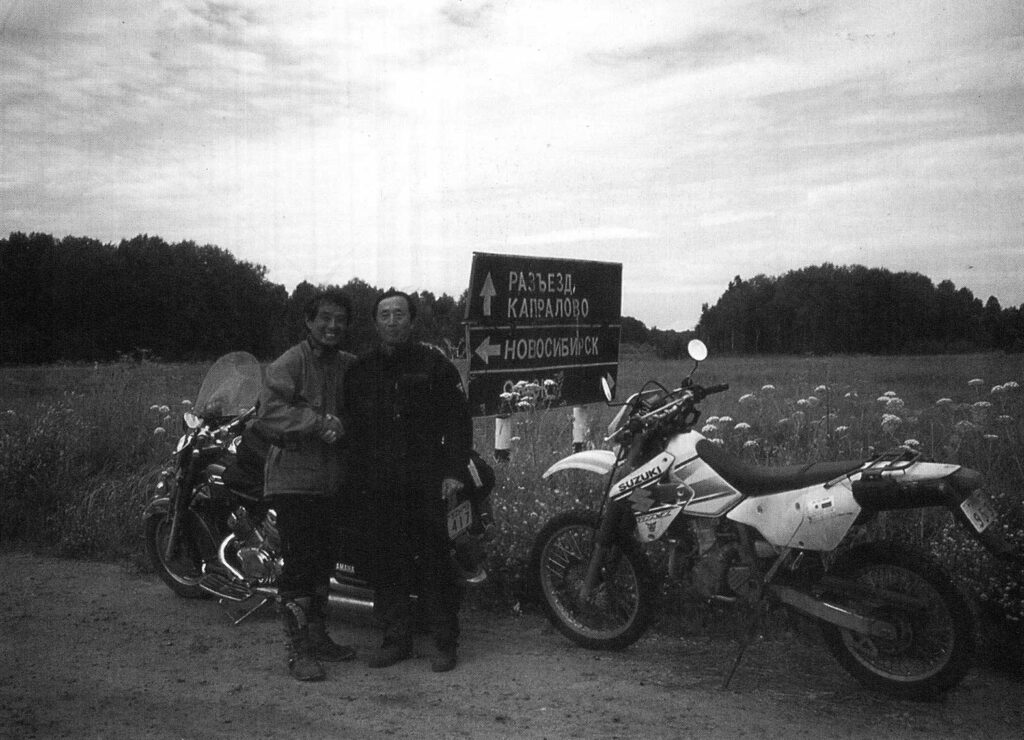
When I had finished my previous round-the-world trip and returned to Japan, he had come to visit me because he wanted to go to Africa by motorcycle. We were moved by this unexpected reunion in such an unexpected place—the Siberian grasslands—and we exchanged a firm handshake. Kasori went on to complete his motorcycle trip to Africa. After that, he continued to traverse the country and the world, and today he is the leading motorcycle tourist in the world. What is remarkable about him is that while traveling at home and abroad, he started a family and raised three children beautifully.
This group was a motorcycle tour recruited by a travel company called “Dosojin” to ride from Vladivostok to the western tip of Portugal. Some members of the group were very surprised to learn that I was doing a solitary motorcycle crossing of Russia. They seemed to think that individual motorcycle travel like mine was still not possible. We were about to leave after lunch, but they treated me to cup noodles for my meal. I hadn’t brought any Japanese food with me, so it was a welcome taste of soy sauce after a month. Wishing each other safety, under the leadership of Kasori, the group set off first, followed by a van carrying a Russian interpreter who accompanied the group and the person responsible from Dosojin.
Crossing the Ural Mountains
Passing through Gubkin, Omsk, and Chelyabinsk, exactly one month had elapsed since leaving Hamamatsu on July 21st. I was saying goodbye to vast Siberia. In any case, Siberia was enormous. I had already covered more than 7,000 kilometers, and adding the distance I traveled by rail brought it to 8,000 kilometers. I thought the roads were bad and the accommodations were dirty, but compared to Japan in the 1950s, it was nothing to worry about. Back then, unpaved stretches still remained on the Tokyo–Hamamatsu section of Route 1. When I did a tour around Japan, about eighty percent of the roads in Hokkaido, Kyushu, and Shikoku were unpaved, and on my previous round-the-world trip, the steep mountain roads of Colombia were almost entirely unpaved. Thinking back to riding 4,000 kilometers round-trip on a 250cc bike from 37 years ago along nearly 2,000 kilometers of completely unpaved rough roads from Brasília to Belém at the mouth of the Amazon, the rough roads of Siberia were nothing to complain about. Having come this far, I thought back calmly and felt that way.
Riding across the Ural Mountains, I climbed and descended gently sloping hills. There were no sheer cliffs—it felt like crossing large hills—and after riding for a while, I entered the city of Ufa. There were many oil wells in the pastureland. The Bashkir Republic was thriving on oil. Ufa is the capital of the Bashkir Republic and is home to many Bashkir people of Islamic faith, and the neighboring Tatarstan Republic is also Islamic.
Series Part 3: Tearful Class Reunion on the Isle of Man After 35 Years
(Special Edition Motorcyclist, March 2004)
Russian-Style Sauna “Banya”
On July 21st, I visited Ilias, who was introduced to me by Mika at Vladivostok’s motorcycle club, Lynx of Amour. Like Mika, Ilias also imported used motorcycles from Japan and sold them, and had made several buying trips to Japan. He strongly urged me to stay at his home. His house was a ten-story apartment building in the suburbs where an average Russian office worker would live, and children were happily running around in a vacant lot. His wife and father greeted me at the home. Once inside, the space was not particularly spacious, and I felt genuinely grateful for his kindness in offering to put me up. After a light dinner, we decided to go to a banya—a Russian sauna—and drove to a friend’s house.
That house, located along the Volga River, had a large vegetable garden where they grew staple foods like potatoes, vegetables such as tomatoes and cabbage, fruits like blueberries, and even raised chickens. Because cash income was low, he said they made almost all their food themselves. In one corner of the yard was a large shed-like building that was the banya. Going in naked was the same as a Japanese sauna. Once the body warmed up, I lay down on a wooden platform, and when someone would beat my body with a bundle of birch branches, the aroma of the leaves was wonderfully pleasant. The beating gives the body appropriate stimulation and improves blood circulation. We took turns beating each other, and repeated the process about four times—getting hot, then cooling down in an adjacent room—and finished with a final washing.
That day I had ridden 550 kilometers from Chelyabinsk to Ufa, including crossing the Ural Mountains, so when I came out of the sauna I was indeed exhausted. But his wife had prepared a meal, and I was treated to beer, borscht, bread, and even homemade strong local spirits. When I got back to Ilias’s house and fell asleep on the living room sofa, it was 2 a.m.
I had wanted to experience an authentic banya while in Russia, so I sincerely thanked Ilias for the precious experience.
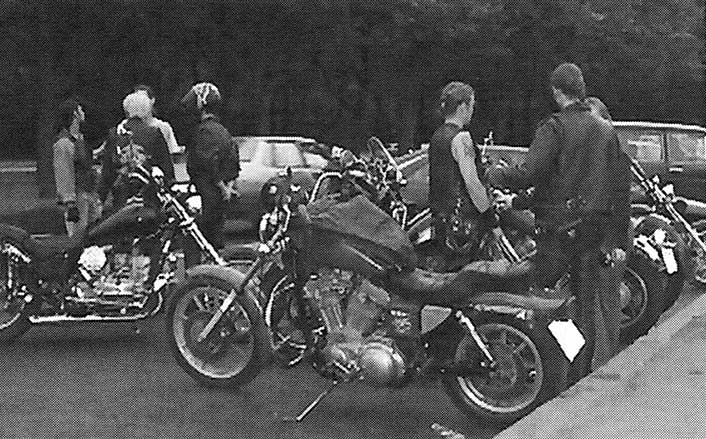
The next day, Ilias’s motorcycle friends gathered. They all owned Japanese motorcycles and would get together whenever there was something, supporting each other. Because television and radio stations were going to cover the story of a Japanese person crossing Siberia by motorcycle, about twenty people showed up. After being interviewed at a café bar, we all rode through town together while being filmed.
To Russia’s Capital, Moscow
As Moscow drew near, road signs displayed both Russian and English, the roads improved, and traffic increased. That night I stayed in Vladimir, about 190 kilometers before Moscow, a historic town that was the capital of the Vladimir-Suzdal Principality in the 12th century. This town was completely different from the Russia I had been riding through so far, and I was surprised by the well-maintained, beautiful historic buildings lining the streets.
The next day, July 28th, I headed for Moscow. While riding, I noticed a thick fog and there was a smell. It seemed to be smoke. After riding for a while, both sides of the road were burning. That year, because there had been little rain and high temperatures, fires had been burning all summer. Since this area has a peat layer exposed to the surface, not only the forest trees but the ground itself was burning, making it impossible to put out the fire easily.
Along the roadside, vendors selling fruits like watermelons and miscellaneous goods increased in number, and before I knew it, I had entered Moscow with its many buildings.
I arrived at the Kremlin, Moscow’s center, just after noon. I barely had time to feel relieved that I had made it here safely when, stopped at a red light in front of the Bolshoi Theatre, a police officer approached and said “dokument” (documents). When I showed my passport, he then pointed at the motorcycle and said “dokument” again. I showed the motorcycle’s customs clearance certificate, but he said it was still insufficient. I asked forcefully what else I should show and took my passport and customs certificate back from the officer. Then the officer returned to directing traffic, but Russia has checkpoints everywhere. On busy days, I would be stopped by police three or four times.
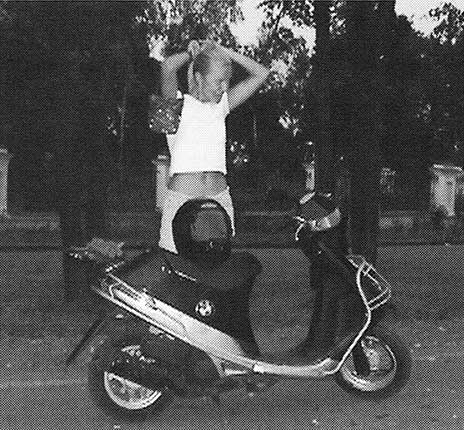
I stopped the bike, set up a tripod, and carefully took a commemorative photo of my arrival in Moscow with the Bolshoi Theatre in the background. Since it was still too early for hotel check-in, I went around to Red Square, where during the summer tourist season there were large crowds of tourists from various countries. On the opposite side of the street is the state-run Hotel Russia where I would stay tonight. At 21 stories with 5,500 guest rooms, it is the world’s largest hotel. Since there are four lobbies on the four cardinal directions (north, south, east, west), if you enter at the wrong entrance, it takes some effort to reach your room. At 1,600 rubles per night (about 6,400 yen), it was cheaper than Moscow’s Western-owned hotels, but you had to be prepared for Russian state-owned service.
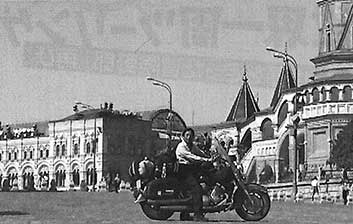
That evening, I was welcomed by the staff of Yamaha’s market development division, and I tasted Japanese food for the first time since leaving Japan. They were people I had worked with during my active years and we were well acquainted, so I could truly relax, and thanks to them the fatigue flew away. Moscow was in the midst of a Japanese food boom; even in Russian restaurants, sashimi and sushi appeared on the appetizer menu.
Moscow’s Underground
The next day, I visited a Yamaha dealer in Moscow to pay my respects, left my bike in their care, and decided to use public transportation for a while. A ten-ride subway ticket cost 40 rubles (160 yen). Once you pass through the turnstile, it doesn’t matter the distance—one ride is one ride, no matter how far you go. Each station has different ceiling and wall designs, like being in a museum, so I got off at every station to enjoy the designs of the walls and ceilings. The escalators are extremely long; a single escalator goes down about 100 meters underground. At the top of each underground escalator, there is always a monitoring booth, and inside each one sits a woman in uniform checking on safety.
While filming video on the platform, a regular person warned me not to take photographs. This was the first such warning I’d received since coming to Russia. During the Soviet era, the subway was one of the military facilities that served as a fallout shelter, so was photography prohibited back then?
Moscow’s main roads have three to six lanes, which is very wide. Many high-end Western European cars like Mercedes and BMW drove along them. By this point, Japanese cars are rare. During rush hour, these roads become severely congested. According to a motorcycle magazine editor I met, Moscow has a population of 9 million people and 4 million cars. Moscow’s streets preserve historical buildings and have beautiful streetscapes, and from the people’s modern clothing, you could sense overall affluence. I was interviewed by the editor, and on the weekend I was invited to his home. He lived in a mansion deep in the forest about 30 kilometers outside Moscow, and the surrounding area had grand estates like his scattered throughout the woods. Many houses were under construction, and it felt like a building boom. In Russia, wealth is concentrated in Moscow, and the disparity with the provinces is glaringly evident in every way. In his case, his parents were government officials and had lived in this area for a long time. Outside the residence were vast grasslands and forests, and you could see people enjoying off-road biking on weekends, and many people enjoying a leisurely lifestyle. At an evening barbecue party, about fifty guests came and went, and the editor introduced me to each person who arrived.
Before entering Moscow, I had a preconception that it was a dangerous city. The reason was that when Russia lost to Japan in the World Cup preliminaries, news spread in Japan about riots breaking out in the city and Japanese tourists being attacked. Also, a Swiss couple, Martin and his wife, whom I had traveled with for a while from Vladivostok, said they wouldn’t go to Moscow because it was dangerous. However, when staying within the range where ordinary citizens live their normal lives, I didn’t particularly sense any danger.
From Russia to Finland
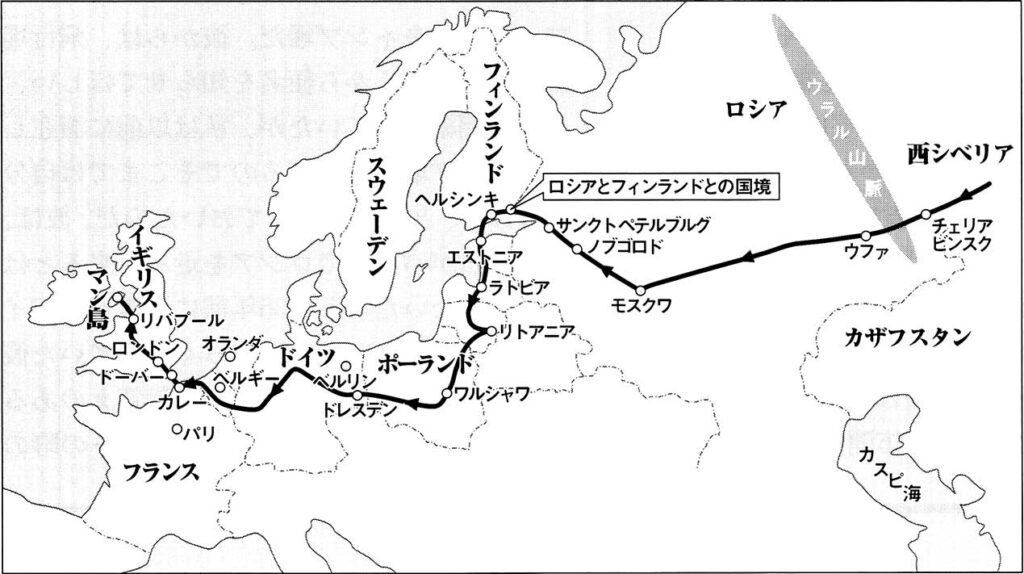
On August 6, I left Moscow and passed through the historic towns of Novgorod and Saint Petersburg. The border with Finland was 150 kilometers away.
Russian people told me that crossing the border during the crowded tourist season of July and August could mean waiting about six hours, so to avoid the congestion of daytime, I decided to stay at a hotel adjacent to a gas station about 10 kilometers before the border. I remembered that 35 years ago, when I tried to cross the border from Finland into Russia, hardly anyone was crossing the border. Now there are large-scale immigration and customs facilities, and nothing of the old atmosphere remains.
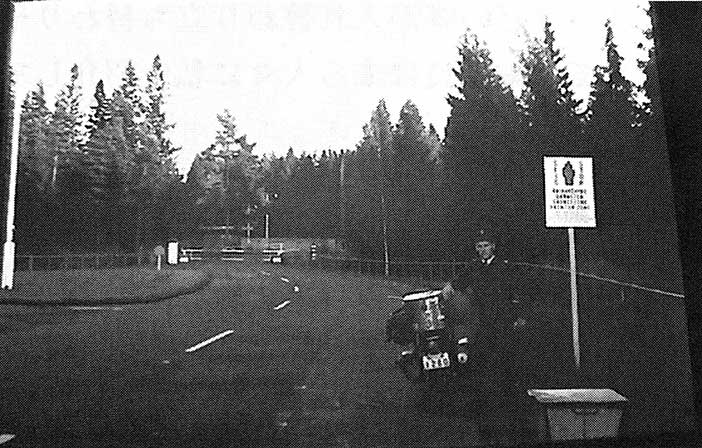
The next early morning, I woke at 5 a.m. and left the accommodation while it was still dark. Sure enough, only about ten vehicles were lined up at the early morning border. Exiting Russia requires submitting your passport and the bike’s customs declaration that you received upon entry. If you lose this customs declaration, you can’t take the Royal Star out of Russia. That’s why I tried to show it as little as possible at police checkpoints along the way. If some officer who didn’t understand the situation confiscated it, I might not be able to complete the border crossing, which was one of the main purposes of this trip. When I submitted the customs declaration to the Russian customs official, he verified the bike’s frame number, and I successfully completed my exit from Russia. As for entering Finland, this was simple. No visa was required and there was no bike check. I thought the lack of procedures might cause problems when exiting, so I asked about the bike’s customs procedures, and was told that if it was my own property, no procedures would be necessary. I was taken aback. On August 10, it was the 48th day since landing in Vladivostok, and I had covered over 10,000 kilometers.
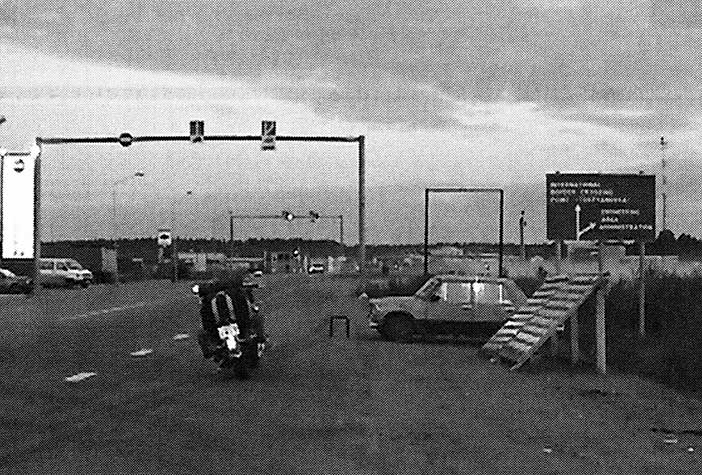
Thirty-five years ago on the same August 10, I was bluntly denied entry into the Soviet Union from Finland after pushing on and on to reach it, and now I was reminded of this with profound emotion. At that time, for a Japanese person to ride across the continent, the only options were to ship to North America and start riding, or to ship to India and begin riding across the Eurasian continent. That something like crossing the Sea of Japan by ship to Russia and riding across the Eurasian continent to Europe, as I was now doing, could ever be possible was once just a dream of a dream. Now I truly realized how long 35 years really is.
A 35-Year Reunion
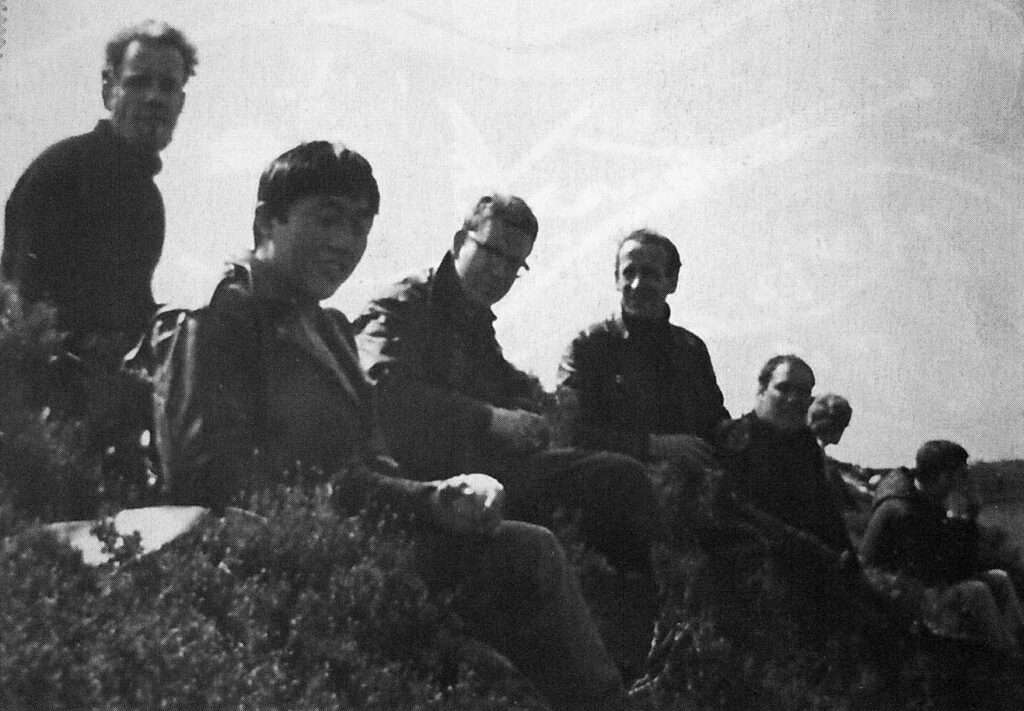
This was in the summer of 2001. I suddenly received word from a German friend, Hermann Steiner, that he wanted to hold a reunion on the Isle of Man in Britain. I had met Hermann in the winter through summer of 1967, in a village in southern Germany where I stayed. At that time, I was staying in a small village of about 100 people, working as a logger in the forest to replenish my travel funds, when Hermann heard that a Japanese person on a motorcycle was staying in the village and came from a nearby village to visit me. Among motorcycle lovers, there are no borders. After that, when weekends came, his friends would join us, and we would enjoy touring on the roads winding through the deep forest, which were perfect for motorcycle riding. In the forest where deer, rabbits, and squirrels lived, we truly enjoyed cutting through the wind as one with nature.
In May, the idea came up to go see the World GP held on the Isle of Man in Britain, and we set out from the German village. We crossed the English Channel by ferry, and in Wales, several British people including Heidon, a friend of Hermann, joined us, and we entered the Isle of Man via Liverpool. On the Isle of Man, we stayed at a campground, and while enjoying the World GP races, we visited various places around the island.
Since then, for over 30 years, we had only exchanged Christmas cards and never seen each other face-to-face, but two of the original group had already passed away. Hermann was worried that if we didn’t meet now, we might miss the opportunity, so he proposed the reunion.
Around that same time, I was about to turn 60 in January 2002 and was at the age of retirement. I had long been thinking that I wanted to do something I couldn’t do while working at a company, taking this milestone year of turning 60 as the occasion. This was the perfect chance. Without hesitation, I sent back word that I definitely wanted to go. If I could go by bike, I would go by bike; if not by bike, I was thinking I could go by the Trans-Siberian Railway or by plane.
In autumn 2001, Hermann sent me the specific dates. He wanted to hold the reunion during the final week of August when the Manx GP takes place, August 25–31.
Isle of Man
The Isle of Man is an island situated between England and Ireland with a circumference of around 100 kilometers, known as a resort destination. Its terrain is hilly, reaching heights of 620 meters at its highest point, which gives it outstanding scenic beauty, and half the land is cultivated. It has also long been famous for motorcycle racing.
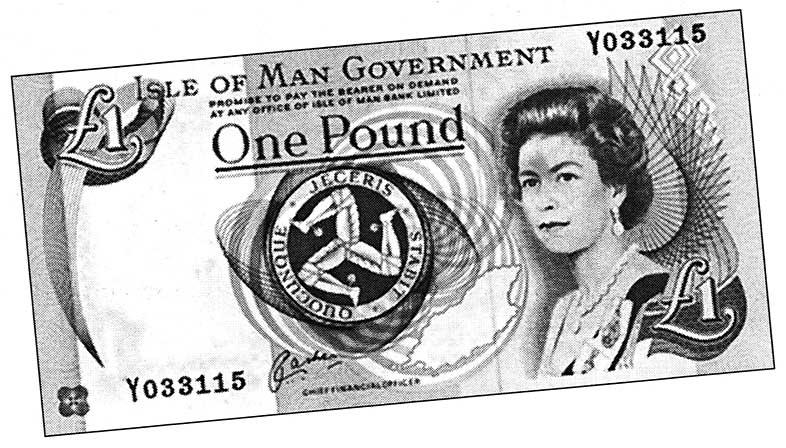
The island has its own parliament consisting of an upper and lower chamber, possesses its own legislation and laws, and issues its own currency in pounds, but be aware that this currency is not accepted in mainland Britain in many places.
The race on the Isle of Man is held on a course of around 60 kilometers per lap, using general public roads that are closed off for the event. This course is extremely varied, running through residential areas and shopping streets, pastures, and into mountains. Even when the sun shines on flat ground, fog and rain can cover the mountains, making the weather conditions harsh. Additionally, the sides of the course are narrow and lined with many stone walls, making conditions extremely dangerous, and a single fall can lead to serious accidents, so the World GP races were discontinued from the mid-1970s onward. Currently, the TT races in June and the Manx GP in August are held every year, drawing many motorcycle enthusiasts.
After completing the crossing of Russia, I was wrapped in a deep sense of satisfaction, but having used up my physical strength after exceeding 60 years of age, I found myself dragging fatigue with me from the moment I entered Finland. I took two days of rest in Helsinki and one day in Estonia, and continued at a leisurely pace after that.
Estonia, Latvia, and Lithuania—the three Baltic states—felt closer to Northern Europe than Russia, with EU membership promotional signs visible here and there along the main roads. Because I was progressing leisurely, it became difficult to arrive at the Isle of Man by August 24, and after that I had to ride more than 500 kilometers every day for four consecutive days.
I entered Germany from Poland. Eastern Germany experienced heavy concentrated rainfall that summer, with rivers flooding in various places. The Autobahn is built at high elevations, and the Royal Star had no trouble running, but Dresden also saw the Elbe River, which flows through the town, overflow, leaving the town center completely submerged—it was a terrible situation.
Arrival at last
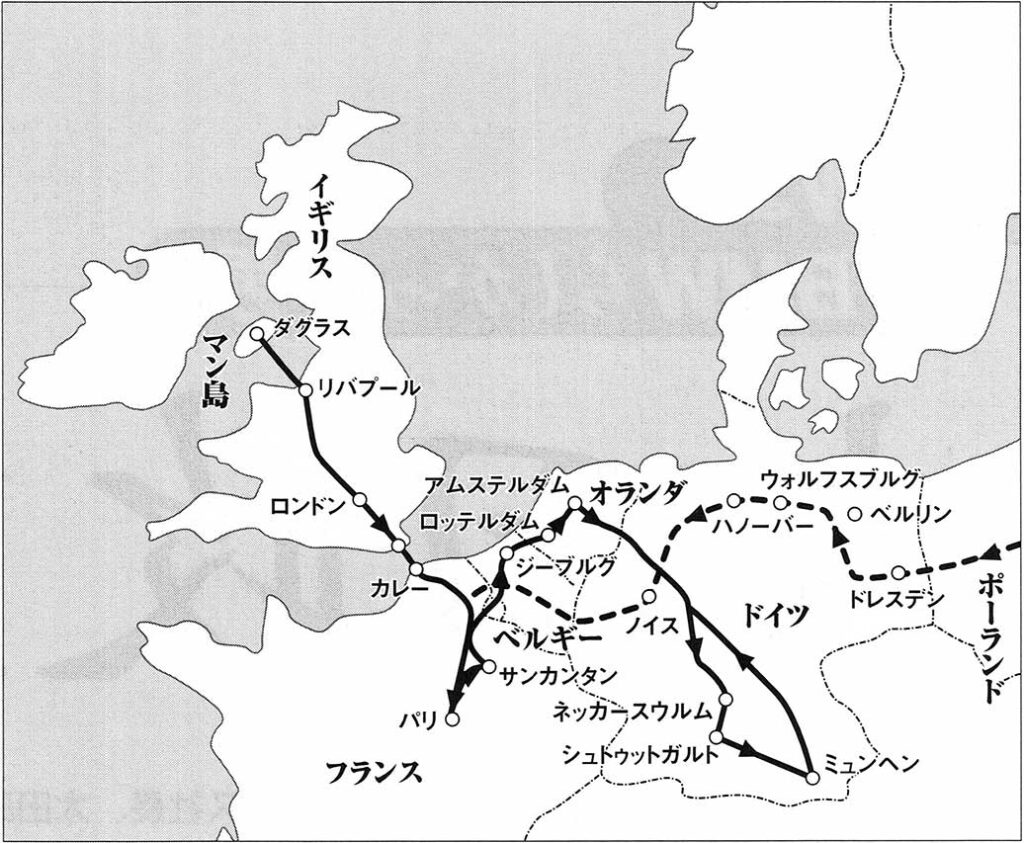
On August 24, I crossed the Dover Strait by ferry from Calais, France, and arrived in Liverpool via London. From there, the scheduled departure time of the ferry to Douglas on the Isle of Man was 6 p.m., but the ship was delayed repeatedly and didn’t leave until after midnight. On board the ship, I rested my body seated in the cabin, and I disembarked the ferry at Douglas harbor around 3 a.m.
The place where I had promised to reunite with Herman was the Glen Dhu Farm campground in Hilberry, where I had stayed 35 years earlier. He had sent word asking me to tell him my flight details so he could pick me up at the airport, but I replied that since I was familiar with the campground where I had previously stayed, I could get there on my own. He surely didn’t imagine that I would be riding a motorcycle across Russia. Recalling the young face of Herman, who had been astonished when he heard I had ridden a motorcycle from Japan 35 years ago, I passed the familiar Douglas coastline and climbed the hill through the town of Onchan.
Relying on my memories from 35 years ago and a map, I searched, but there were more vacation homes than before, and the sign was difficult to find. I finally made it to the campground around 4 a.m. Many tents were lined up in silence. I turned off the Royal Star’s engine and looked around in the moonlight. To my amazement, the inside of the campground had not changed at all from 35 years ago. I quietly found an empty space, unloaded my luggage, pitched my tent, and crawled into my sleeping bag, stretching my arms and legs fully. I thought there was no happiness greater than this.
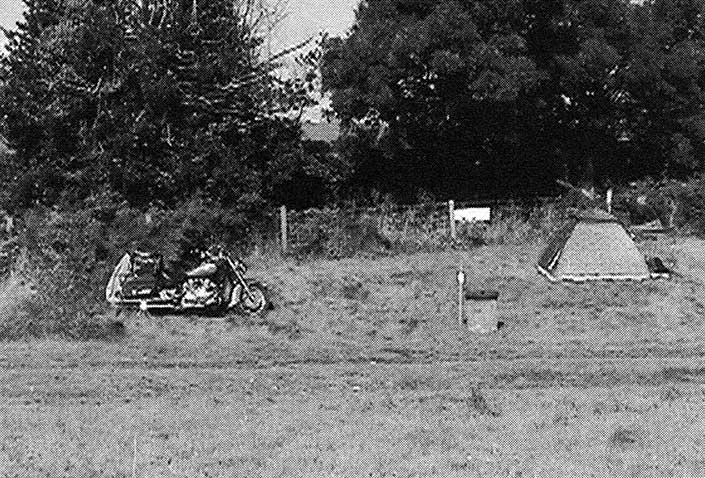
After getting some sleep, I woke up at 8 a.m. When I got up and looked around, people were preparing breakfast here and there. A person who had pitched a tent next to mine called out and gave me a warm cup of tea. He said that a German had been looking for a Japanese person yesterday, and that it was surely you. There was a parking area in the middle of the campground, and beyond that parking area there were three tents, and he told me the German was staying in one of them. He also said that if I called out loud, he would come running. I wanted to do so immediately, but that would wake up other people. Holding back my excitement, I decided to wait a bit longer. I thanked him for the tea and began walking to get a look at the entire campground. Then a man who looked somewhat like Herman came out of one of those three tents. Herman had a distinctive way of walking because a motorcycle accident when he was young had left his left and right legs three centimeters different in length. His hair had thinned considerably, but he had that distinctive way of walking. It was unmistakably Herman.
“Herman!” I called out involuntarily in a loud voice.
“Shigeru!” he answered.
We drew near each other and exchanged a firm handshake. For a moment, neither of us could find words.
I told him that I had ridden a motorcycle across Russia from Vladivostok and that the ferry had been delayed, arriving here early this morning. Seeing his joyful face, I felt anew the happiness welling up inside me—I had been right to come by motorcycle.
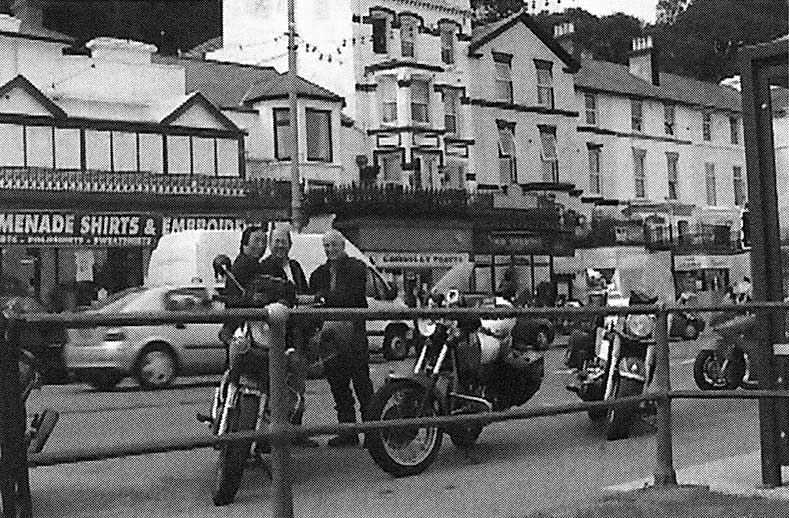
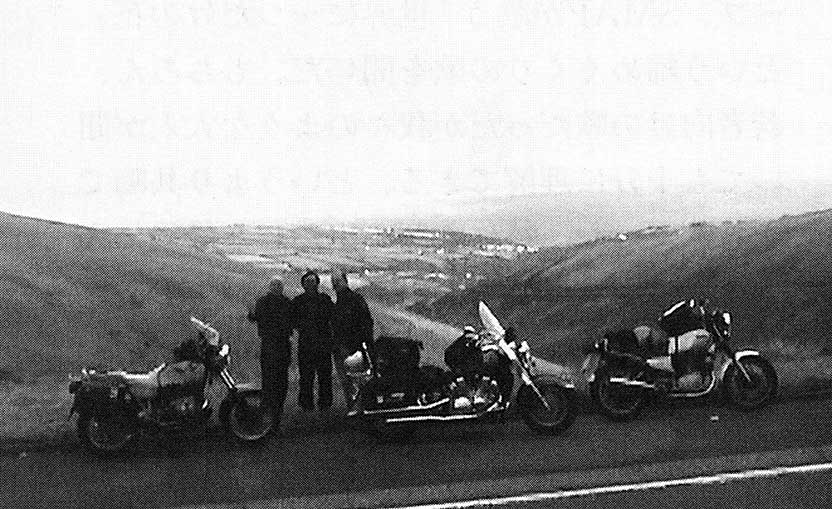
That evening, we both went to the harbor to meet Haydn, a British friend, who arrived in Douglas a day late. It was the same ferry as yesterday but also delayed by two hours, arriving at 10:30 p.m., and our reunion took place in the dim light at the harbor. Haydn’s hair had turned white and was nearly shaved, but his face was unchanged from long ago. I recognized him immediately. Haydn used to ride a Norton, but this time he came on a BMW. Herman, on the other hand, used to ride a BMW, but now rides a Yamaha TR1, and when I asked, he said he owned three TR1s. That showed just how much trust he placed in them. Thirty-five years ago, every time we rode on the Autobahn, he would point at my 250cc YDS-III and say that a motorcycle that couldn’t do 180 km/h wasn’t a motorcycle at all, and he would harshly criticize Japanese motorcycles. But how things change. Now he was completely captivated by Japanese motorcycles.
Installment 4: Touring 200 years of two-wheeled history across Europe
(Separate volume Motorcyclist, April 2004)
Time slip
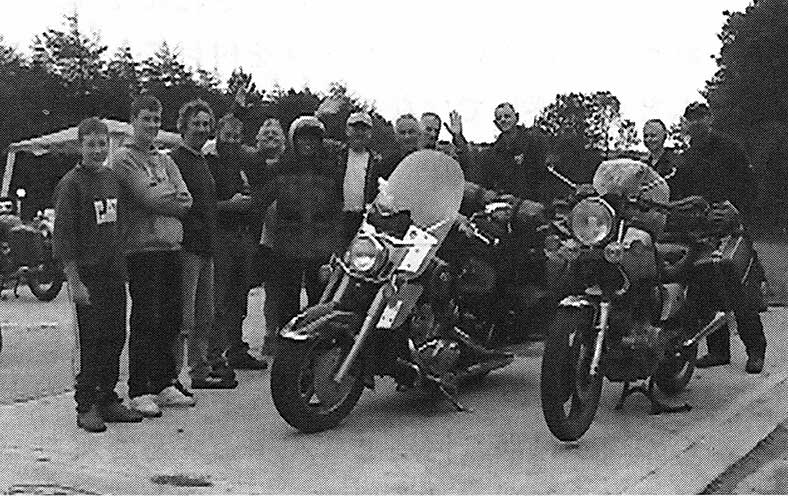
The Isle of Man TT course is open to general traffic on non-race days, so the three of us drove all over the island retracing old memories. We climbed onto the stone wall above the Mountain Course where we had watched the World GP race, and ate at Crecknill Bar where we had dined 35 years earlier. Along the coastal road by Douglas Bay, we saw classic motorcycles gathered from all over Europe and listened to their owners’ proud tales.
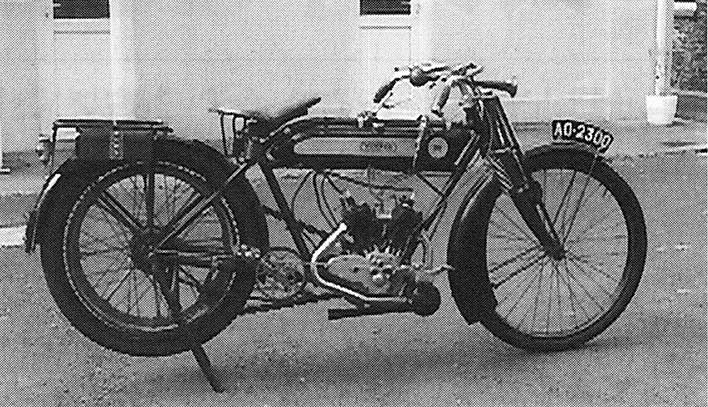
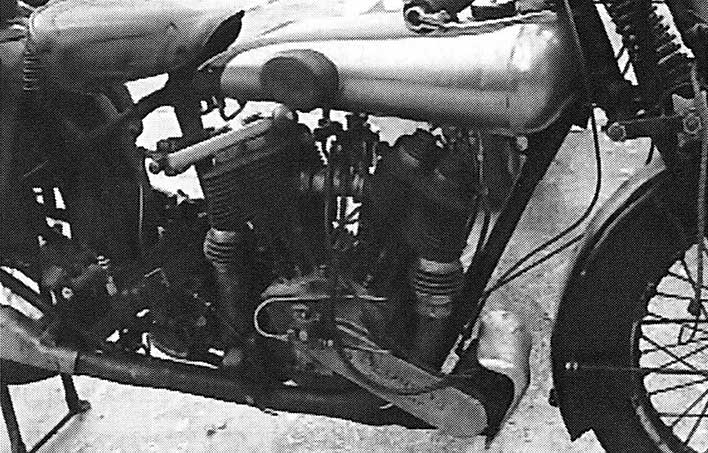
At the campsite where we stayed, we were amazed to encounter owners of surprisingly old motorcycles. Two bikes—a 1914 Humber and a 1924 Brough Superior—actually ran and could be ridden. The entire Isle of Man is like a museum. The horse-drawn tram running along the coastal road is unchanged from 35 years ago.
We slept in tents and sleeping bags at the campsite for a week, but surprisingly we slept very well, and the fatigue we had been dragging along from Russia was completely gone.
The ferry back from the Isle of Man was full, and the only reservation we could manage was on an emergency ferry on August 31st, departing at 4 a.m.
The rain that had started on the 29th finally turned to light drizzle by the evening of the 30th. Since we didn’t know how the weather might change after that, we decided it would be better to pack up the tent while we had the chance, go to Douglas Port, and take a nap in the ferry departure lounge. The first four days on the Isle of Man had been unusually sunny and we’d had favorable weather, so we figured we’d have to put up with rain for at least the last day.
When we went to the ferry departure lounge at 7 p.m., there were already a lot of people waiting. We secured empty seats and spent a sleepless night, but the 4 a.m. ferry’s departure was delayed another three hours, and the ferry didn’t actually leave Douglas Port until after dawn, at 7 a.m. Living in Britain requires a great deal of patience.
The week we spent on the Isle of Man felt like time travel, as if I’d forgotten my current age and returned to 1967. Britain is a culture of stone, and that is also a culture of treasuring things. It was surprising that the campsite hadn’t changed in 35 years, but looking at the island as a whole, while more houses had been built, the old buildings were still being carefully maintained, and the stone walls piled up on both sides of the roads were completely unchanged.
There I reunited with motorcycle friends I hadn’t seen in 35 years, and that week spent together was time spent back at age 25. We don’t know when we’ll meet again, but as long as we’re healthy, we’re sure to meet again. With that to look forward to, I left the Isle of Man.
The Eurotunnel
On September 2nd, I crossed the English Channel from Britain via the Eurotunnel.
You cannot drive a car or motorcycle through the Eurotunnel. Only trains travel through the tunnel; motorcycles and cars are loaded onto freight cars, and people ride in those freight cars to cross the channel together.
At the gate I bought a ticket for 92.5 pounds, about 18,000 yen. Following the signals, I proceeded onto the platform where a tall silver freight car was waiting.
The freight car had a large entrance on its side, and when I drove the Royal Star in through it, the partitions between freight car sections were open toward the front, and the freight car itself was like a tunnel. Staff members stood at key points inside the freight car and gave instructions, so both cars and motorcycles could be efficiently packed forward.
The freight car was less than half full and mostly empty, but the open partitions between freight car sections closed, and after a while we departed. This train had no passenger cabin, so we spent the travel time standing next to our motorcycles. There were four other motorcycle travelers, and they too were either straddling their bikes or standing beside them. In the case of cars, passengers could sit in their car’s seats.
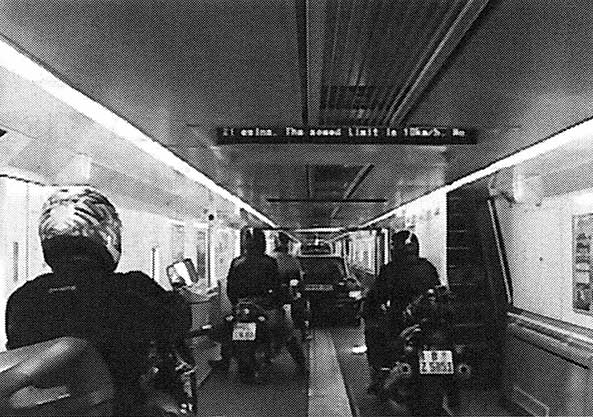
The train arrived at Calais, France after about 25 minutes. By the way, the ferry I took when going to the Isle of Man cost 124 euros 50, about 14,000 yen, which was somewhat cheaper than the Eurotunnel.
After crossing the English Channel and entering France, I headed toward Paris on Highway A26 from Calais, driving about 250 kilometers. This was my first toll road since entering Europe. The toll for 250 kilometers was 10 euros, about 1,200 yen—roughly a quarter of the cost of Japan’s Tomei Expressway, very inexpensive. Still, Hermann, a German accustomed to driving on the free Autobahn, said, “French highways are expensive,” and instead of going through France, he took a ferry directly from Britain to the Netherlands and returned to Germany.
That day we stayed at a hotel inside a rest area on the highway. There are many such hotels in Europe, so we didn’t have to drive around town looking for a hotel, which was a great help.
An Unexpected Grand Welcome
On September 3rd, I met up with Morimoto, a Yamaha France resident representative, at our promised meeting place at Charles de Gaulle Airport, and from there I followed his car about 30 kilometers to Yamaha France.
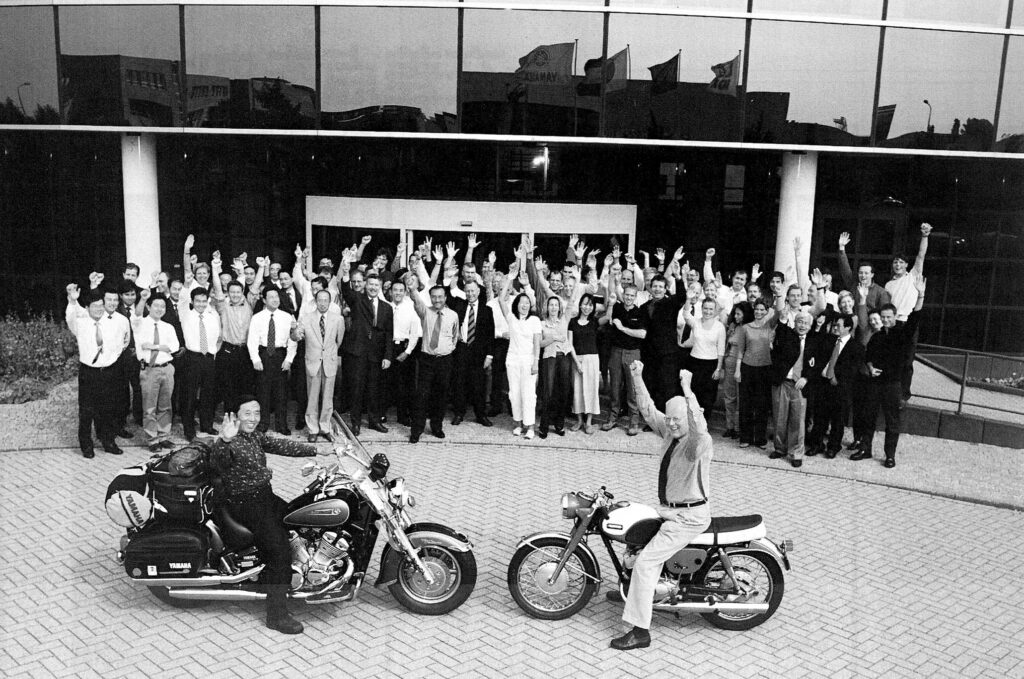
When I stopped my beloved Royal Star in front of the main entrance and opened the door, there was Olivier, the president of Yamaha France, to greet me! And behind him stood all the company employees, welcoming me with thunderous applause. I was shocked by such a grand welcome.
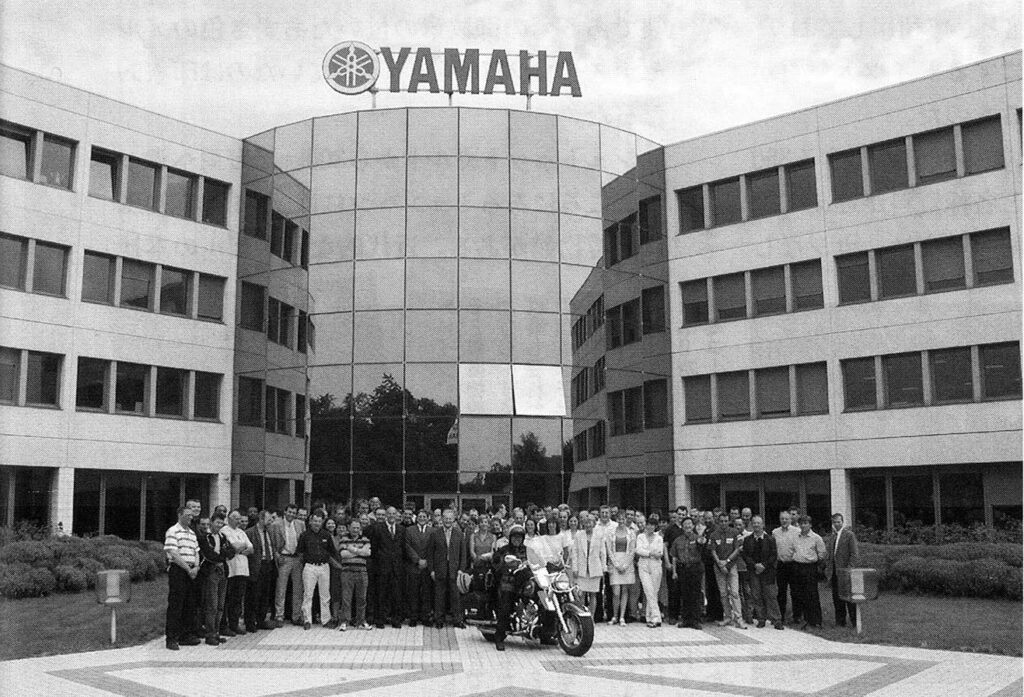
Olivier and I have been acquainted since my previous round-the-world trip.
After Olivier introduced me to the employees, I filled in the route of my journey on a map I had prepared and reported on how the trip had gone so far. Then, in commemoration, he gave me a wonderful plaque and a color photocopy of the cover of an old French motorcycle magazine Moto Revue mounted in a fine frame, presenting it to me in front of his employees. The magazine cover featured me and my motorcycle (YDS-III) from when I had stopped in Paris 35 years ago, and I thanked Olivier from the heart for having carefully preserved that magazine.
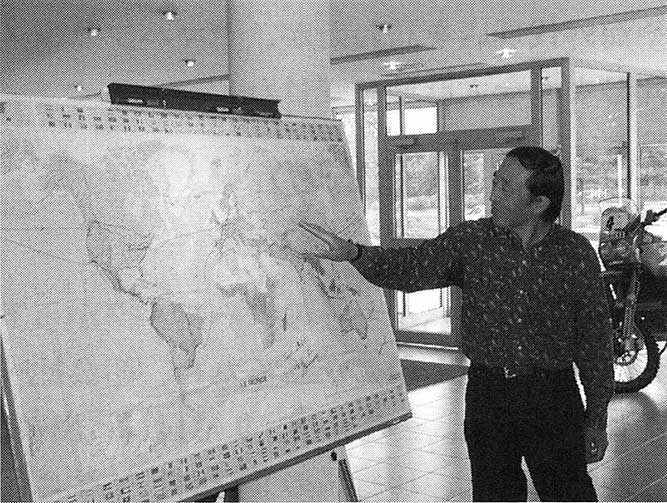
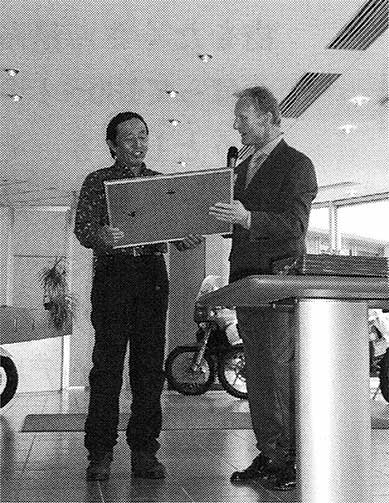
Afterward, all the employees celebrated me with a champagne toast. Olivier is a top-class rider who has himself competed in the Paris-Dakar Rally, known as an grueling race, and has achieved top finishes many times, and has made tremendous contributions to the development of French motorsports. Even now that he is president, he commutes by motorcycle, and whenever a new model comes out, he personally leads the charge and takes employees out for test rides. He is someone who places the value of riding motorcycles at the top of his priorities.
After the welcome party, Olivier shared his passionate thoughts about motorcycles with me over lunch.
For all employees to constantly approach their work with initiative, he, as president, must himself continuously maintain a spirit of challenge. To do this, he commutes by motorcycle, and when new models come out, he takes employees along on test rides to inspire himself and instill a spirit of challenge in them. When I arrived today, he gathered all the employees to welcome me, saying this was because he wanted to share that spirit of challenge with them.
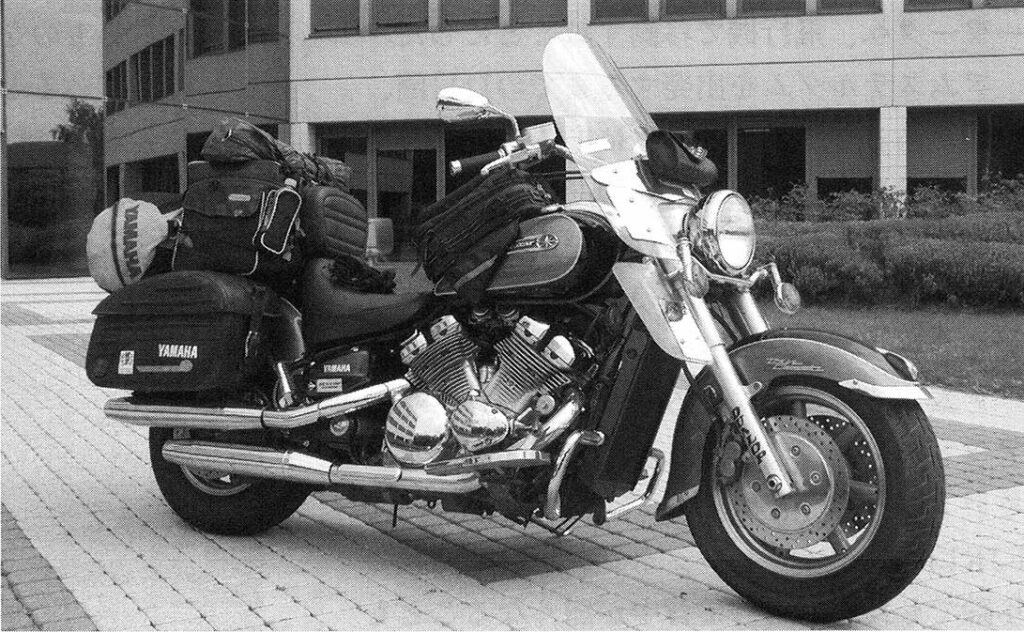
After that, we visited Yamaha’s overseas factories and overseas dealers in Saint-Quentin, France, and Amsterdam, Netherlands, and received a similarly warm welcome as we had from Yamaha France.
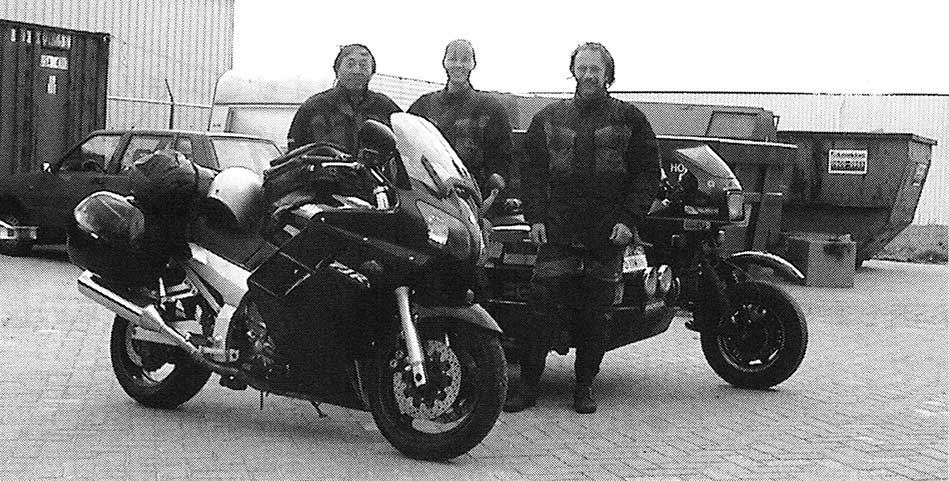
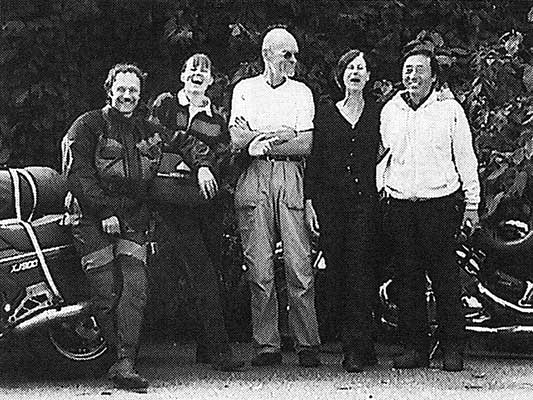
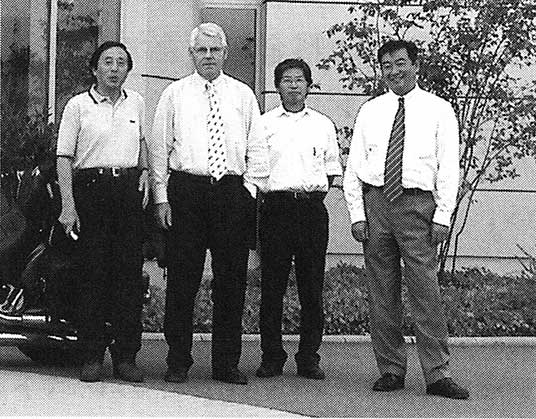
Touring the 200-year history of two-wheeled vehicles museum.
On September 11, I rode to the shipping company to load the motorcycle onto a ship heading to the U.S. East Coast from Zeebrugge, Belgium. The ship is scheduled to depart on September 14, cross the Atlantic, and arrive at Newark Harbor in New Jersey on September 23, 10 days later. I decided to fly from Amsterdam to Newark on the 23rd.
With 11 days remaining before departure from Amsterdam, I had time, so I decided to visit as many museums as possible in Germany to collect information on two-wheeled vehicle history. This was planned before I left Japan, as I wanted to gather as much information as possible about two-wheeled history in Europe, where that history is so long.
I borrowed an FJR1300 from Yamaha Europe in Amsterdam, a bike that can easily cruise the Autobahn, and decided to tour museums on it. The FJR1300’s riding position is a moderate forward lean that doesn’t cause back pain even at my age on long-distance rides, and combined with a windshield whose angle can be adjusted according to speed, on the Autobahn it runs stably at 150–200 km/h and is very comfortable.
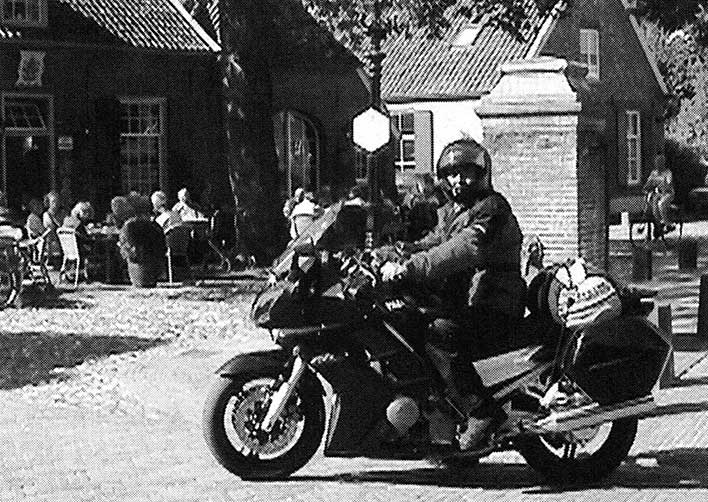
On three-lane Autobahn sections, the rightmost lane for slow vehicles is mainly used by large trucks traveling at 100–110 km/h, the middle lane flows at 130 km/h or more, and the leftmost passing lane travels at an astounding speed of 180 km/h or more. With the heavily loaded Royal Star, even when I pushed hard to reach 130–140 km/h and tried to stay in the middle lane, that was still slow for that lane, so I’d have to keep an eye on traffic behind me. In comparison, the FJR1300 was supremely comfortable.
First, I visited the NSU two-wheeled museum in Neckarsulem, a town at the confluence of the Neckar and Ulm rivers near Heidelberg. The entrance fee was 4 euros for adults (about 500 yen). A castle built in the 14th century is used as-is as the museum, which shows the German trait of cherishing old things.
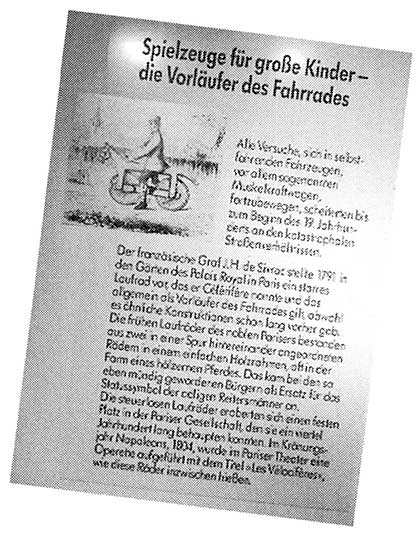
Inside, I was greeted by an abundant collection of over 350 display items and various materials related to the history of two-wheeled vehicles worldwide. The history of European two-wheeled vehicles begins with a vehicle without steering (handlebars that couldn’t turn), without pedals (propelled by kicking the ground with one’s feet)—a bicycle conceived in France in the late 18th century, early in the Industrial Revolution. The displays at the NSU two-wheeled museum are subdued, but rather than just looking, there are simulators where visitors can touch and even ride, which keeps them from getting bored.
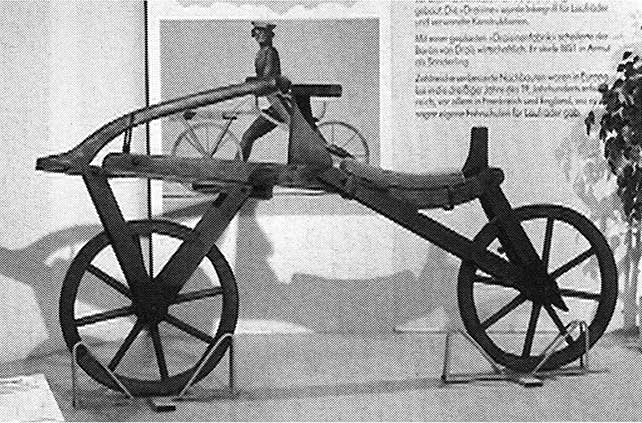
The highlight is a bicycle from the 1870s with a front wheel 2 meters across. You can straddle it and actually ride it. This NSU two-wheeled museum clearly displays two-wheeled concepts from their earliest conception to the present day—it is the finest two-wheeled museum in the world.
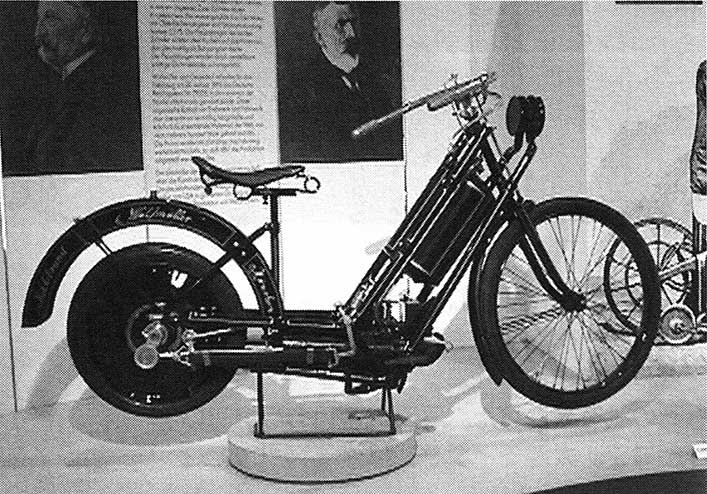
The Mercedes-Benz and BMW museums.
About 100 km south of Neckarsulem lies Stuttgart. There is the Mercedes-Benz headquarters factory, and the museum is located there.
Motorcycles can’t go to the museum entrance, so from a bus stop outside the headquarters factory grounds, I used the free shuttle bus dedicated to the museum. I boarded a bus marked “Mercedes-Benz Museum,” passed through the factory gate, traveled through the factory grounds, and got off in front of the museum. The museum was located in the middle of the headquarters factory grounds. Entry to the museum was free. The tour guide earpieces came in five languages, and Japanese-language guidance was also available free of charge.
The first thing that catches your eye upon entering is a two-wheeled vehicle with a wooden body and an engine. In 1885, predating the four-wheeled vehicle, this two-wheeler was conceived, and here began the history of Benz.
The museum building is subdued, but the displays are magnificent. In addition to the main four-wheeled vehicles, there were also displays of aircraft engines and marine engines. Moreover, among the many exhibits, I was particularly impressed by the display of a 1935 Mercedes-Benz 770 in adzuki bean color with the imperial chrysanthemum crest, which was used by the Showa Emperor.
About 300 km east of Stuttgart, in Munich, there are BMW headquarters factory and museum. Adjacent to the modern high-rise headquarters building is a bowl-shaped modern structure that is the museum.
I entered through the entrance and looked for the reception desk, but there was no one there. With no choice, I browsed the gift shop for a while, and it seemed that one staff member was handling reception, the gift shop, and the snack bar together, and when it got busy, the reception desk didn’t get staffed. Eventually someone came to the desk and assisted me, but an empty reception desk made a poor first impression. The operation may be for efficiency’s sake, but it still didn’t feel quite right.
The entrance fee was 3 euros (about 360 yen), and the locker deposit was 5 euros (about 600 yen). This is returned when you return the locker key. BMW is the only German four-wheeled vehicle manufacturer that continues to actively develop and manufacture two-wheeled vehicles and sell them worldwide.
As I climbed the spiral corridor viewing the exhibits, at the top is a theater accommodating about 200 people. After viewing, you can ride a long escalator from the top floor down to near the reception desk on the first floor. The BMW museum’s modern exterior matched with very contemporary displays, featuring numerous simulators of various kinds, shows consideration to keep visitors from getting bored, and I was astounded by the innovative plan into which considerable expense had been invested.
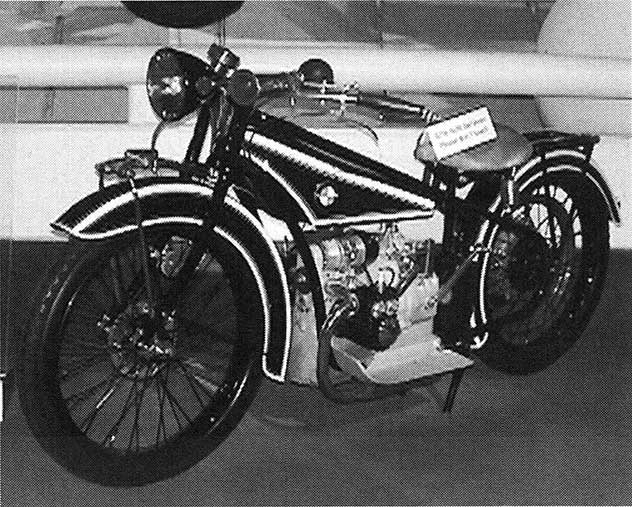
As luck would have it, Germany’s largest motorcycle show, InterMoto, was being held in Munich at the time. The venue, which seemed larger than the Tokyo Motor Show held in Makuhari, featured exhibits from around the world centered on motorcycles themselves, as well as parts and accessories. Here too, the local BMW was in particularly fine form, entertaining visitors with a roughly 15-minute show using their display booth.
Over the past 40 years or so, the global two-wheeler industry has been led by four Japanese companies, but on this trip I felt strongly that American and European makers are regaining their vigor. The rise of motorcycle makers from China and South Korea is also remarkable. I believe Japanese manufacturers must never relinquish their technological superiority. From a global perspective, the two-wheeler industry is thriving and still has room for growth. As environmental requirements become more stringent, the role of two-wheelers with their greatest strength of lightness will loom large.
I was amazed by Volkswagen’s customer service
Along the autobahn connecting Berlin and Hanover, in the town of Wolfsburg, there is Volkswagen’s (hereafter VW) headquarters factory and a theme park called Autostadt, which is larger in scale than a museum.
Though the story jumps around, this Wolfsburg and the aforementioned Neuss are places I stopped at on the way to the Isle of Man on the Royal Star, as mentioned in the previous issue.
At this theme park, Autostadt, there are a museum and interactive experience facilities for children and adults, as well as separate showrooms for all VW group companies including Audi, with 1200 employees working there. Its primary purpose, I’m told, is to invite VW product purchasers here and treat them as VIPs.
I parked the Royal Star in the parking lot and the first thing that caught my eye were two tall buildings with entirely glass facades. Inside these buildings, I learned, are packed 800 new cars ready for customers to pick up after purchase. Upon entering the front, there was a reception desk in the middle of a spacious lobby where a large rotating globe by Ingo Günther was on display. Currently, about 40 percent of all purchasers come here to pick up their cars. This is because VW customers who come to headquarters to collect their vehicles get not only a discount on transport costs from the factory to their dealer, but also VIP treatment at the Autostadt theme park.
Next to the two entirely glass-faced buildings stands a beautiful three-story cylindrical building where customers actually take delivery of their vehicles. Near the center of the building is a restricted area where new cars undergo final inspection, and after rigorous pre-delivery checks, the new cars are handed over to users.
When I visited, I could see users’ names displayed on an electronic bulletin board, and users receiving explanations about their purchased vehicles with smiling staff members.
Seeing such well-equipped facilities and this approach, I keenly felt VW’s determination to aim for number one in customer satisfaction through massive capital investment and commitment of many employees. Adjacent to this is the luxury Ritz-Carlton hotel, which also appears to be part of VW’s image enhancement efforts.
The VW museum had DKW motorcycles on display. DKW was a motorcycle maker that boasted being number one in the world in the 1920s. VW has inherited two motorcycle makers: DKW and NSU, which boasted being number one in the world in the 1950s. Just like BMW, VW too has the blood of two-wheelers that once led the world flowing through its veins.
Final installment: Crossing the snowy Rocky Mountains to the journey’s end
(Motorcyclist Extra, May 2004)
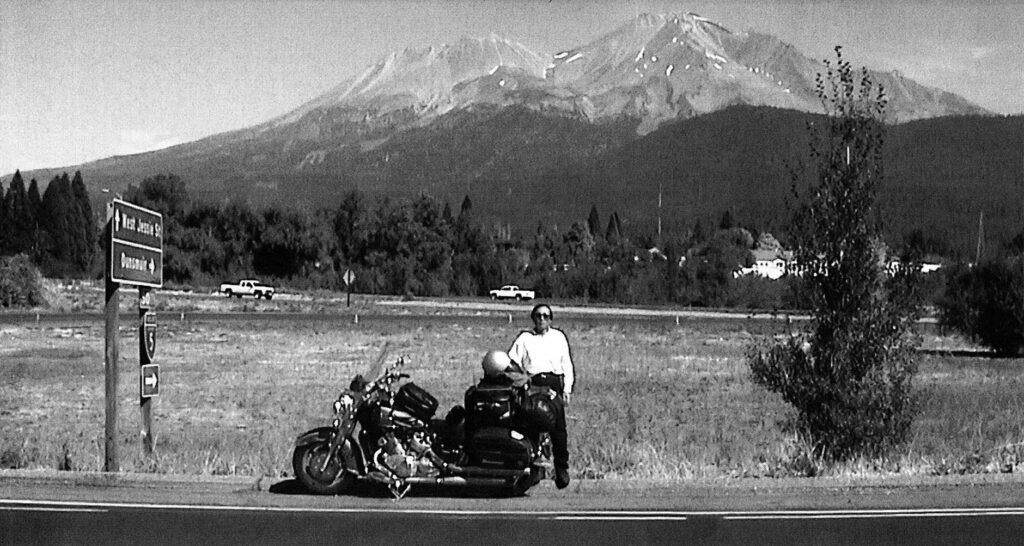
Landing on America’s east coast
On September 23rd, I departed from Amsterdam’s Schiphol Airport in the Netherlands on an early morning flight at 8:20 a.m., leaving Europe behind.
At 10:30 a.m., I arrived in Newark, a town adjacent to Manhattan on America’s east coast near New York. Although the actual flight time was seven hours, accounting for the five-hour time difference meant arriving at this time.
Since it had been a while since I’d been to Newark, I wanted to arrive as early as possible to decide on a hotel for the night and confirm with the shipping company about the ship carrying the Royal Star to understand the situation. As soon as I called a nearby hotel from the airport arrival lobby, a shuttle bus came to pick me up right away. America has made everything remarkably convenient. I was checked in by 1 p.m. I immediately called the shipping company, and they said the ship had already arrived and would unload the cargo today, so I could pick it up tomorrow. Newark Harbor is just east of the airport on the other side of the landing strip from my hotel. It was very convenient being so close by. I informed the shipping company, which had given me the arrival notice, that I would handle the customs clearance myself and received their advice to go to the customs office after 10 a.m. and they provided the address.
The next day, I took a taxi to customs with the necessary documents. When I found the customs window, three heavy-set Black women were sitting there. I arrived at 9:30 a.m. It seemed early as some were having coffee and eating donuts. When I explained to one of them that I wanted to clear a motorcycle through customs, she prepared the necessary paperwork based on my passport and Royal Star registration certificate, stamped it with the official customs seal, and the entire process was completed in just 15 minutes. This was incomparably faster than the customs clearance in Vladivostok, which had taken three days.
About five minutes by car away was the shipping company’s stockyard on the waterfront, and I immediately spotted the Royal Star that had been unloaded from the ship near the gate. When I went into the shipping company office and showed them the paperwork prepared by customs, they verified the vehicle number of the Royal Star, and I was given the okay to take it out. I reattached the international license plate that had been removed during loading, and drove out of the stockyard. First I stopped at a gas station and filled the tank. It was six dollars (about 720 yen) for four gallons (about 15.2 liters). In America, gasoline costs 40-50 yen per liter, making this price about one-third to one-quarter of European prices.
It was astounding that just about two weeks after handing the Royal Star to the shipping company in Ziebrugge, Belgium, I could receive it on America’s east coast. One major reason for this remarkable speed was that the motorcycle didn’t need to be packaged. Not only does making a wooden crate sized for the bike take nearly a week, but packaging incurs extra transportation costs. The shipping company I used operates dedicated car transport vessels, so they were able to load the motorcycle bare without packaging.
Visiting Ground Zero
In the afternoon I spent about two hours inspecting the motorcycle to prepare for the cross-continental journey across America. From here in Newark to Manhattan in New York is just across the Hudson River, practically next door. I had stayed in Manhattan for about four months 37 years ago and worked at a department store moving merchandise from the warehouse to the sales floor to replenish my travel funds. At that time I rode around on the YDS-III in the Greenwich Village area on the Manhattan side, having crossed the Hudson River by the Holland Tunnel.
I also used the ride as a chance to do a maintenance check. I visited Ground Zero in Manhattan, the site of the World Trade Center that was destroyed in the September 11, 2001 terrorist attacks—a place I had decided to visit first after entering the United States. From the hotel, I took Highway 9 toward the Holland Tunnel, which runs under the Hudson River. The road was narrow and the surface was worn, bringing back memories of 37 years earlier. The atmosphere around it hadn’t changed much either. Even though it was 3 p.m., cars were packed solid, and their numbers kept increasing. At the tunnel entrance, I paid 5 dollars (about 600 yen) and finally entered Manhattan. Thirty-seven years ago, the World Trade Center and Empire State Building were already there, along with many other skyscrapers. As someone who had come from Japan back then, I was overwhelmed by how prosperous America was.
I parked the Royal Star at the edge of the road and stood there in shock. The World Trade Center was gone. The absence of something that should be there was a tremendous impact. Thinking of the over 3,000 lives lost here, I realized that terrorism is not something happening in a distant world. Scars remained on the surrounding buildings, and one thing that struck me was the large words written across the wall of one building: “The human spirit is not measured by the size of the act but by the size of the heart.” Letters searching for survivors, T-shirts with names written on them, and various other items were attached to the wall. Each one seemed to carry the feelings of a family, things I could not overlook. As I looked at them intently, the area gradually grew dark, so I decided to head back to the hotel.
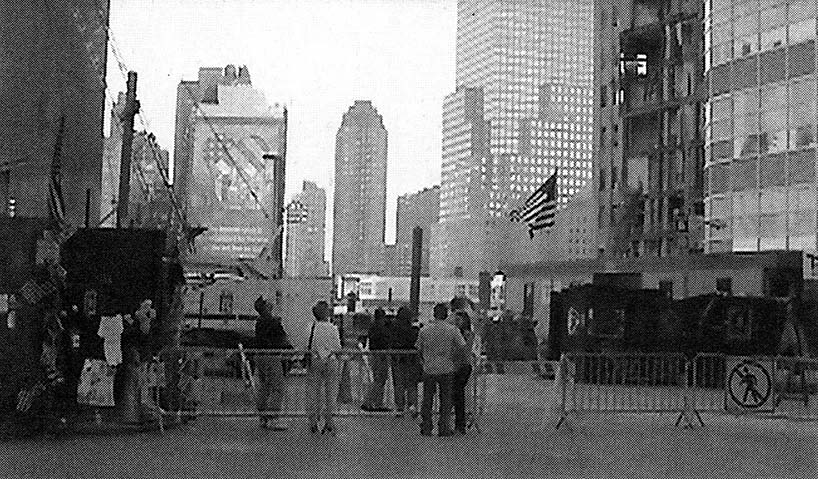
Through Amish Country
September 25th—this was finally the start of the last cross-continental journey of North America on this trip. I headed west, always west, on Route 80. After driving about 50 miles (approximately 80 km) through New Jersey, I entered Pennsylvania. The highway speed limit is 65 miles per hour (about 104 km/h), but the actual flow of traffic is 70 to 75 miles per hour (112 to 120 km/h). The median is wide, and the green belts on both sides are also sufficiently wide, so there’s little sense of speed. Most trucks are large trailers about 25 meters long, flowing with the traffic, but some were passing other vehicles at speeds exceeding 75 miles per hour (120 km/h), which really surprised me. On Germany’s Autobahn, trucks are limited to 100 km/h, so they always drive obediently in a single line on the right side.
After crossing the Appalachian Mountains, I found myself in America’s breadbasket. Cornfields and soybean fields stretched on and on. When I entered Ohio, I left the highway and drove on local roads. I wanted to know how the Amish are living now, so I visited the area where many of them live. The Amish are a faith community that has lived in this region for a long time. They use horse-drawn carriages as their means of transportation, do not use large farm machinery, tilling fields with plows and horse power instead, and do not use electricity. They live a life that is gentle to nature. When I traveled through here 37 years ago, I noticed their way of life. It seemed to me that the local people treated them as odd. I was very worried that they, who seemed to live the most gently in harmony with nature, were not being driven out.
Driving on local roads through cornfields, I came to a small country town. At the town’s supermarket, logs about 10 meters long had been laid to create parking spaces for several horse-drawn carriages, and black Amish carriages were parked there. As I watched, another carriage with a family dressed in black clothes came by. When I pointed my camera at them, the child smiled and waved, and the father smiled too. After them came a single woman in medieval-looking clothes, driving her carriage. Looking around at the other shops in town, I saw that many of them, including the post office, had hitching posts set up so the Amish could safely park their carriages. At the town intersection, I saw one carriage stopped at a red light, and a large trailer on the crossing road was driving slowly, being considerate of the horse. The number of Amish had increased compared to before, and it seemed they were living well with the townspeople. The eyes with which the townspeople looked at these people who value nature had changed. It was a relief.
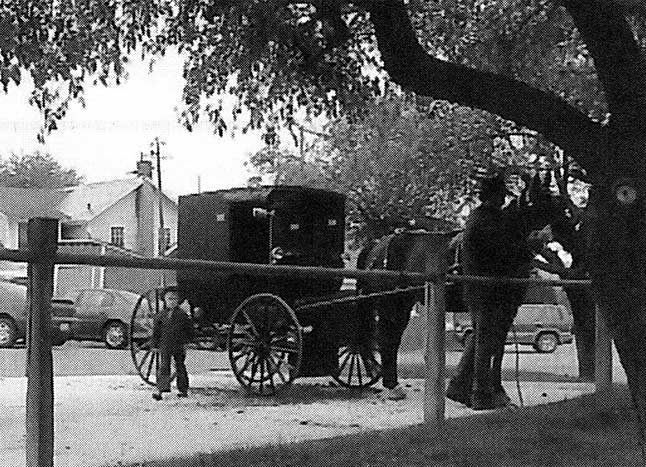
From America to Canada
With a warm feeling in my heart, I moved forward. I passed through Ohio, Indiana, and Illinois, and entered Milwaukee, Wisconsin.
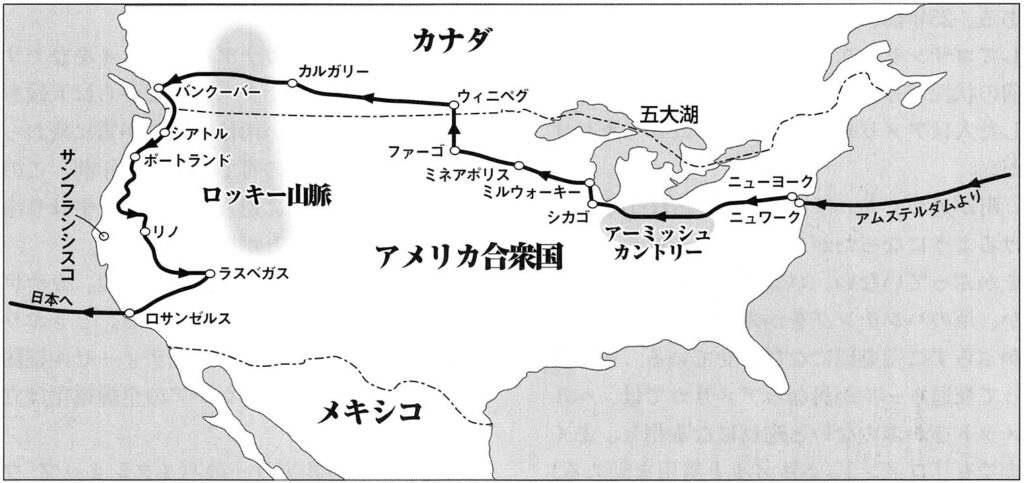
Milwaukee is a town known for beer and Harley-Davidson (H-D). H-D is currently the most vibrant motorcycle manufacturer in the world. Twenty-five years ago, when I came to Los Angeles as a Yamaha Motor representative, H-D was on the brink of bankruptcy. Twenty-five years later, I don’t think anyone in America would have predicted what H-D is today.
As I approached the town, I began seeing H-D motorcycles on the highway, but the riders weren’t wearing helmets. They were either holding their hair back with a bandana, wearing a leather flat cap, or letting their hair blow in the wind with nothing on their heads. In the United States, where traffic rules differ by state, some states require helmets to be worn, while others merely recommend them. While it is certainly safer to wear a helmet, America is a country that doesn’t insist that everyone nationwide must wear one or face a violation.
From Milwaukee, I passed through Minnesota and North Dakota, and on October 2nd, I entered Winnipeg, Canada. I had left Japan in early summer, but summer had passed and autumn had arrived. At latitude 50 degrees north in Canada, the mornings and evenings were freezing. In the fields, most of the corn, soybeans, sunflower seeds, and pasture grass had been harvested, and large tractors were finishing the little that remained.
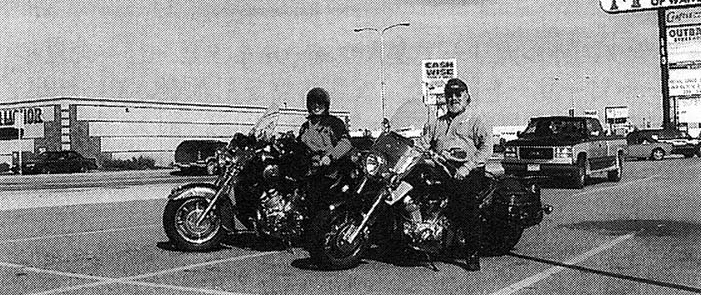
A Canadian friend who rode motorcycles until age 87
The reason I made the detour to Canada was to visit the grave of my friend Walt Healey, who lived in Calgary. He had been a friend since my previous round-the-world trip, and back then he ran a small bike shop dealing in Yamaha and Indian motorcycles. He later grew it into Canada’s top Yamaha dealer, and beyond just selling bikes, he made tremendous contributions to the development of youth throughout Canada. Sadly, he passed away in January 2002 at the age of 88. Despite our ages being 28 years apart, our love for motorcycles never changed, and we maintained a family friendship. I can’t help but regret that if this trip had come a year earlier, I would have been able to see him in good health.
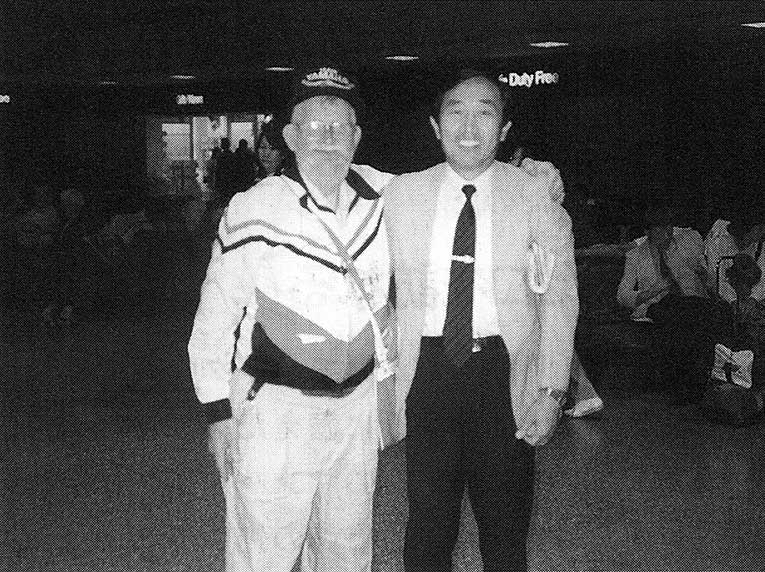
Heading relentlessly west along the Trans-Canada Highway in early winter. Since entering Canada, the weather has been far from favorable. The cold rain gradually turned to snow. It was the first snow of this trip. I recalled that 37 years ago, I had traveled this same road in the opposite direction during the same season, and had also encountered cold snow.
Along the highway runs the Canadian Pacific, the transcontinental railway. I occasionally spotted freight trains, and they were diesel locomotives, which made Russia’s full electrification of its rail lines seem all the more impressive.
On October 5, I visited the bike shop “Walt Healey Yamaha” in Calgary. Walt’s son Terry had been running the shop for more than ten years. Since I had contacted them in advance, Terry welcomed me warmly. He spoke to me while remembering the day his father Walt passed away, his eyes reddening as he held back tears. He explained that Walt left home in good spirits that morning to attend a meeting in Calgary, but suddenly collapsed as he stood up after it ended, and never returned.
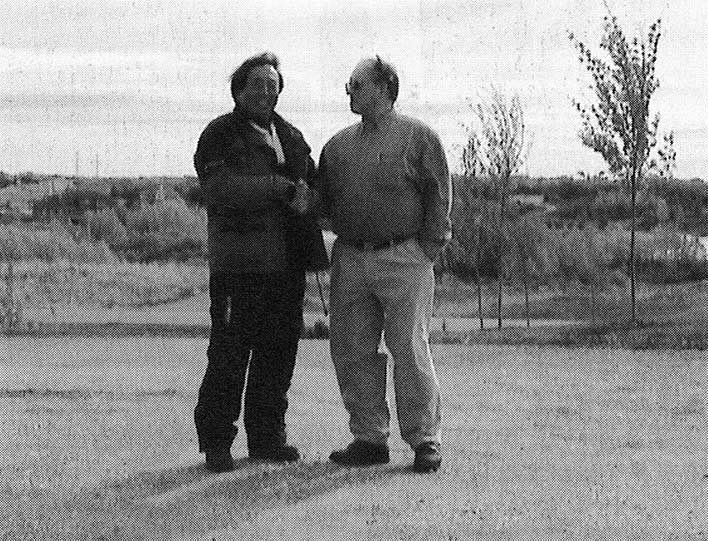
Until the year before he passed away, he rode a sidecar. He was simply a man who loved riding motorcycles. When I was living in Los Angeles, he visited me numerous times on his sidecar. After he grew older and entrusted the shop to his son Terry, wherever he went—throughout Canada and into the United States—he would take his wife on the sidecar with him. He also traveled overseas, visiting Baja California in Mexico and even as far as Australia, enjoying motorcycles to the fullest. Within Canada, he was a great figure who actively engaged in social contribution, organizing motorcycle races for the healthy development of youth and operating mechanic schools after obtaining government approval. The sidecar he rode until age 87 was donated to a local high school, and with part of his estate, the Walt Healey Scholarship fund was established.
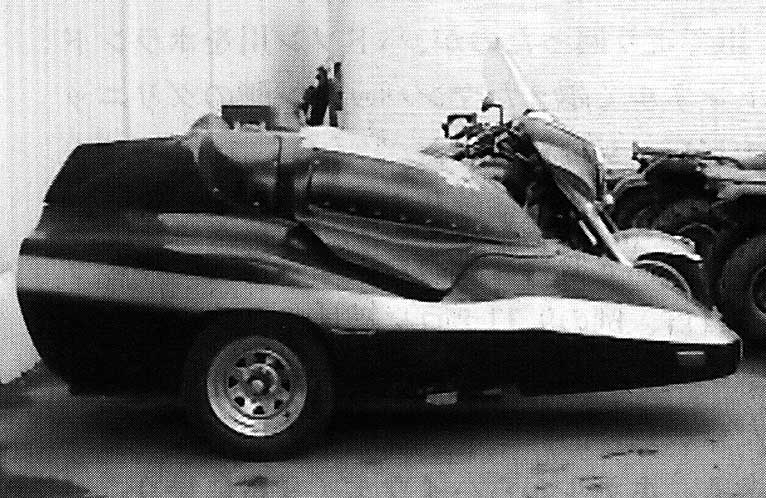
Together with Terry, I visited Walt’s grave, bowed deeply, and offered my prayers for his soul. As Terry handed me a watch inscribed with “Walt Healy,” he said, “Thank you so much for coming.” I too felt genuinely glad that I had come.
Crossing the Rocky Mountains in early winter, riding through scorching desert
From Calgary, I could either continue west to cross the Canadian Rockies, or head south through Montana and Spokane to Seattle—a difficult decision since bad luck with snow could block my path either way. Either way, I had to cross the Rocky Mountains somewhere. Since entering Canada, I had been paying close attention to the weather forecast daily. This morning’s forecast fortunately indicated that the cold snap would ease over the next few days, so I decided to head west and cross the Rocky Mountains while the cold hadn’t arrived. Entering Banff National Park, I was surrounded by the snow-covered Rocky peaks. After passing through Lake Louise, I found lodging in Golden while it was still light. If darkness fell, temperatures would drop and the road surface would freeze, and ice on winding mountain roads is extremely dangerous.
The next day, there was Glacier National Park to pass through before reaching Vancouver, which was another mountain pass. After traveling for a while along the Columbia River from Golden, the road began to climb toward the pass. Just as clouds appeared, snow came. Fortunately it melted once it hit the road surface, but it was still slippery. Tourist season was long over, so traffic was light. I proceeded with extreme caution to avoid skidding and falling. Then, on October 7 of that day, I safely crossed the Canadian Rockies and arrived in Bellingham, Washington, via Vancouver.
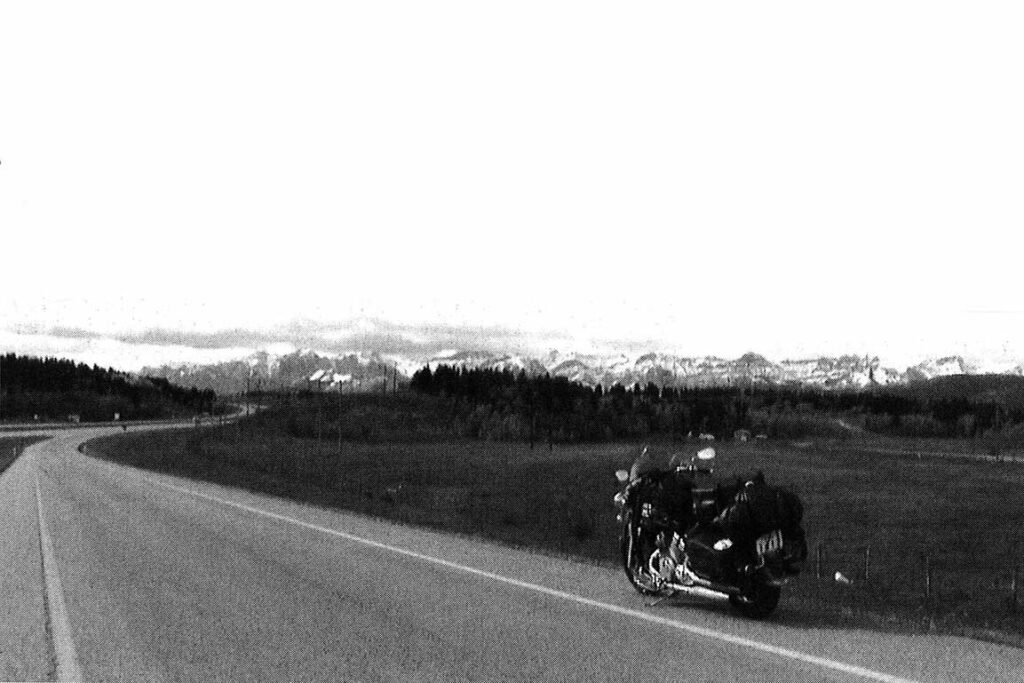
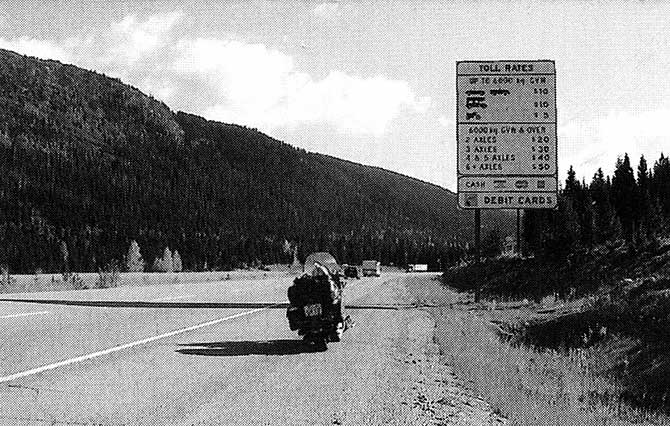
Once I entered Portland from Seattle, the daytime temperature returned to over 30 degrees Celsius. I could have followed the coast through San Francisco to Los Angeles, but instead I decided to go from Reading through Chico into Nevada and head to Las Vegas. The endless single road through sparsely trafficked desert spanning Nevada and California is something special to ride on a large cruiser like the Royal Star—you can savor the leisurely essence of America, and it’s incomparable. It’s quite different from riding on roads surrounded by Siberian wetlands and endless taiga.
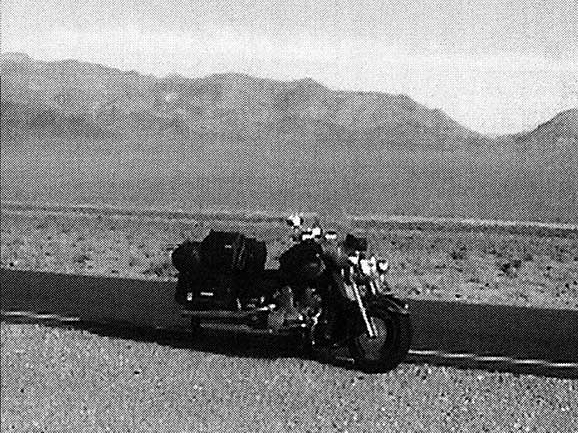
The end of the journey
I made a stop because I really wanted to see “Art of Motorcycle,” an exhibition held at the Guggenheim Hermitage Museum in the latest luxury hotel “The Venetian” in Las Vegas. From among all the motorcycles built worldwide over 130 years of motorcycle history, 100 models worthy of being called art were carefully selected, actual bikes were gathered from around the world, and they were displayed artistically. The first exhibition was held in New York about three years ago, and after that it toured Europe before coming to Las Vegas. It’s groundbreaking in itself to treat motorcycles as artistic material. Each of the exhibited bikes was one I would desperately want to own and ride. This event will end in mid-January 2003, and the displayed bikes will be sent back to their owners. Gathering such precious motorcycles is a difficult task, and it’s unclear whether this can be done again in the future—it was an event of immeasurable value.
After enjoying the Art of Motorcycle exhibition, I finally headed for Los Angeles, the final international destination of this trip. The route from Las Vegas to Los Angeles was a familiar favorite drive. Running through desert with nothing else around, I passed through the ghost towns of Calico and Barstow, continued west, and on October 15 arrived safely in Los Angeles.
In Los Angeles, he received a warm welcome at YMUS (Yamaha Motor USA). Meeting familiar faces, he felt relief as the trip came to an end. Over the course of four months, he covered more than 29,000 kilometers. He met all kinds of people. He was able to visit many museums. Particularly in Russia, every day brought new discoveries, so those four months felt like more than a year. As a milestone in his life, he was glad he had made the bold decision to depart from Japan.
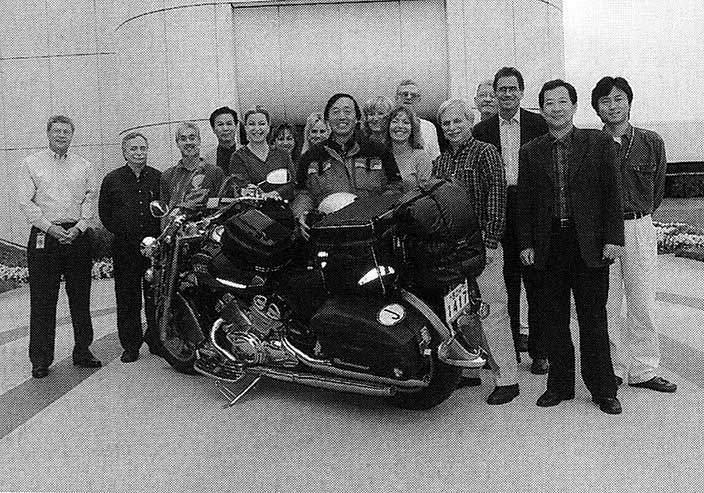
Afterward, from Los Angeles, the Royal Star was loaded onto a cargo ship and unloaded at Toyohashi Port in Aichi Prefecture on November 18. He returned ahead by air to Hamamatsu, where his family was waiting.
Two wheels save the Earth.
He often receives the question: what has changed most compared to his round-the-world trip 37 years ago on a YDS-III, going eastbound? While it is true that the number of cars has increased tremendously and roads have improved dramatically, what he has decided to answer is that the Earth has become dirty. Everywhere people live—whether roads or seas—is full of garbage. Major cities are covered in smog, and entering a major city feels like driving into a haze of gray smog. Even when the wind blows, the smog spreads but does not disappear. Oxygen is not infinite either. He felt such a sense of crisis that he wondered whether humanity on Earth might someday need oxygen tanks to survive.
In the face of this, the role of two-wheeled vehicles such as bicycles and motorcycles is significant. European countries are actively working toward widespread adoption of two-wheeled transportation. Bicycle and moped lanes have dedicated lines on roads to make them easier to ride, and people look warmly on motorcycles. When riding the Royal Star through congested city streets, many cars gave way at traffic lights.
Currently, approximately 70 percent of passenger cars in the world have only one person in them. If 15 percent of these people switched to two-wheeled vehicles such as bicycles or motorcycles, traffic congestion around the world could be eliminated and air pollution could be improved. Given that the world’s population is increasing rapidly, it is natural that everyone wants to become more prosperous, but that would only make global traffic congestion, environmental pollution, and air pollution increasingly serious. Would not the active use of two-wheeled vehicles, which are energy-efficient, resource-efficient, and superior in mobility, lead to saving the Earth?
(End)
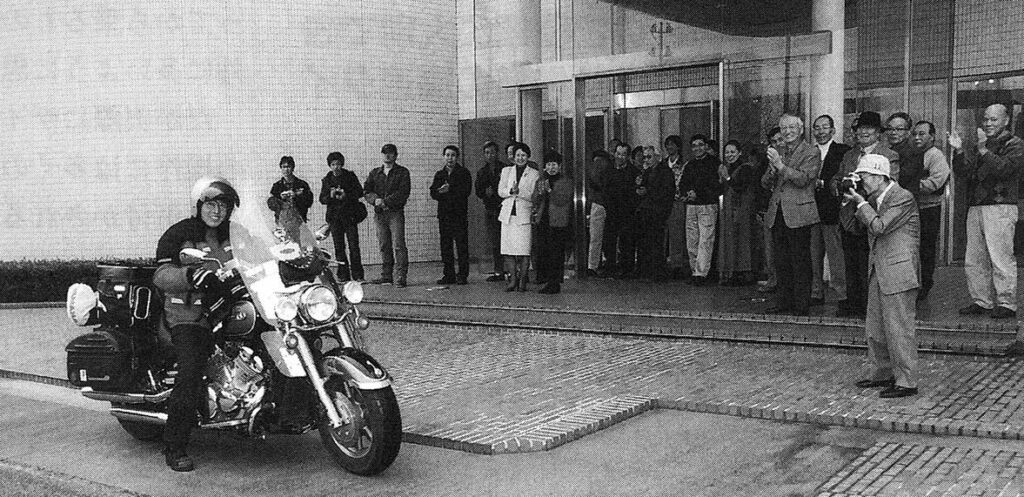
Source
Bessatsu Motorcyclist, January–May 2004
Yaesu Publishing Co., Ltd.
Good Loop Co., Ltd. publishes this article with permission from the copyright holder Shigeru Yoshida and the publishing rights holder Yaesu Publishing Co., Ltd. Unauthorized reproduction or copying is prohibited.