
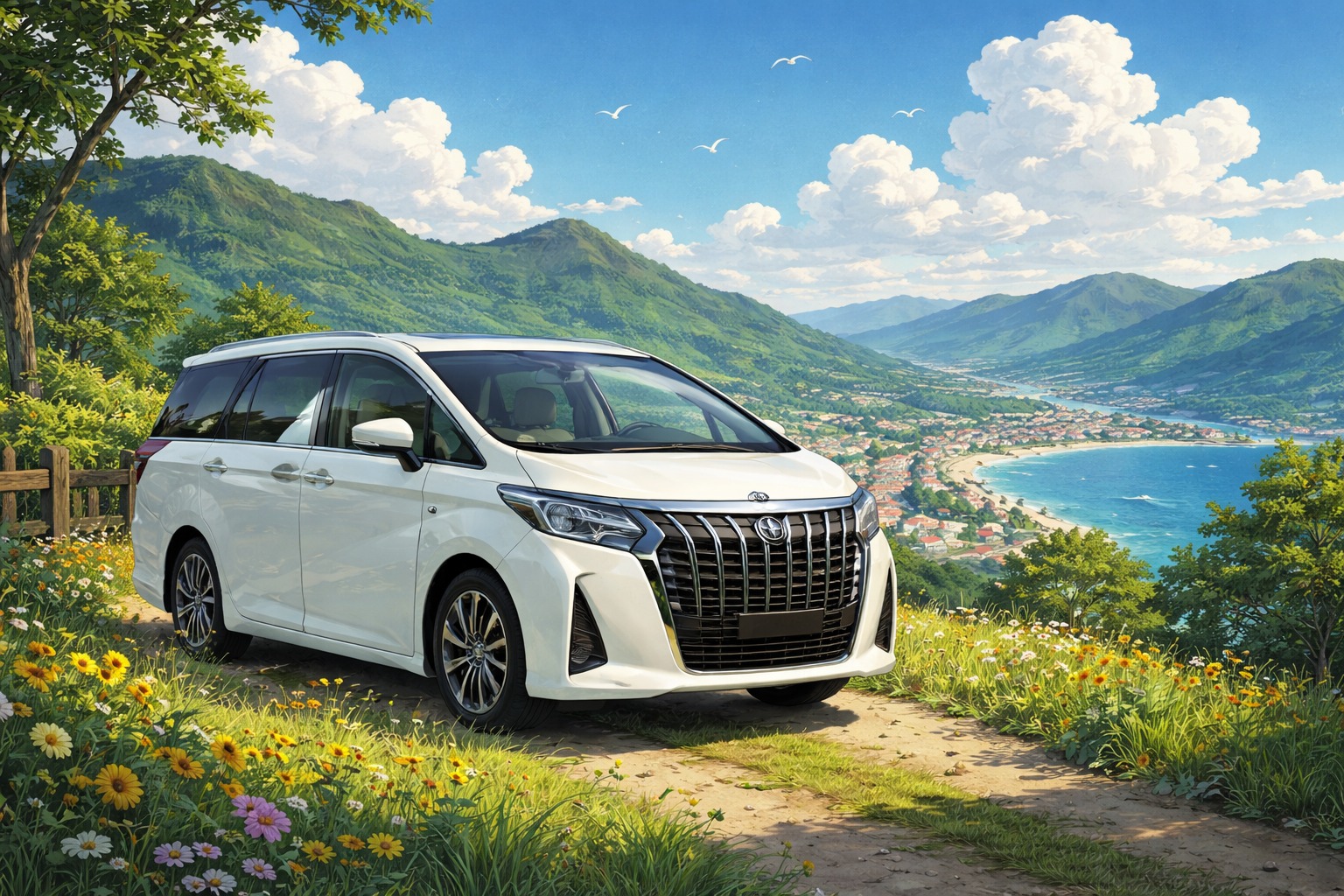
The Toyota Alphard is a flagship luxury minivan that commands overwhelming popularity in Japan’s used car market. While the new car price is steep, plenty of people wonder whether an Alphard “will still fetch a high price ten years later” and whether “buying one is unlikely to result in a loss.” Here we explain the Alphard’s projected residual value rate, trends in used car pricing, and comparisons with the Vellfire and other minivans, so you can understand its future asset value clearly.
Predicted residual value rate (resale value) after 10 years
The Alphard is known for particularly high resale value among domestic minivans. According to 2026 resale data, the 5-year residual value rate is 81.05%, which is top-tier even in its class. Most domestic cars typically hold 40–60% of their value after 5 years, so the Alphard’s figures fall into a notably high bracket.
Actual 10-year data for the current 40 series is not yet sufficiently available, but considering the high residual rate at 5 years, used market prices for past models, and strong demand in the used car market, the Alphard is likely to maintain a residual value rate of around 40–50% even after 10 years. This is considerably higher than typical minivans, and it’s one reason the Alphard is said to be “expensive but holds its value well.”
Predictions from automotive media also indicate that the current Alphard maintains a high range of 82–90.6% after 3 years and 73–86.1% after 5 years. While the short-term premium pricing is gradually settling, looking at the long term, the Alphard should still be considered a vehicle that maintains strong asset value.
▼ Price and residual value rate image for the Alphard and similar popular models
| Model | New car price (estimate) | 5-year residual value rate | 10-year predicted residual value rate |
|---|---|---|---|
| Alphard (40 series) | Approximately ¥5.10–10.65 million | Approximately 81% | Approximately 40–50% |
| Vellfire (40 series) | Approximately ¥6.70–10.85 million | Approximately 80.78% | Approximately 40–50% |
| Voxy | Approximately ¥3.00–3.90 million | Approximately 72.64% | Approximately 35–45% |
Note: The 10-year projection is a rough estimate based on 5-year residual value rate data as of 2026, used market prices for past models, circulation volume, and popularity trends. Actual prices vary depending on grade, color, mileage, and market conditions.
Price movement trends in the used car market
The current 40 series Alphard has been extremely popular since its launch, and combined with delays in new car delivery times, used examples reached a “premium market” where used prices exceeded new car prices. Particularly through around 2024, demand for immediate delivery was strong, and registered but unused vehicles and low-mileage examples commanded high prices.
However, this premium state is not permanent. From 2025 onward, partial improvements and grade additions were made, and as circulation volume increased, the market entered a slight adjustment phase. Indeed, according to Car Sensor’s analysis, as of May 2025, the average price of the current Alphard model has settled to ¥7.757 million.
Still, rather than the market collapsing, it’s more accurate to say “the excessive premium has settled down somewhat.” Even as of 2026, the used car price range remains very wide, and depending on year and grade, many examples still command high prices. Strong brand power as a luxury minivan, fleet demand, and strong direct purchase requests from family buyers are characteristics that keep prices from falling sharply.
Why the Alphard holds its value so well
The biggest reason supporting the Alphard’s asset value is the thickness of demand in the used car market. Its upscale interior and exterior design, comfortable ride, and excellent rear-seat comfort are highly valued, and demand exists not only for family use but also for shuttle services and corporate purposes.
Furthermore, the Alphard is a vehicle type where many people think “if I can’t buy it new, I want to buy it used.” When supply shortages occur, used market prices tend to spike quickly, and conversely, even when supply stabilizes, the vehicle’s popularity itself doesn’t fade easily, so prices tend not to crash below a certain floor.
Also, body color, grade, and equipment create large price differences, with demand concentrating on popular configurations. Generally, higher grades, popular colors, and well-equipped units tend to be advantageous at resale, and even among Alphards, resale value can vary considerably.
Comparison with the Vellfire and other minivans
The Vellfire, a sibling model of the same generation, also has very high resale value, and according to 2026 data, its 5-year residual value rate is 80.78%, nearly matching the Alphard. By contrast, the Voxy is 72.64% and the Noah is 66.04%, highlighting the strength of the Alphard and Vellfire.
This difference is influenced not just by the car’s simple quality but largely by “brand value as a luxury minivan.” In other words, the Alphard is valued not merely as a means of transportation but also for ownership satisfaction and status, which is why its price holds firm in the used car market too.
Maintenance costs, precautions, and the relationship to asset value
While the Alphard has high asset value, it is not a cheap car to maintain. The vehicle price is steep, and tires and consumables are proportionally large; the weight and engine displacement mean taxes and fuel costs are substantial. In particular, if you buy one thinking “resale is good, so actual costs are low,” daily maintenance expenses can become a burden.
Also, you should be cautious about future price trends. Premium pricing like what we saw right after launch is gradually settling due to increased circulation volume and added specs. Therefore, it’s more realistic to think of the Alphard not as something to buy for short-term resale, but as a “high-residual-value minivan” that won’t depreciate much even after a few years of ownership.
In other words, the Alphard is not an “absolutely profitable car,” but rather a luxury car that holds its value well for its class, and unlikely to result in a loss. With this understanding, it can certainly be considered a vehicle with excellent asset value.
Conclusion: The Alphard is a luxury minivan that tends to retain value even 10 years later
As of 2026, the Alphard remains one of Japan’s highest-resale domestic minivans. Its 5-year residual value rate is approximately 81%, very impressive, and there is a good chance it will retain around 40–50% of its value even after 10 years. While short-term premium pricing is settling down, considering the thickness of demand, brand strength, and breadth of applications, the model should prove resistant to value deterioration over the medium to long term.
For people who want “an expensive car that is unlikely to result in a loss” or who “want a family vehicle while keeping future resale in mind,” the Alphard is an extremely compelling choice. When purchasing, being mindful of popular grades, popular colors, and equipment content makes it easier to maintain even higher asset value.