
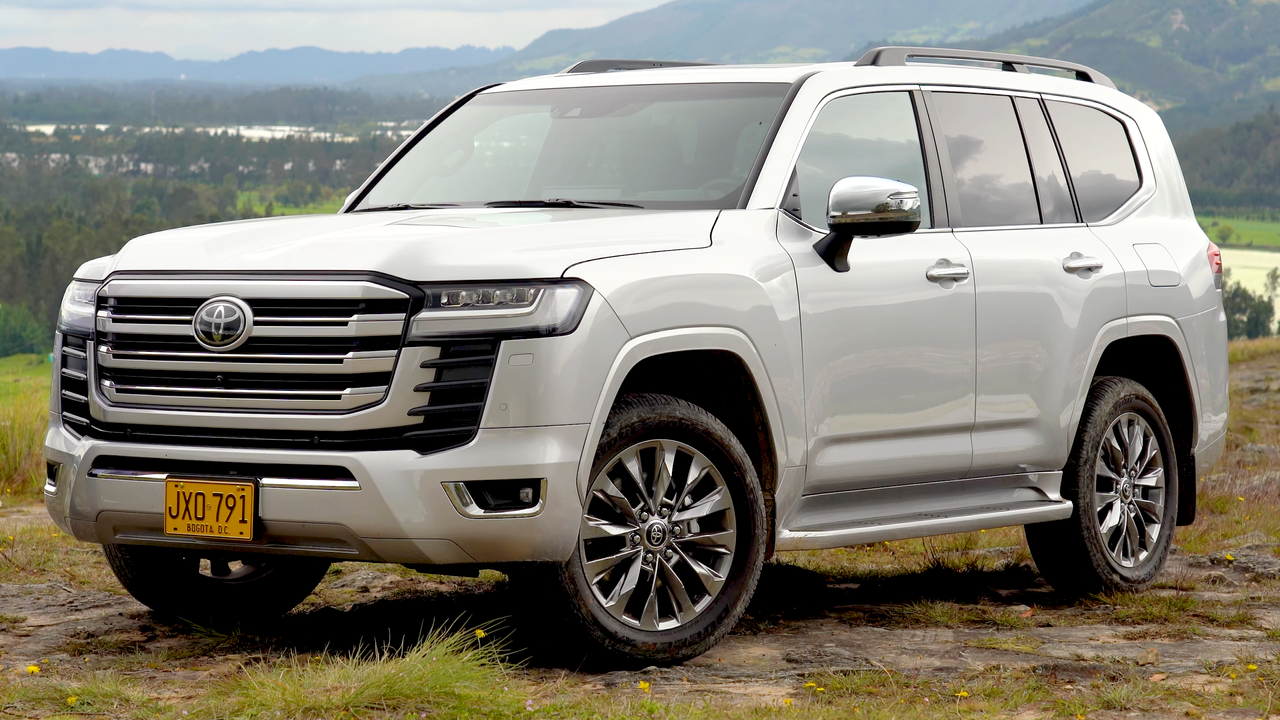
The “Land Cruiser 300” (300 Series), which underwent a full model change in 2021, is Toyota’s flagship SUV that the company presents to the world. It has enjoyed worldwide popularity since its launch, and in Japan the demand was so high that lottery sales and a one-year transfer restriction were implemented. As a result, the asset value (resale value) in the used car market has also attracted significant attention. This article explains the Land Cruiser 300’s predicted 10-year residual value rate and price trends in the used car market, as well as the main differences between it and its sibling models, the Land Cruiser 250 and Land Cruiser 70. We’ll also touch on the Lexus LX600, a high-end luxury model, while exploring the appeal of the Land Cruiser 300 from the perspective of a used car dealer.
Predicted residual value rate (resale value) after 10 years
The Land Cruiser 300 is said to be “a vehicle type with an extremely gradual decline in value over time”. In fact, based on the track record of previous models, it is predicted that even after 10 years, it will maintain a residual value rate of around 50%. This far exceeds the typical residual value rate for 10-year-old domestic vehicles (approximately 10–20%). The previous generation Land Cruiser 200 Series showed an average residual value rate of about 48.4% at the 10-year mark, with some grades reaching as high as 64.8%. The 300 Series is expected to achieve a similar level, and some experts predict that the 5-year residual value rate will be over 80%. In fact, in Toyota’s 2025 resale value prediction rankings, the Land Cruiser 250 is expected to have a 5-year residual value rate of 82.7% (tied for second place among all Toyota vehicles), which is on par with the full-size SUV Land Cruiser 300. As is the case with the Land Cruiser series in general, these vehicles tend to maintain remarkable high resale values even as years pass since their new car purchase.
Price movement trends in the used car market
Shortly after its launch, the Land Cruiser 300 made headlines when it commanded premium prices exceeding the new car price in the used car market due to its rarity. For example, in the case of the top-grade ZX (gasoline model), while the new car price was about ¥7,300,000, the used car buyback price for 1–2-year-old models reached about ¥9,850,000, recording an astounding residual value rate of 134.9%. Similarly, the Land Cruiser 250, which launched in 2024, despite a new car price of around ¥8,000,000–10,000,000 (including grades and options), saw cases where used resale prices exceeded ¥12,000,000. Such premiums tend to peak shortly after a new model’s launch, and the Land Cruiser 300 indeed showed price spikes of 130–140% of the new car price during its first 1–2 years on the market.
However, at present, the used car market price for the Land Cruiser 300 is gradually entering a correction phase. With Toyota’s improved production system and shorter delivery times stabilizing supply, the extreme premium pricing has eased, and the residual value rate is expected to converge over the medium to long term to normal high levels—around 80–90% of the new car price for vehicles a few years old, and around 50% for 10-year-old models. In fact, even the previous generation Prado (150 Series) saw used prices fluctuate wildly around the time the new 250 Series was announced, but it stabilized at a high level over the long term. The Land Cruiser 300 is similarly expected to show short-term fluctuations due to supply-and-demand gaps, but a long-term price trajectory characteristic of the Land Cruiser, where the decline in value is minimal.
Behind this lies the worldwide popularity and reliability of the Land Cruiser series. In a situation where supply is limited relative to demand, strong interest from overseas markets such as the Middle East and Africa makes used prices prone to spike. Additionally, the toughness and reliability for which it is renowned—described as “a vehicle that goes anywhere and brings you back alive”—is a factor that keeps users from letting go of it, and is a reason why it commands high prices even on the used market. This brand value can be said to underpin the asset value of the Land Cruiser 300.
Main Differences Between the Land Cruiser 250, 70 Series, and Other Models
The Land Cruiser 250, which debuted in 2024, is the successor to the Prado and is positioned in the “light-duty” segment of the Land Cruiser series. Meanwhile, the Land Cruiser 70 (70 Series) is a traditional model in the heavy-duty category, and it made a long-awaited comeback in Japan in 2023. When comparing the Land Cruiser 300 with these 250 and 70 Series models, differences emerge across various points including price range, specifications, design, and intended use. Let’s organize the main differences between them by category.
- Price Range: The Land Cruiser 300 is priced at around ¥5,100,000–8,000,000, and the Land Cruiser 250 (around ¥5,200,000–7,350,000) falls in roughly the same range. With the 300 Series positioned as the higher model and the 250 Series as the successor Prado both in the same price bracket, the traditional hierarchy of “Land Cruiser = expensive, Prado = affordable” has disappeared. Meanwhile, the Land Cruiser 70 was originally an affordable, practical vehicle, and when it was reintroduced to the Japanese market in 2014, its new car price was around ¥3,500,000–3,600,000, significantly cheaper than the 300/250 Series. However, the 70 Series that has been recently relaunched shows an upward trend in price due to dieselization and the addition of safety features. Still, compared to the 250/300 Series with more comprehensive equipment, the 70 Series maintains a modest price range, making it an option for those prioritizing cost.
- Specifications: There are clear differences in powertrain as well. The Land Cruiser 300 is equipped with a V6 engine (gasoline 3.5L twin-turbo or diesel 3.3L turbo), with maximum output reaching about 415 PS on the gasoline model. In contrast, the Land Cruiser 250 carries over from the previous Prado a four-cylinder in-line engine (gasoline 2.7L or diesel 2.8L turbo), with output limited to around 163 PS for the gasoline and 204 PS for the diesel. The new Land Cruiser 70 (2023 model year) is also equipped with a 2.8L turbo diesel four-cylinder (1GD type), with output comparable to the 250 Series diesel, but its transmission is configured simply as a 6-speed AT or 5-speed MT, prioritizing rough-terrain durability. Only the 300 Series maintains frame construction while adopting the latest GA-F platform and other chassis refinements, so in terms of specifications, the 300 Series is the most advanced and powerful.
- Exterior and Interior Design: The Land Cruiser 300 lives up to its vehicle class with “powerful and dignified design”, featuring a broad body equipped with a large-opening grille and advanced LED lamps. The interior is also high in quality, with a spacious seven-seat three-row configuration and the latest safety and comfort features, creating an atmosphere befitting a luxury SUV. The Land Cruiser 250, by contrast, is characterized by “design that blends tradition and modernity”. Its exterior has an angular body with round headlights (note: round headlights on the First Edition model only), evoking the spirit of the Land Cruiser 70 from the 1980s. The interior features a horizontal-oriented dashboard that prioritizes visibility and off-road capability while maintaining a sense of quality, resulting in a finish that feels natural for everyday use. The revived Land Cruiser 70 inherits a solid and robust no-frills design, with its iconic round dual-lamp front face upgraded to the latest Bi-Beam LED technology for improved functionality. The interior is a simple all-black space with analog-heavy controls, preserving the atmosphere of the “classic Land Cruiser.” In short, the 300 series is a refined luxury SUV at home in the city, the 250 series is a practical SUV with classic touches, and the 70 series is a traditional rugged off-roader—each with its own distinct character.
- Difference in Intended Use: Based on the differences described above, the primary intended uses and target user groups differ for each model. The Land Cruiser 300, with its latest mechanical systems and large-displacement engine, offers a comfortable ride and is best suited for people who spend a lot of time on high-speed long-distance driving and on-road travel. The Land Cruiser 70, on the other hand, features a simple structure with excellent maintainability, making it ideal for those who frequently tackle serious off-road terrain. The Land Cruiser 250 combines a modern frame and suspension with a light and nimble 2.7–2.8L engine, making it perfect for people who focus on city driving in everyday use but also enjoy the occasional outdoor adventure or rough-road driving—a well-balanced SUV. To summarize, the 70 series is positioned as heavy-duty, the 250 series as light-duty, and the 300 series as flagship, each possessing character suited to how the owner will use it.
- Resale Value: In terms of asset value, all three models live up to the Land Cruiser name and can be expected to command high resale prices. Among them, the Land Cruiser 70 series, with its limited production run, tends to command premium prices in the used market—especially special limited-edition models. In fact, the 2014 revival edition of the 70 series achieved a remarkable residual value rate of approximately 95 percent after five years. Both the Land Cruiser 250 and 300, as mentioned earlier, can be expected to maintain long-term residual rates of around 50 percent of the new car price, and over the short term, retention rates exceeding 80 percent. Particularly in the immediate aftermath of launch, both the 250 and 300 series have sometimes commanded premiums exceeding the new car price due to excessive demand. Even when owners choose to sell, they are likely to receive favorable valuations compared to other vehicles. Overall, “whichever Land Cruiser model you choose, it will sell at a high price” is a great source of reassurance, though in terms of rarity, the 70 series and limited-edition trims—with their smaller production numbers—stand out.
Upper-tier Model: Lexus LX600
The Land Cruiser 300 has a brother vehicle under the Lexus brand called the LX600. The LX600 shares the basic platform with the Land Cruiser while taking the luxury level of its exterior and interior to the extreme. It features a majestic exterior with a large spindle grille and an interior that lavishly uses wood grain and genuine leather, pursuing refinement in every detail. Particularly in the four-seat executive configuration, the rear seats are equipped with reclining seats, dedicated monitors, and even massage functions, providing a travel experience reminiscent of first-class airline seating. Given these differences, the price ranges are significantly different. While the Land Cruiser 300’s new car price ranges from approximately 5.1 million to 8 million yen, the LX600 is priced at 12.5 million to 18 million yen—more than twice as high. It could be called the “upgraded version” of the Land Cruiser 300, but since the off-road capability and powertrain are essentially the same in terms of function, it is an option for those seeking greater luxury and the pleasure of ownership. The LX600, with its limited production run, also maintains stable high prices in the used market and sustains a very high level of resale value (it became so popular that new orders were halted). However, because sales volume is limited, the number of units available is rare, and market trends may be even more fluid than those of the Land Cruiser itself.
Conclusion
The Land Cruiser 300, thanks to its outstanding performance and brand strength, commands exceptionally high popularity and asset value both as a new and used vehicle. While the derivative 250 and 70 series models each have their own character, all can be expected to maintain high resale values worthy of the Land Cruiser name, and when you choose based on your intended use, “you can’t go wrong with any of them”. The entire Land Cruiser series, including the even more upscale LX600, commands a special presence in the used car market. These models, which hold their value well over the long term, make an attractive option for users who value not only hobby appeal and practicality but also investment potential.
For detailed specifications and the latest used-market pricing of each Land Cruiser 300, 250, and 70 model, please feel free to contact us. We will propose a vehicle suited to your budget and intended use. When shopping for used cars, by all means also keep the strong resale value in mind as you consider your options. The overwhelming popularity and reliability of the Land Cruiser should surely bring you satisfaction even after your used vehicle purchase.