
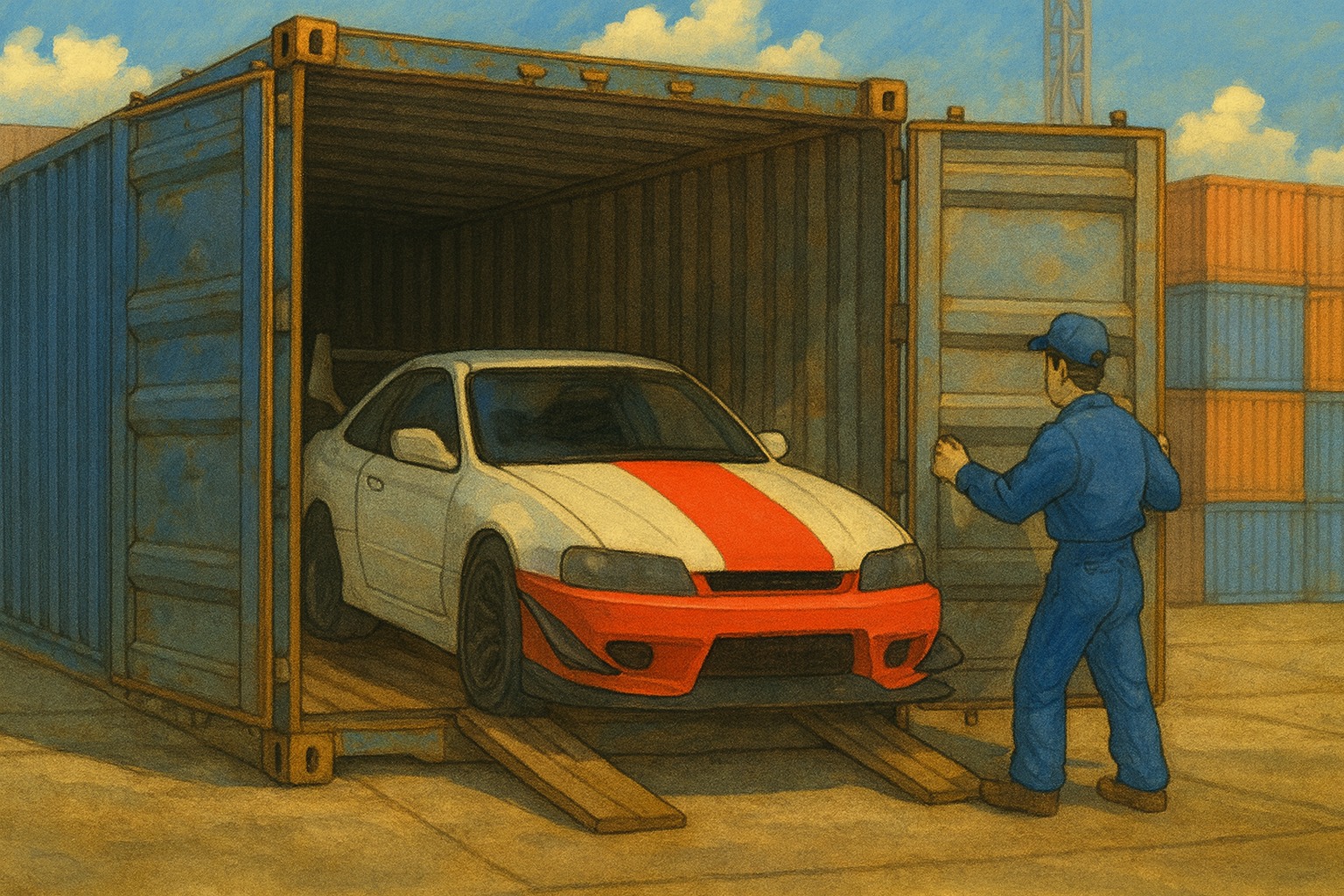
Japan’s premier time-attack event, Attack Tsukuba, has drawn increasing attention from overseas in recent years. With foreign drivers posting impressive times and a diverse international field, enthusiasts from around the world dream of racing at the “sacred ground” of Tsukuba. That said, bringing your own car to Japan and racing it involves numerous hurdles, from vehicle transport to on-site preparation and support. As a professional company in international vehicle import and export, Good Loop provides comprehensive support for this challenge. Below, we introduce the services needed to participate in Attack Tsukuba (and other circuit racing events) from overseas.
Vehicle Transportation to Japan: Ocean Freight vs. Air Freight
Vehicle transportation from overseas to Japan breaks down into two main methods: ocean freight (sea shipping) and air freight. Each differs in time required and cost, with its own merits and drawbacks. We arrange the optimal method to suit your needs.
- Ocean freight (container ships and RORO ships): A cost-effective, standard method. Voyages from Europe to Japan typically take around three to six weeks, and shipping multiple vehicles together reduces the cost per vehicle. For example, loading three to four passenger cars into a single 40-foot ocean container allows safe, sealed transport protected from theft and damage. However, shipping a single vehicle in a container becomes expensive, so we also consider shared container arrangements or auto-transport ships (RORO ships) that vehicles can be driven onto.
- Air freight: Ideal for emergencies or shipping high-end vehicles, this method is characterized by its speed: typically just days to a week. For example, it works well if you want to send a race car at the last minute, or if you want to use your vehicle locally right up until the event date before bringing it to Japan. However, costs are extremely high—often exceeding one million yen for air freight compared to several hundred thousand yen for ocean freight—and there are size and weight restrictions. If you need air freight, we provide detailed estimates and guidance on procedures in advance, offering it as the option to “buy time with money.”
For temporarily bringing a vehicle to Japan, the following options are available.
- ATA carnet (Admission Temporaire – Temporary Admission Carnet)
This is a customs document used for trade shows, business meetings, and similar purposes. In Japan, the Japan Commercial Arbitration Association (JCAA) is the issuing authority. For cases where racing cars are brought in for motorsports events like Attack Tsukuba or shows, the ATA carnet is the most common option. You can use it tax- and duty-free for a set period (usually within one year), on the condition that the vehicle is re-exported after the event. - CPD carnet (Carnet de Passages en Douane)
A system for temporarily bringing a privately owned vehicle abroad; in Japan, the Japan Automobile Federation (JAF) issues it. It is commonly used when you want to drive on Japan’s public roads with your home country plates for tourism or touring. - Temporary import application through standard customs clearance
Without using a carnet, you can file a “temporary import permit application” with customs. In this case, you pay import duties and consumption tax at import, then receive a refund when re-exporting. For vehicles from countries where carnets cannot be used or in special circumstances, this method becomes a practical option. - Temporary import by international ferry
Automobiles temporarily imported on ferries between Japan and other countries can go through customs clearance duty-free using an Automobile Temporary Export/Import Report (Form C5014), separate from carnet procedures.
We support the paperwork for any of these methods by partnering with reliable logistics and customs providers. From preparing necessary documents (invoices, manifests, bills of lading, etc.) through customs declarations and timeline management, we provide comprehensive guidance.
Vehicle Storage Service in Japan
After arriving in Japan, securing a vehicle storage location is important, whether you need it until the event day or want to leave your car in Japan for a while after the event to enjoy sightseeing and driving. We can store your vehicle at a secure partner garage. Indoor storage prevents theft and vandalism, and we can also provide maintenance like battery care, periodic engine starts, and protective covers to keep the vehicle in good condition as needed. We can handle long-term storage too—if you’d like to leave your car in Japan after this year’s Attack Tsukuba and participate again in future events or driving sessions—we’re happy to help.
Vehicle Setup and Maintenance Support
To perform your best on a Japanese circuit, vehicle setup at the venue is essential. We partner with repair shops and tuning specialists to support pre- and post-drive maintenance and setup adjustments. We can handle basic work like oil and coolant changes, suspension settings adjustments, tire changes and sourcing, brake pad reserves, and more.
Tsukuba Circuit is a technical 2,045-meter course, and certain aspects like corner-exit-focused setup and adapting to Japan’s road grip characteristics benefit from local knowledge. We have a network including mechanics and engineers with extensive Tsukuba driving experience and can introduce trackside support staff on race day if needed.
Visiting Renowned Japanese Tuning Shops
We also arrange intermediation for tuning and maintenance at coveted JDM tuning shops. For example, requests like “I’d like to fine-tune ECU settings during my stay in Japan” or “I’d like a renowned shop’s craftsperson to do alignment adjustments” get flexible responses. We handle specialist terminology interpretation and negotiation too. However, famous shops often have booking schedules full well in advance, so please note.
Automaker & Private Collection Museum Tours
Japan has a rich automotive culture with appealing automotive museums throughout the country. Manufacturer-operated museums include the Toyota Museum (Nagakute, Aichi Prefecture), the Nissan Heritage Collection (reservations required; Zama, Kanagawa Prefecture), the Suzuki History Hall (reservations required; Shizuoka), and the Honda Collection Hall (at Twin Ring Motegi, Tochigi Prefecture). Particularly, the Honda Collection Hall showcases generations of iconic cars and racing machines—a must-see not just for Honda enthusiasts but for motorsports fans in general. Additionally, the Mazda Museum at Mazda headquarters (Hiroshima) and the Communication Plaza at Yamaha Motor (Shizuoka) each offer impressive maker-specific facilities.
Meanwhile, museums that grew out of personal collections are scattered throughout the country. For example, the Japan Automobile Museum in Ishikawa Prefecture is one of Japan’s largest, housing around 500 precious classic cars including a Toyota 2000GT and a Jaguar XK140. The Lake Kawaguchi Automobile Museum (which displays the Cisitalia V16T), which opens only in August, and the GLION MUSEUM in Osaka are also well-known. Beyond these, there is the Iwashita Collection in Oita (displaying the world’s only L-type four-cylinder Ducati Apollo), the Nasu Classic Car Museum in Tochigi, and many others too numerous to list.
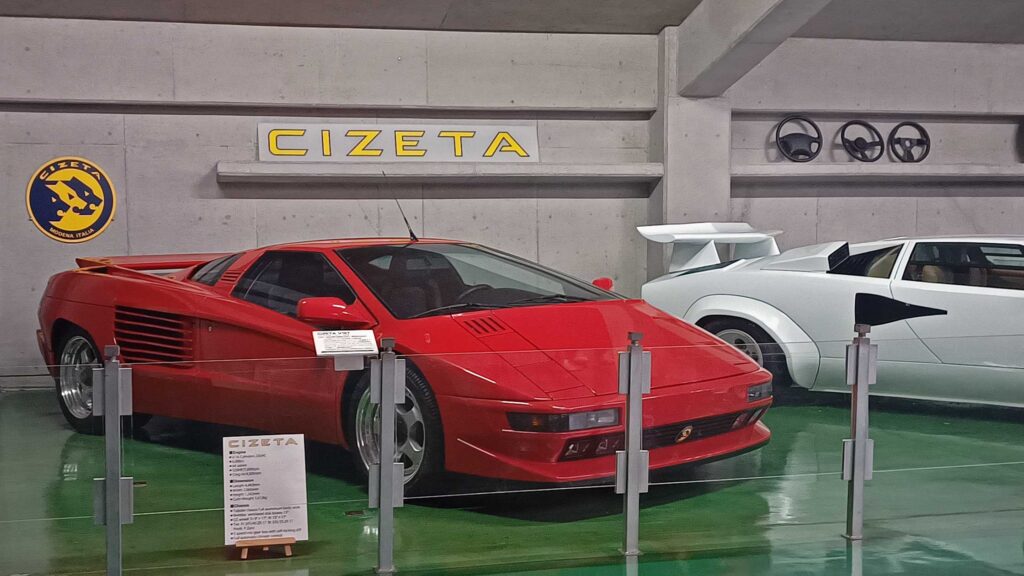
We at Good Loop also plan museum tour itineraries tailored to our customers’ interests. If you’re concerned that you’d like to visit these museums during your stay in Japan but don’t know how to access them or make reservations, rest assured. For example, the Nissan Heritage Collection operates by advance reservation only, but we can handle the reservation procedures on your behalf and arrange English-language tours. For visitors from abroad, these museum visits offer a chance to directly experience Japan’s automotive culture—an unforgettable experience.
Touring street racing hotspots like Daikoku PA and the Hakone Turnpike
When discussing Japan’s car scene, one cannot overlook visits to the birthplaces of street racing culture. The most iconic example is Daikoku Futo Parking Area (Daikoku PA). Situated on an artificial island beneath the elevated expressway in the Wan-sen Line of the Metropolitan Expressway, this parking area becomes a gathering place for countless modified cars and supercars when night falls—one of the world’s premier car-meeting spots. Surrounded by the spiral ramps of the expressway and framed by its striking landscape, Daikoku PA is often regarded as a microcosm of Japanese car culture.
Also popular are driving courses in suburban areas outside the greater Tokyo region. In particular, the Hakone Turnpike in Kanagawa Prefecture (now the toll road leading to the MAZDA Sky Lounge) is famous as one of Japan’s finest winding roads. With smooth high-speed corners in succession and spectacular views of Mt. Fuji, it’s sometimes called the “Japanese mini-Nurburgring.” Why not set out from Tokyo early in the morning and enjoy a drive to the foothills of Mt. Fuji, stopping along the way for hot springs and sightseeing?
We can also arrange tours of other street racing hotspots throughout Japan according to your preferences. Enjoy a memorable car culture experience.
Travel support during your stay (information services)
Beyond vehicle-related matters, we also provide complimentary information and advice so that our customers can enjoy their time in Japan with peace of mind. By directing you to reliable external services and official booking sites, we help make your trip run smoothly.
- Accommodation guidance
We introduce hotels near the circuit, accommodations in central Tokyo, hot spring inns, and more at no charge. You will make the actual reservations yourself. - Rental car and transportation information
We introduce vehicle types you can drive with an international license and vehicle classes popular with circuit participants. - Sightseeing and dining recommendations
We introduce sightseeing spots and restaurants worth visiting in the Tsukuba area and greater Tokyo region, based on our staff’s experience and word-of-mouth. - Interpreter and support provider referrals
If you need professional interpreting or guide services, we refer you to trusted external partners.
While we cannot conduct travel services directly, Good Loop provides substantial support in the form of “information services” to ensure that our customers from abroad enjoy a more comfortable stay in Japan.
Why Good Loop is the choice: trustworthy partnerships and flexible solutions
- Collaboration with reliable partners: We partner with trusted specialists in international logistics, vehicle maintenance, tourism, and other fields to deliver services tailored to your needs. On export-import procedures and transportation, we work with experienced logistics companies to ensure a reliable and safe support system.
- One-stop & customized solutions: Our ability to guide you end-to-end—from transportation and storage to setup and tourism support—is a distinctive strength of Good Loop. Since each customer’s situation is unique, we flexibly customize our approach to make your “one-of-a-kind special plan” a reality.
- Transparency and cost-consciousness: We provide clear itemized quotations and propose optimal plans with unnecessary costs eliminated. For example, we can arrange cost savings through container-sharing with multiple vehicles or by choosing off-season routes.
- Passionate support: As fellow enthusiasts of automotive culture and motorsports, Good Loop wants to support your ambitions. We care for each customer individually and strive to create an experience you’ll feel good about.
Traveling across borders with your car is an experience that becomes a lifetime memory. Good Loop will do everything possible to make it happen. If you’re considering participating in Attack Tsukuba, please feel free to get in touch. Let’s aim together for your best time on Tsukuba Circuit’s Course 2000!